Summary

  • Temperatures are expected to rise above 30C in parts of England and Wales today as the UK's third heatwave of the year continues - the latest forecast

  • Parts of the south and east of England officially declared a heatwave on Monday and have seen temperatures reach 30C or higher since

  • Amber heat health alerts are in place across southern and central England until Sunday night, with yellow alerts covering northern England

  • NHS England says many of its ambulance services will be under "sustained pressure" due to the extreme heat, which it warns could be "dangerous" for some

  • Temperatures are not forecast to be record breaking like those experienced in May and June, but this heatwave could be one of the longest lasting since the one that hit in 1976

  • What's the weather like where you are? How are you coping with the heat? Let us know

  1. Charity warns hot weather could worsen mental health symptomspublished at 09:06 BST

    Emma Tracey
    Senior disability reporter

    If you struggle with your mental health, you might find the heat affects you more than other people.

    Dom Horton, from Rethink Mental Illness, says: “Hot weather can worsen mental health symptoms, for example by triggering mania in people living with bipolar disorder.”

    He also notes that some antipsychotics and antidepressants, such as SSRIs - which are designed to increase serotonin levels in the brain to improve symptoms of depression - “can affect how our bodies regulate temperature and how much we sweat".

    Other medications can leave the skin more sensitive to sunlight, while some can reduce how thirsty you feel.

    The government also highlighted this in its 2025 Climate Change and Mental Health report, stating that “people taking psychotropic medications may be at increased risk of death and other physical health impacts during heatwaves compared to those with other chronic conditions, such as cardiovascular disease".

    Horton advises people to continue taking their medication as prescribed, store it in a cool, dry place, stay hydrated, and remain indoors during the hottest part of the day where possible.


  2. Why heatwaves hit women harderpublished at 08:51 BST

    Emily Atkinson
    BBC News

    A serene woman in a summer home cools herself with a retro fan.Image source, Getty Images

    Extreme heat can affect anyone.

    However, heatwaves can affect women harder than men, and act as a "stress-test" for their cardiovascular systems. according to Dr Nighat Arif, an NHS GP who specialises in women's health.

    Biologically, Dr Arif says the greater risk comes down to the natural rise and fall of our hormone levels and our body's response to heat, which are different to men's.

    She says women's periods can make them more susceptible to heat, with progesterone levels rising during the second half of the menstrual cycle, before the period begins, raising core body temperature.

    Research has also shown that women produce less sweat and start sweating at a higher temperature. impairing our ability to quickly shed excess heat.

  3. Today's hot temperatures are accompanied by high or very high UV levelspublished at 08:31 BST

    Helen Willetts
    Lead weather presenter

    In a heatwave, temperatures often grab the headlines. However, UV levels will also be high or even very high under a prolonged spell of sunshine at this time of year, when the Sun is close to its highest point overhead.

    And unlike air temperature, UV radiation is largely determined by the strength of the Sun and cloud cover.

    This means you can still burn quickly even in locations with a cooling sea breeze - these onshore breezes can make one feel deceptively comfortable compared with stifling inland locations, and importantly can mask the Sun's strength which increases the risk of spending longer outdoors without adequate protection.

    By Friday and into the weekend we are expecting an easterly breeze to pick up across southern areas.

    This will allow temperatures to dip back to the high 20s - 27 or 28C - which is still a heatwave, but may reduce how intense the Sun feels however it does not reduce the strength of the Sun's ultraviolet radiation.

  4. NHS England warns of 'sustained pressure' during heatwavepublished at 08:09 BST

    NHS England says many of its ambulance services will be under "sustained pressure" due to the extreme heat, which it warns could be "dangerous" for some.

    “The extreme heat means that many of our ambulance services are under sustained pressure, but as always, patients should always call 999 in a life-threatening emergency or 111 if less urgent," NHS national medical director Professor Frankie Swords says.

    People, especially children, the elderly and those with existing health conditions, are urged to "take the weather seriously", while others should also look out for anyone who may be vulnerable, she adds.

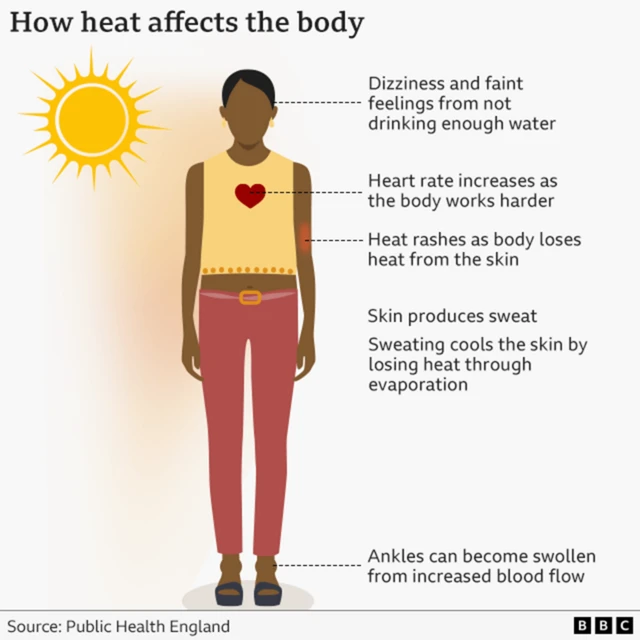
    Infographic titled “How heat affects the body.” A stylised illustration of a person stands beside a large sun icon. Dotted callouts label different parts of the body, explaining effects of heat: dizziness and faintness from dehydration; increased heart rate as the body works harder; heat rashes on the skin; sweating, which cools the body through evaporation; and swollen ankles due to increased blood flow. Source credited to Public Health England, with a BBC logo at the bottom.
  5. A foggy start for some, while early risers get in walks before heat hitspublished at 07:50 BST

    While many people were tucked up in bed, our Weather Watchers have already been seizing the day. Here are a few of the pictures they've captured this morning:

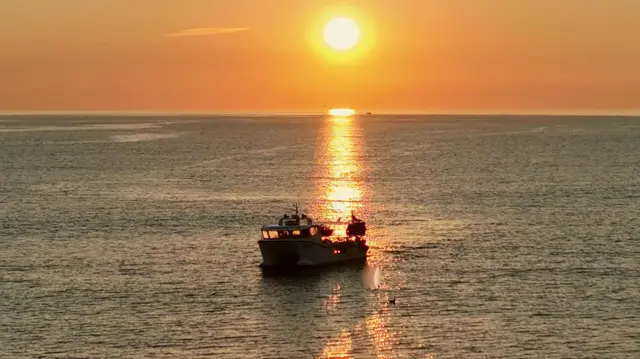
    A small boat floats in the middle of a vast body of water as the sun rises on the horizonImage source, BBC Weather Watchers / Alastair
    Image caption,

    An early start to the day for this sailor in Runswick, North Yorkshire

    A lone chestnut coloured horse eats grass in the middle of a field. It is foggy and there is a row of trees in the backgroundImage source, BBC Weather Watchers / John from Carmavy
    Image caption,

    But a more gloomy morning for some in Carmavy in County Antrim

    A Labradoodle type dogs looks at the camera while standing in a field during the sun riseImage source, BBC Weather Watchers / Fudge-PawCast
    Image caption,

    It was walks at dawn for this pooch in Oxfordshire

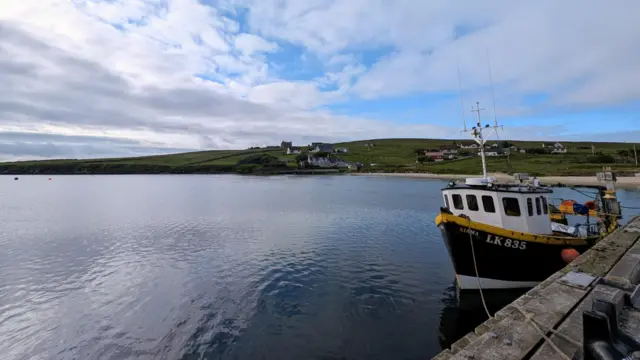
    A boat is moored in the water next to a wooden jetty under a cloudy sky. More of the coast can be seen in the background, with a beach and large swathes of green fieldsImage source, BBC Weather Watchers / Jeannie
    Image caption,

    While blue skies hide behind the clouds in the Shetland Islands

  6. Train services impacted by the hot weatherpublished at 07:16 BST

    The hot weather is affecting some rail services this morning. Here's what you need to know if you're just waking up:

    • East Midlands Railway says some of its trains may be cancelled or revised due to the hot weather and is advising people to travel only if their journey is essential
    • South Western Railway is also expecting services to be impacted, while Great Western Railway warns some services from London Paddington to Oxford will not run
    • London Northwestern Railway and West Midlands Railway are experiencing "heat related issues" affecting some of their services
    • Several c2c trains will not be running today due to the hot weather. You can find a full list on the National Rail website, external
    • Transport for Wales is operating a reduced service between Wrexham General and Chester. It adds services between Llandudno and Blaenau Ffestiniog will not operate from 07:30 BST

  7. The summer of 1976 - a record-breaking heatwave and a drought that swept the nationpublished at 07:05 BST

    A person in the fountains at Trafalgar SquareImage source, Getty Images

    As with a number of recent heatwaves, comparisons are being made to the summer of 1976.

    If you remember that summer, you might recall scorching temperatures similar to what the UK is facing today.

    Temperatures peaked at 35.9C (96.6F).

    England in particular saw multiple locations record 13 to 16 consecutive days above 30C. It still holds the record for the longest-lasting heatwave in the UK.

    As a result, a drought saw the driest summer since 1772, leading to the government appointing a minister for drought, and hosepipe bans strictly enforced through patrols touring the streets.

    The hot weather lasted until late summer, when thunderstorms brought rain - and flooding - to many parts of the country.

    September and October were extremely wet months, bringing an end to the drought.

    People in the sea in deckchairs in 1976Image source, Getty Images
  8. Another hot day - but don't expect records to be brokenpublished at 06:51 BST

    Jennifer Bartram
    Senior weather presenter

    Sunrise over Church Broughton in DerbyshireImage source, BBC Weather Watchers/@Mark Hallam
    Image caption,

    One of the BBC's Weather Watchers captured this sunrise over Church Broughton in Derbyshire

    We’re not expecting this current heatwave to break any records – but it is still going to be very hot, and the heat is going to be sticking around for quite some time.

    During June’s heatwave, temperatures peaked at 37.7C (99.9F) in Lingwood, Norfolk, smashing the previous June record of 35.6C (96F).

    Today we’re expecting temperatures to climb to 35C (95F) - still extremely hot but not breaking any records.

    Although temperatures will cool off a little into the weekend, many places will still reach the official heatwave thresholds through much of next week.

    People will no doubt be drawing comparisons with the long hot summer of 1976, where the UK saw 16 consecutive days above 30C – but this record isn’t likely to be broken.

    The highest July temperature recorded in the UK was during the unprecedented heatwave of 2022, where the mercury rose to an astonishing 40.3C (104.5F) in Coningsby, Lincolnshire.

  9. What’s today’s forecast?published at 06:39 BST

    Jennifer Bartram
    Senior weather presenter

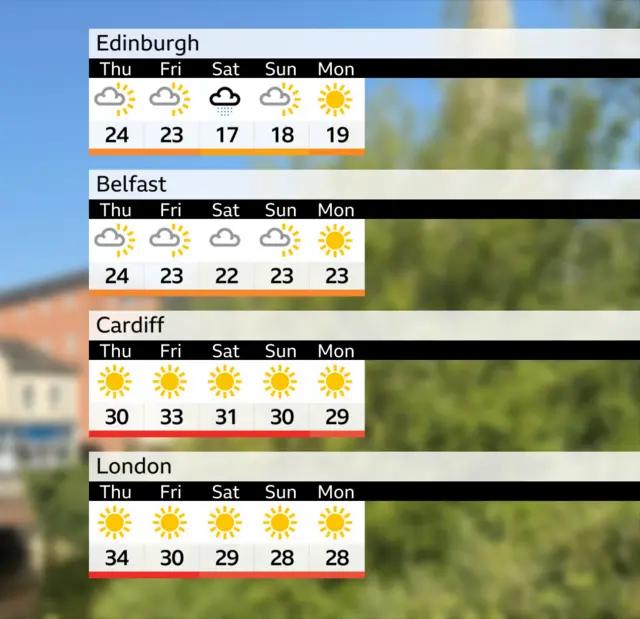
    A graphic showing temperatures for Edinburgh, Belfast, Cardiff and London

    Although some places may start off a little misty, it’s going to be another dry, sunny and hot day today, with high pressure continuing to drive this heatwave.

    How hot?

    Well, across England and Wales, we’re looking at temperatures in the high 20s or low 30s.

    The highest temperatures are expected to be 33-34C towards south-east and central southern England, possibly up to 35C in some areas.

    Far western and far northern England and west Wales can expect highs of 24-27C, and temperatures across much of Scotland and Northern Ireland in the sunshine will reach 22-25C.

    Not everywhere will feel the heat, though.

    Northern and western areas of Scotland will have a cloudier day today with the chance of some light rain, with temperatures here around 15-18C.

  10. Temperatures continue to climb during third heatwave of the yearpublished at 06:35 BST

    Jennifer Bartram
    Senior weather presenter

    Temperatures are expected to reach 35C (95F) today as the current heatwave spreads further north and west across the UK.

    The year's third heatwave, which began earlier this week, is not expected to break new temperature records, but the longevity of the heat will make it feel remarkable.

    The heatwave could be one of the longest lasting since the infamous heatwave of 1976. During it, England in particular saw multiple locations record 13 to 16 consecutive days above 30C.

    On Wednesday, temperatures peaked at 33.8C at Heathrow Airport in the strong July sunshine with Wales recording 31.2C at Cardiff Bute Park, Scotland seeing 29C at Aboyne and 27.1C at Helen's Bay in Northern Ireland.

    Amber heat health alerts are in place across parts the Midlands, eastern and southern England until 12 July, with yellow heat health alerts are also in force across northern England for the same period.

    Stay with us as we bring you the latest updates and advice on the hot weather throughout the day.