Summary

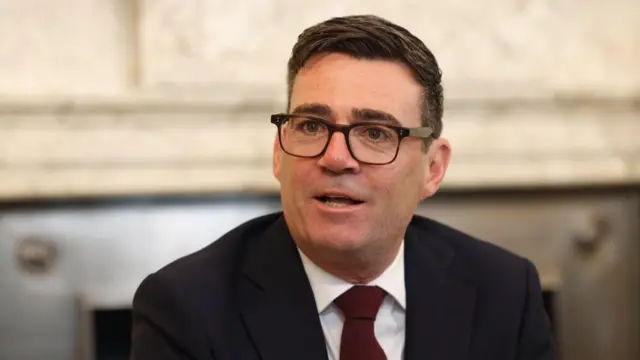
  • Most single bus fares in England will be capped at £2 from January, Prime Minister Andy Burnham announces

  • But Burnham has pulled back from a possible increase to the tax-free personal allowance - it has been frozen at £12,570 since 2021, and is not due to increase until 2031

  • A bus fare cap was first introduced in 2023 - it was initially £2, before rising to £3 in 2025

  • Burnham says: "Lower fares will help people get to where they need to – giving them breathing space to help with the cost of living"

  • The measure is expected to cost more than £500m – £454m will be reallocated from the Department for Energy Security and Net Zero, the government says

  • The bus fares announcement follows the government cutting VAT on household electricity bills yesterday. Our chief political correspondent writes Burnham is trying to strike a different tone to Keir Starmer's first weeks

  • Will the announcement help you? Tell us your views

  1. Fare cap 'not enough' to convince people to use bus instead of car, think tank policy chief sayspublished at 08:41 BST
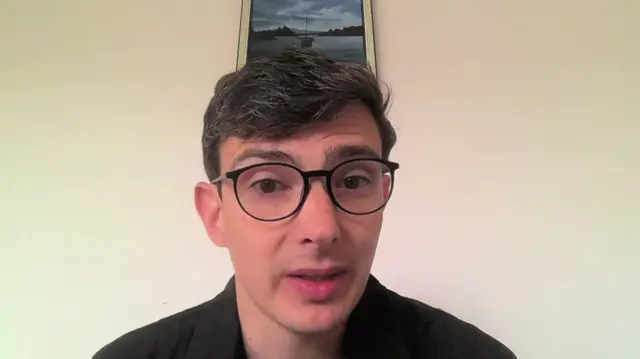
    Alex Chapman sits instead of a white wall with a painting at the top. He is wearing a dark shirt and glasses.

    Andy Burnham's £2 fare cap is "not going to be enough" to convince people to use the bus instead of a car, says the economics and environment policy chief at a British left-wing think tank.

    Alex Chapman of the New Economics Foundation tells Radio 4's Today programme that he was pleased to see the initiative being brought in so soon into Burnham's premiership, but that the money being spent on the policy, expected to be over £500m, is "very small in government terms".

    He adds: "The actual scale of this is very limited. It's really the reinstatement of a policy that we had only a couple of years ago."

    Chapman says he would love to see more ambition on cutting bus fares for youths, adding that a £1 bus fare cap would make the service "much more competitive" with the cost of a private car.

  2. Fare cap announcement applies to all areas of England outside Londonpublished at 08:31 BST

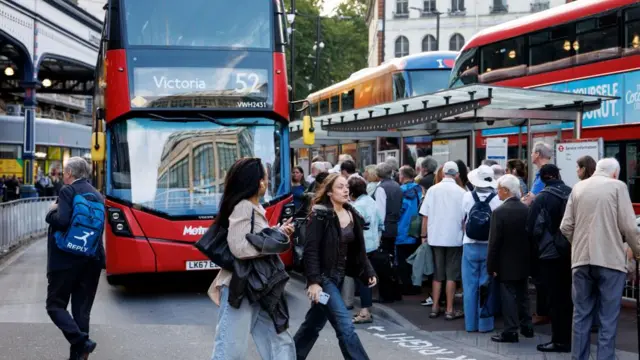
    People waiting to board a double decker London bus.Image source, EPA
    Image caption,

    Single bus fares in London currently cost a flat rate of £1.75

    The government's announcement of a £2 single bus fare cap applies to all areas of England outside of London.

    London has its own integrated transport system - Transport for London - which is part of the Greater London Authority, and chaired by London Mayor Sadiq Khan.

    Single bus fares in London currently cost a flat rate of £1.75. Earlier this month, the mayor extended a bus and tram fare freeze until 1 November.

    Most of England, not including London and Manchester, currently operate under deregulated bus networks, where private operators set fares (when there is no cap).

    In 2023, Manchester became the first place outside of London to introduce bus franchising - bringing buses back under public control - since privatisation in 1986. It was a key policy when Burnham was Greater Manchester mayor.

    The Labour government has brought in more powers for local authorities to take control of buses, and more mayoral authorities, including West Yorkshire and the West Midlands, now have plans to do so.

  3. Transport secretary speaking to Today programme - watch livepublished at 08:21 BST

    Transport Secretary Heidi Alexander is speaking to BBC Radio 4's Today programme about the £2 bus fare cap.

    You can watch the interview live at the top of the page.

  4. Will a £2 cap on bus fares help you?published at 08:09 BST

    You can get in touch in the following ways:   

    Please read ourterms & conditions andprivacy policy  

    In some cases a selection of your comments and questions will be published, displaying your name and location as you provide it unless you state otherwise. Your contact details will never be published.  

    A purple banner with the words 'your voice' in white writing.
  5. Burnham wants to improve public transport across the country - transport secretarypublished at 08:08 BST

    More from Heidi Alexander, who says Burnham's first priority in government is to "help with the essentials of day-to-day life".

    Alexander says a "high-quality, reliable" public transport network is "the backbone of successful local economies".

    She praises Burnham's work on public transport in Greater Manchester - more about that here - adding the new PM "wants to make sure" those sorts of services are available to people across the country.

  6. Transport secretary '100% sure' money is there for fare cappublished at 07:55 BST

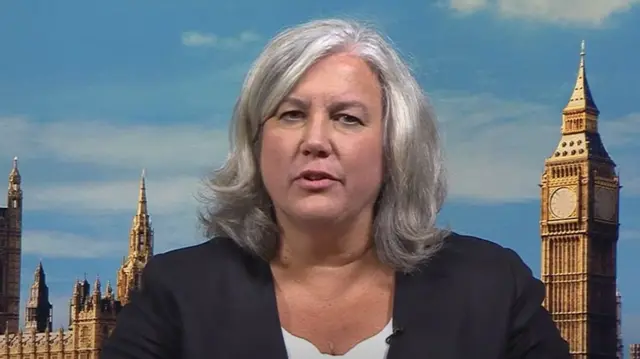
    Heidi Alexander speaking in front of a background of Parliament on BBC Breakfast

    Transport Secretary Heidi Alexander says she's "100% sure" the money is there to pay for this single bus fare cap.

    "There is £454m of re-prioritising money. It's switch spending, we're not going to be giving those grants for international climate projects in other countries. We're going to be making those loans instead so that money comes back," Alexander tells BBC Breakfast.

    Alexander's assertion follows disagreement yesterday over the allocation of money to pay for cutting VAT from electricity bills.

    The government previously said the £1.8bn cost of that measure would be paid for by scrapping Keir Starmer's planned digital ID scheme - but Labour MP Darren Jones, newly sacked from the cabinet, said that programme was "unfunded".

    Read our political editor's story.

  7. Burnham earlier pulled back on suggestion to increase income tax allowancepublished at 07:32 BST

    Harry Farley
    Political correspondent

    As our chief political correspondent writes, Andy Burnham has pulled back from suggestions about increasing the tax-free personal allowance.

    Burnham told the Times over the weekend that the "frustration about the personal allowance" he had heard while campaigning in the Makerfield by-election was "lodged in my mind".

    The prime minister then told reporters on Monday that "all of this will be looked at" in the next budget but conceded any change would be expensive and "difficult given the financial circumstances in which we find ourselves".

    Those close to Burnham have since told BBC News that any changes to the personal allowance are not part of his initial plan to tackle the cost of living.

    The £12,570 threshold has been frozen since 2021, resulting in more people being dragged into paying tax as earnings increase.

  8. Burnham told cabinet he would lead a 'cost of living government'published at 07:27 BST

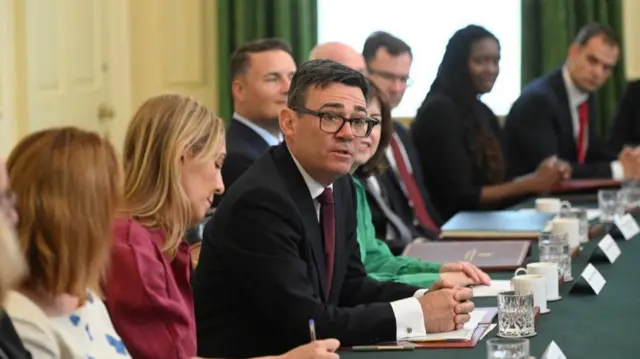
    British Prime Minister Andy Burnham holds his first Cabinet meetingImage source, Reuters

    Two early morning announcements in two days - and both have focused on the cost of living.

    That was the theme of his first Downing Street on Monday - and yesterday he told his newly formed cabinet they would be a "cost of living government".

    Burnham told ministers they needed to give people a sense “that help is coming”.

    This had also been a focus for Keir Starmer, who himself said every minute not talking about the issue was "wasted".

  9. Analysis

    Burnham's announcements a stark shift from Starmer's first weeks at helmpublished at 07:07 BST

    Henry Zeffman
    Chief political correspondent

    This is the second announcement in two days designed to give people what the new prime minister describes as “breathing space” against the cost of living.

    Combined with the tax cut on household electricity bills, it is clear that Andy Burnham is prioritising tangible measures which can be implemented quickly.

    There is a stark tonal shift, too, from Keir Starmer’s first weeks in office in which he emphasised how difficult things would continue to be (something which he later acknowledged was a mistake).

    The decision to reimpose the bus fare cap of £2 contrasts with Burnham backing away this morning from suggestions which he made as recently as Monday about the possibility of increasing the personal allowance – the amount people earn before paying income tax, which has been frozen since 2021.

    Backing away from that reflects that this is a new prime minister who has both made quite a lot of commitments and displayed a range of instincts on major policy questions.

    He talks of the biggest council house building programme since the postwar period, fixing social care on an NHS model, taking public control of utilities – and that is before you get to the level of defence spending implied by John Healey’s appointment as chancellor.

    This week we are learning the order of Burnham’s priorities. And perhaps now he has access to the civil service and to more granular advice about the state of the public finances, Burnham himself is learning which of his commitments are viable in the near-term.

  10. Bus reform was among Burnham's priorities as Manchester mayorpublished at 06:59 BST

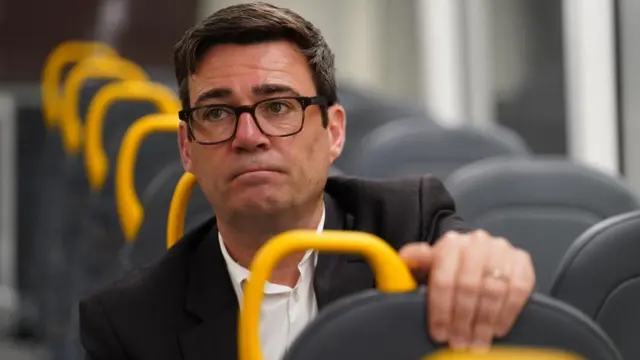
    Burnham sat on the top deck of a bee network busImage source, PA Media

    During his time as Greater Manchester mayor, Andy Burnham launched the Bee Network - a London-style network where all local bus and tram services are joined up and under local control.

    Public control of the region’s buses was rolled out in stages since the launch of the Bee Network in September 2023 - named after Manchester's worker bee.

    Manchester became the first area outside of London to have a locally regulated bus system since the 1980s, which Burnham called "a coming-of-age moment for English devolution".

    Single fares have been capped at £2 in Manchester for the last four years.

  11. ONS found Manchester bus cap helped boost bus usage but didn't score highly for value for moneypublished at 06:54 BST

    Katy Austin
    Transport correspondent

    As Mayor of Greater Manchester, Andy Burnham brought in a £2 cap in September 2022, at that point funded by money from central government.

    The £2 cap was initially meant both as a cost of living measure and to encourage people back on buses in the wake of the pandemic.

    The ONS said it played a role in reducing inflation in 2023, and it appeared popular. An evaluation of the first ten months - not published until 2025 - found that the scheme did contribute 5% of the 13% rise in bus usage during that period.

    Lower-income passengers felt the most financial benefit.

    However it didn’t score highly when it comes to value for money. How much money people saved varied depending how much fares in their local area cost before the cap.

    The Burnham government says a £2 cap should particularly help passengers in rural and coastal areas, where single fares can be higher.

  12. Shadow chancellor says government hasn't specified where money is coming frompublished at 06:44 BST

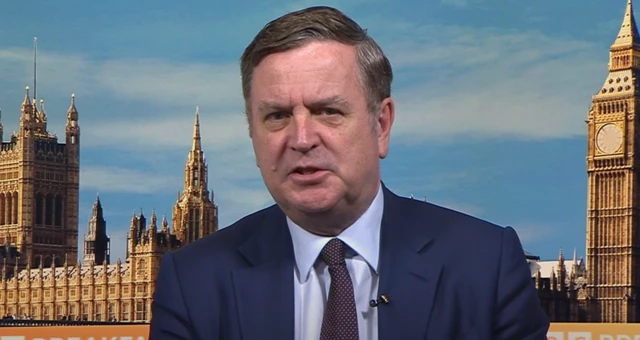
    Mel Stride speaking on BBC Breakfast

    Shadow Chancellor of the Exchequer Mel Stride accuses the government of "not actually specifying where the money is going to come from" for the bus fare cap extension.

    "That is a worrying sign, we need to have a government which is on top of the public finances, not one that is making lots of spending commitments without explaining where the money is going to come from," Stride tells BBC Breakfast.

    In the government's announcement this morning, it says the cap extension is expected to cost over £500m, and that £454 million will be reallocated from the Department for Energy Security and Net Zero.

    It says this will be used in addition to funds already earmarked by the Department for Transport for buses.

  13. Latest announcement comes after electricity bills pledgepublished at 06:40 BST

    This morning's announcement follows Burnham's government yesterday promising to cut VAT from household electricity bills from October through to the end of the financial year.

    That measure is projected to save people an average of £45 from their annual bill - and would be funded by reallocating funds through the cancellation of the digital ID programme.

    Questions were raised over whether those funds had yet been found for the digital ID programme - but Downing Street insisted the electricity bills change was "fully funded".

    "Departments were going to have to fund the Digital ID programme through their existing budget reprioritisation," a spokesperson said.

    "Departments will now direct these savings towards this."

    Business Secretary Jonathan Reynolds said the move would give people some "breathing space".

  14. Bus fare cap expected to cost over £500mpublished at 06:33 BST

    As with yesterday's announcement on cutting VAT from domestic electricity bills, the government has similarly said this measure will be paid for through a reallocation of funds.

    In this case, the government has said £454 million will be reallocated from the Department for Energy Security and Net Zero - £400m of which will come from switching investment set aside for international climate finance to loans and the remaining £54m from savings in the department's budget.

    This will be used in addition to funds already earmarked by the Department for Transport for buses.

    The total cost of the scheme is expected to be over £500m.

    Chancellor John Healey says: "This action to ease the cost of living is funded by savings made elsewhere, so there's no burden to British taxpayers, just pounds going back into their pockets."

  15. A £3 bus cap was due to expire in March 2027published at 06:25 BST

    A £2 cap was introduced by the Conservative government in 2023.

    Initially due to last only three months, it was extended until Keir Starmer increased the cap to £3 at the start of 2025.

    That cap had been due to expire in March 2027.

    This new cap will lower fares to £2 from 1 January.

    In Manchester, where Prime Minister Andy Burnham was mayor from 2017 until he became the MP for Makerfield last month, single fares have been capped at £2 for the last four years.

  16. 'No one should be priced out' of good transport links, Burnham sayspublished at 06:20 BST

    Prime Minister Andy Burnham.Image source, EPA

    Prime Minister Andy Burnham says no one should be "priced out" or "left behind" when it comes to affordable transport links after announcing bus fares in England will be capped at £2.

    "For too long people have said that cheaper transport isn't an option. I don't accept that. I've done it before and I will do it again now: a £2 cap on bus fares for millions across the country," he says in a statement.

    "Lower fares will help people get to where they need to - giving them breathing space to help with the cost of living."

  17. Most single bus fares in England will be capped at £2, PM announcespublished at 06:09 BST

    Most bus fares in England will be capped at £2 from 1 January in 2027, the government has announced.

    The reduction would see the cap on fares go down by a third from the current £3 cap.

    This is breaking news. We will bring you more detail as it comes.