Jiu jitsu helps pupils set boundaries and 'power of no'

 BBC
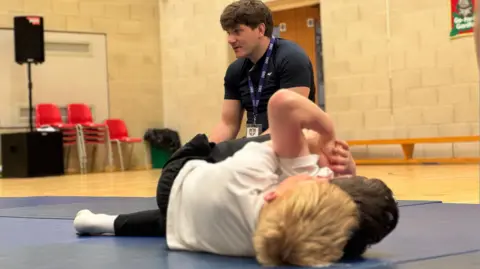
BBCA primary school programme inspired by jiu jitsu is helping children build confidence, resilience, and how to set and respect boundaries, a head teacher has said.
Victoria Road Primary School piloted the Grapple for Growth programme almost a year ago, run by jiu jitsu coach Callum Perry.
Teachers said children taking part had become more confident, more willing to speak up, and better able to regulate their emotions in challenging situations.
Head teacher Natalie Johnstone said: "We've seen a real growth in confidence for the children that have taken part so far. They're more likely to step out of a situation, take a moment, take a breath."
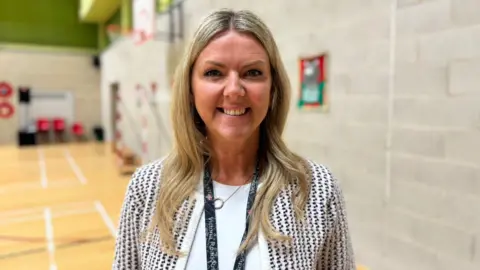
"They've learned the power of no" and the "acceptance of no as well", she added.
She said: "It's really important that children learn that from the offset and so as adults they have a better grasp of all of that."
Originally introduced as a pilot for pupils thought likely to benefit from improved emotional regulation and resilience, the programme has now widened to any students that are interested.
Inspired by the Brazilian self defence sport and martial art, the grappling games involve controlled wrestling, problem solving and teamwork, and staff said the effects had extended well beyond the classes themselves.
"It's important that they don't shy away from challenge but actually they just learn how to handle and cope with it," Johnstone said.
Coach Callum Perry said the idea came from research into rough-and-tumble play and emotional development, alongside his own coaching experience.
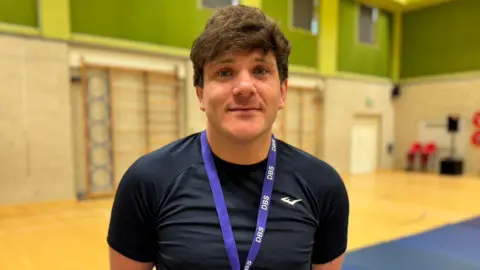
Perry said the programme was "not teaching martial arts necessarily", but instead were "games with the focus" that "let the children explore and play".
"What they're learning that we might not see on the surface is confidence, physical literacy and emotional regulation and control," he said.
'Tap out'
A key feature of the programme was the ability to "tap out", a familiar concept in grappling sports where participants signal they want to stop.
"It's essentially setting your boundary," Perry said.
If a child feels overwhelmed or uncomfortable, they can pause and return when ready, something he said was already translating into everyday school life.
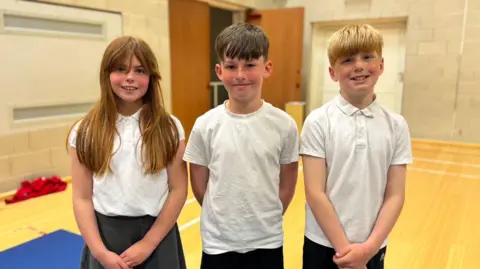
For pupils, the common thread of feedback was about "having fun".
Ten-year-old Lily said she enjoyed the energy of the games and it was about "just having fun", while Teddy described the classes as "fun to wrestle with each other".
Freddie said he felt like it was a safe space and he knew they could stop if needed.
Senior Education Support Officer Kelly Farragher said: "The biggest thing that I've noticed is the confidence, especially with the girls."
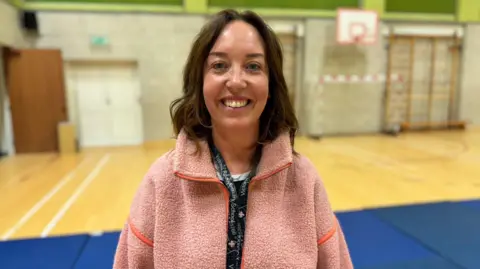
"They've grown from not speaking, to going up against the boys, and feeling overwhelmed, and then coming out the other side."
"The other week we watched them outside at playtime and they were wrestling and they were tapping out," she added.
The school is now hoping to expand the programme, with a growing waiting list of children hoping to take part.
"With anything that's new, you're always wondering if it's going to be as impactful as you hope it would be," Johnstone said.
"It's really lovely to see that this has made a difference to our children."
Read more stories from the Isle of Man on the BBC, watch BBC North West Tonight on BBC iPlayer and follow BBC Isle of Man on Facebook and X.