Alan-David Mundy is a fisherman from the Channel Islands who used to sell his lobsters all over the world until coronavirus closed the markets. He and his fellow fisherman have instead found a way of bringing their customers to them.
I don’t think anyone realised how much of an impact coronavirus would have. Of course there was worry – people were very worried. Jersey is a small community and there are not a lot of alternatives for people in terms of jobs or where they can get their food.
Normally, we’re able to export most of our catch but now we’re not able to. I think the vast majority of exports from Jersey go to Spain, France, Italy. Some make their way to China, I’m sure. Without that market fishermen are lost.
Now my fishing day has been cut in half because the only option we have is selling directly to customers.
I’ve been using a Facebook group called Jersey Alternative Fish Market for about four weeks now. I think it might have been running for longer. It was set up by a lovely gentleman called Jez Strickland. I don’t think he is a fisherman himself, just a member of the public with a big heart.
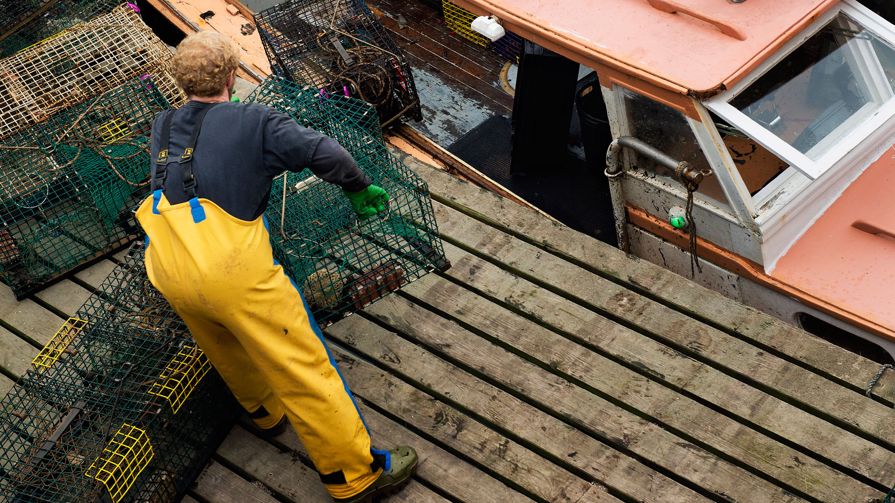
Fishermen who are unable to export their catch are building up local customer bases online (Credit: Getty Images)
Jez adds people to the suppliers list, and we say what catch we have each day. We go out, catch our catch, and now we can get the product out there on Facebook before we even get off the boat. Then people give us a call and come down to the marina to pick up the catch – crabs, shellfish, or I sell lobster.
I think the community support on the island has worked. We need some source of income. I’m just crew – but this helps pay people’s wages. We’re not able to export, as we would normally – but now we can sell it locally.
The local fish market is suffering as people stay away, so the customers are buying directly off the fishermen now


Is this going to carry on? Of course it will. Hopefully this means that every fisherman is going to have a little local customer base after this. You will get to know the fisherman and you will get to meet them. It could be great for us all.
I always say to my customers, if you don’t mind, send a little pic and I’ll put it on the Facebook group to show people how easy it is to use this produce. Cooking lobster is like cooking pasta. People are learning how to do it. I try to put a couple of posts on there and say “this is how easy it is for you”. People look at them and say “that looks nice”.
But there are people being affected. The export market to Spain and France has shut down – those countries don’t want to import our produce and that’s where most of it would go. The local fish market is suffering as people stay away, so the customers are buying directly off the fishermen now. I don’t think that is fair, the fish market is also a local business. There is cause and effect. Fishing is a big business and I only know a small part of it.
It has created a sense of community. I come from a generation where they could cook crab or lobster. People don’t know how to do that these days, but on Facebook they’re learning. People now want to go out to source food locally, which helps.
This interview with Alan-David Mundy, a fisherman based on Jersey, the Channel Islands, was adapted by William Park.
This article is part of Follow the Food , a series investigating how agriculture is responding to environmental challenges. Follow the Food traces emerging answers to these problems – both high-tech and low-tech, local and global – from farmers, growers and researchers across six continents.