How to make the ultimate chocolate chip cookie
By Edd Kimber
There's nothing quite like a homemade cookie. Follow these tips to get the perfect taste and texture…
What makes a cookie perfect?
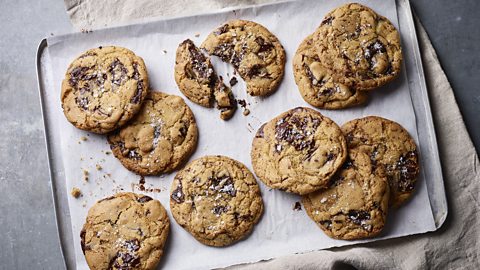
To me, the perfect chocolate chip cookie is rather like the unicorn of the baking world. It’s magical and mystical and somehow so elusive. To get those crispy edges and a fudgy centre, with beautiful chunks of chocolate and a deep caramel flavour, it seems almost too good to be possible.
The basic recipe for cookies is actually very simple, but there are subtle tweaks you can make to ensure you get those squidgy, melt in the mouth cookies just how you like them. Let’s talk cookie chemistry…
What makes the perfect chocolate chip cookie? Edd Kimber talks you through the process.
Butter is a big contributor to the flavour of a classic chocolate chip cookie. You can use other fats like coconut oil or vegan butters but the flavour will be noticeably different. Creaming the butter together with sugar will create lots of tiny air pockets which contributes to the depth of the cookie.
If you melt the butter, you can skip waiting for it to soften, but the cookie will spread more and be thin and crispy. You can take it one step further and brown the butter for an even more flavourful cookie. These are variations that make the cookie your own, so experiment!
Eggs are critical for that fudginess we’re aiming for. Without eggs, the cookie will be more like a shortbread. The eggs are binding the dough together – providing fat from the yolks that keep the cookie tender and they also give moisture which activates the baking powder helping them to rise.
Why two sugars are better than one
Most cookie recipes will suggest you use a mix of caster sugar and light brown sugar, and here’s why I like to use a combination of the two.
Using purely soft brown sugar will give a caramel-treacle flavour that can overpower the chocolate and the butteriness. It will also cause the cookie to spread less and have a softer texture.
Caster sugar contributes crispness. Using solely white sugar would lead to a thin, crunchy cookie. If thin and crispy is the texture you prefer you could use golden caster sugar which will contribute a little of the molasses flavour found in brown sugar, but plenty of crunch.
Combined, caster sugar and light brown sugar give a great flavour and texture, the caster sugar will help create crisp edges and the brown sugar will contribute to a soft and chewy centre.
Be gentle
While we’re not talking about bread, we are going to talk a bit about gluten. Over-mixing your dough will strengthen gluten networks, potentially tipping it over into tough territory.
When making cookies we want a little chew but we don’t really want to make something overly chewy. We are looking for that perfect balance between crisp, tender and chewy.
Because the cookie is made with a high proportion of butter we don’t need to worry too much about developing gluten but it is still good practice to mix in the flour just enough until a dough is formed. If you’re using an electric mixer, go easy. Likewise, just mix in the chocolate briefly until it’s distributed evenly.
Related stories
Let’s talk about chocolate
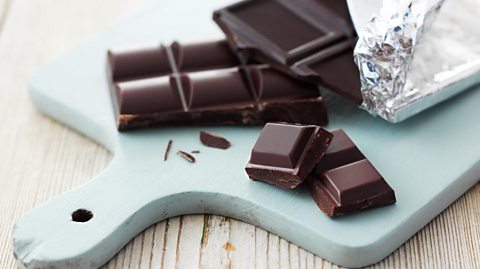
You could go old school and use a bag of chocolate chips, but generally speaking the chips available in supermarkets are made with more sugar and a low percentage of cocoa butter. This means the chocolate holds its shape as the cookies bake, and won’t give you that lovely, oozy melted chocolate.
I prefer to either roughly chop a bar of good quality chocolate or use chocolate that comes in discs/callets. A chopped bar of chocolate can give a variety of shapes and textures meaning each bite of the cookie will be a little different, it also creates my favourite look for a cookie.
Discs or callets are what many bakeries will use for ease and quality. The shape and size means the chocolate doesn’t need chopping, it can simply be measured and added straight to the cookie dough.
I like to use dark chocolate because the bitterness balances out the sweetness of the cookie, but some people prefer milk chocolate. The higher quantity of fat in milk chocolate (or cheaper dark chocolate) may melt into your cookie and make it slightly flatter.
This may sound obvious, but choose a chocolate that you love, if you don’t love the chocolate before it goes into the cookie it’s not going to magically transform into something else in the oven! Cookies should be unapologetically sweet, but for me, a little sprinkling of flaked sea salt just before you pop them into bake is essential to highlight the chocolate flavour.
If you take one piece of advice away from this article…
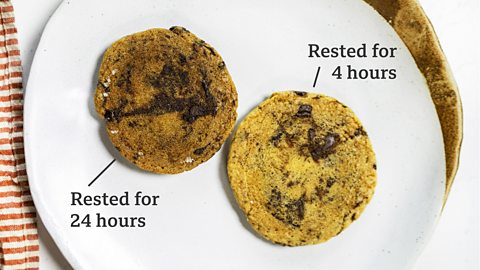
Rest. Your. Dough. For 24 hours if you can. I can’t stress enough what a difference this will make to the consistency and flavour of your cookie. It will allow the flour to hydrate and soak up the liquid from the eggs, creating a dough that will caramelise more as it bakes, giving you a beautiful depth of caramel-y flavour. As the flour in the dough hydrates you’ll also find the cookies spread less.
You can get away with resting for just a few hours if you really can’t wait – but for the ultimate chewy cookie with an intense butterscotch flavour, let it rest longer and you’ll be amazed by the results.
The optimal baking time
Baking times are key to the final texture. Leave them in the oven too long and you’ll end up with crisp cookies – still nice, but not what I’m going for.
You want to remove the cookies from the oven when they look lightly browned around the edges but still pale in the centre. This is essential for those crisp edges and soft and gooey centre. I’ve put recommended bake times in my recipe, but really try to be guided by visual clues as all ovens are different. It will also depend on the size of your cookies.
When they come out of the oven the cookies will be very delicate and will fall apart if you try to move them immediately, so give them a minute before you transfer them to a rack to cool. But if they cool on the tray, they’ll continue to firm up in the heat and become crispy.
Three variations on the master cookie dough
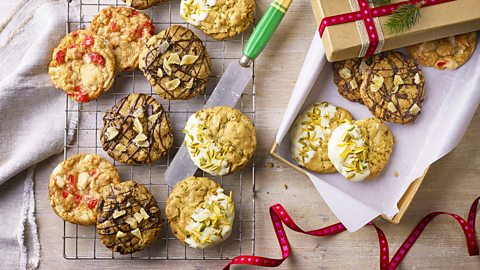
Cherry and marzipan, dark chocolate and ginger, orange, pistachio and white chocolate
Experimenting with flavours
Your favourite chocolate chip cookie could include nuts, multiple types of chocolate or other flavourings. If you omit the chocolate you’ve got a great starting point for all manner of other cookie recipes.
You can be relatively cavalier and experimental when it comes to chucking things into this cookie dough, but be aware that for this recipe 250g of additional ingredients is the limit – anything above this will start to affect the texture and bake of the cookie. It’s also worth noting that should you want to make two flavours of cookie, you can simply the split the finished dough in half and add different mix-ins to each portion of cookie dough.
Giving the cookies a finish is another way to customise them. I’ve experimented with drizzling them in chocolate and dipping half in white chocolate, which not only tastes great, but makes them look lovely, so they could even make a thoughtful Christmas gift.
Originally published December 2022