How can we save Britain’s pubs?
Ever since the health crisis saw pubs shut in March, there’s been concern about how many will survive into next year. But for a lot of landlords, problems started before Covid-19. For his new TV series, chef and pub owner Tom Kerridge spent time with some of those whose livelihoods are at stake.
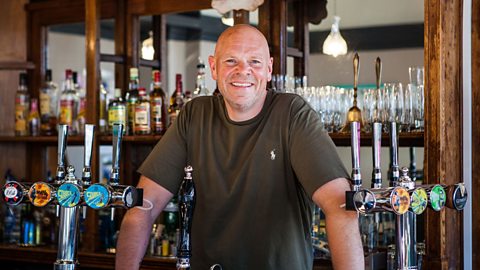
The hospitality industry stopped in its tracks in late March, with pubs, restaurants and cafes shutting overnight. Tom Kerridge was watching on with two very different roles, as a pub owner trying to keep his businesses afloat and as TV presenter and industry expert on new BBC Two series Saving Britain’s Pubs with Tom Kerridge.
Later in the year, on the day Tom was told – along with the rest of the pub and restaurant industry – that his businesses would have to close by 10pm each day, we sat down to talk to the Michelin-star chef.
Pubs were struggling before the pandemic
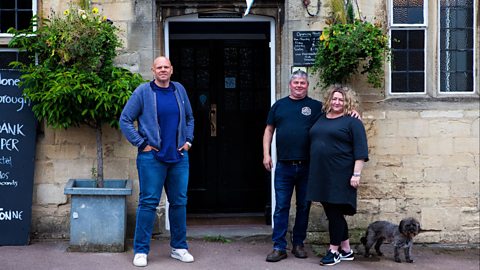
Initially, Saving Britain’s Pubs was going down a different path. Tom had been filming with four UK pubs, all struggling for different reasons. But halfway through production, while the pubs were implementing his advice, Covid-19 struck. So why did Tom sign up to the programme?
“I wanted to showcase the fight pubs are up against, because it’s not the same blanket problem. Different issues affect different places.
“There are so many reasons why it’s hard, but one main issue is people’s attitude to profit margin. When you open a pub as a landlord, you’re trying to create an environment and you lead by passion. It’s a way of life you fall in love with. But quite often the business side of it can become secondary to what you’re trying to create”.
Then the problem escalates, as without a profit margin you can’t adapt your business when needed: “development and growth – that all costs money”, says Tom.
In episode one, we’re introduced to three of the pubs. In South London, one pub has become a community hub for a very small group of customers and the landlord wants to appeal to a wider clientele. Down in Cornwall, another pub finds its layout isn’t making use of its prize asset. In Stroud, a pub which doubles as a music venue has a problem linked to the price of its booze and its business model.
Pubs are diversifying
Whether it’s having a food menu (which became particularly important when it enabled pubs to stay open in areas with Tier-3 Covid restrictions, requiring pubs to close unless they served ‘substantial meals’), or providing a space for community events, in this series we see just how important it is for pubs to offer something extra.
Tom knows this first-hand, as one of his pubs doubles up as a butcher during the day. “It’s solely sat as a butcher right now. We haven’t been able to get it to re-open to operate as a pub just yet, and with the latest measures it doesn’t look like we’re going to be able to anytime soon. So survival is now hinged on it being a retail unit, which is fine. It’s working well and that’s the way we’re looking at it moving forward.”
It’s not all about money
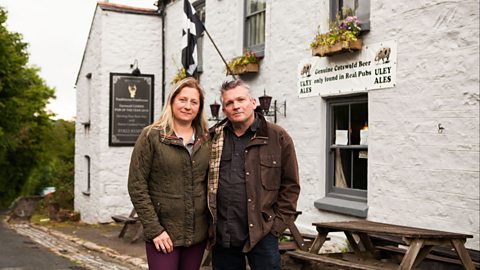
On the programme we learn one landlord receives a salary of just £75 a week – despite working long hours. Tom admits that when he and his wife started out, they were on a similar salary. “Nobody goes into pubs to make money, because there are lots of easier ways. If you’re working 100-hour weeks, there are easier ways to make money than hospitality. You have to do it because you love it.”
The impact of the pandemic on pubs
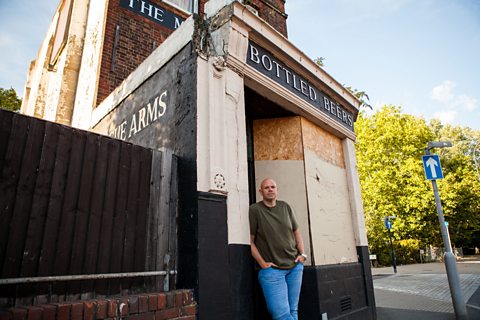
At the end of the second episode we see pubs preparing to relaunch, but just a few weeks later many in the industry came to a standstill again. “Something that makes the series very special is that we were in it as it was happening. You can’t foresee that, you can’t capture that or plan that from a television point of view”, says Tom.
The cameras kept rolling during lockdown 1.0, and Tom and the landlords became a support network for each other. “It started off with me talking to four pubs and being able to use my expertise within the business. It turned into something very, very different.
“The moment lockdown came in, I was in the same position as them – now, we are all in the same boat and in it together. All our businesses are up against it.”
All the businesses featured managed to reopen. “We’re talking about how we survive until next year. But we’re all still here”, says Tom. However, he is quick to point out the health crisis will have pushed many of the nation’s pubs to a point of no return.
“Lots of pubs who shut their doors will not re-open. Profit margins are very, very small [in hospitality], and even the… best run businesses won’t make a huge amount of money, just enough for survival, a little growth, and a lifestyle of buying into an industry you enjoy very much. If you’re making less money than when you were shut, there’s no way you can pay back money you needed to borrow to re-open.”
Tom’s advice to the public
As the conversation draws to a close, Tom has advice for those who, like him, are trying to survive in a worrying climate. “We’ve got to adapt and go into survival mode. Look at where you’re spending money and at your profit and losses. Look at where you can tighten your belt and streamline on all those costs. I think that’s really, really important.”
Before lockdown 2.0, Tom said, “As for the public, if you don’t use those pubs, they won’t be there… If you don’t just call in for a couple of pints every now and then, that pub’s not going to be there. They need your help to survive, please support your pubs.” In a recent move, some pubs are offering takeaway beer as well as meals during lockdown 2.0, giving us more ways to support them.
Saving Britain’s Pubs with Tom Kerridge is on BBC Two on Thursday evenings at 8pm from 12th November.