Why to eat Moroccan food right now
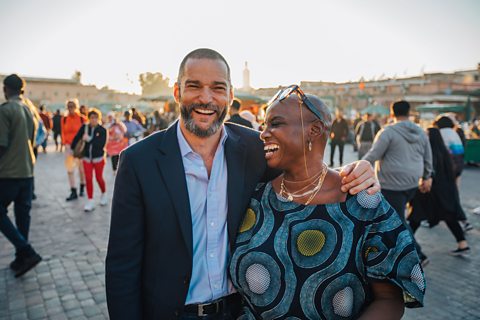
“I don’t need to watch the programme back on TV, I want to be there right now, on the roof of El Fenn, with the sun pouring down. It’s just so beautiful. If I could wiggle my nose and get myself there at the drop of a hat, I’d do it.” Cook and presenter Andi Oliver is gushing over Marrakesh, and in particular its food.
It’s fair to say the Moroccan city’s cuisine needs a spokesperson or two – it has been criticised by tourists and experts alike. So Andi is ready to set the record straight. She takes Fred Sirieix on a food journey to the city in BBC Two’s Remarkable Places to Eat. And below, Executive Chef at Marrakesh’s L’mida restaurant, Nargisse Benkabbou, shows how you can easily cook Marrakesh’s most popular dishes at home.
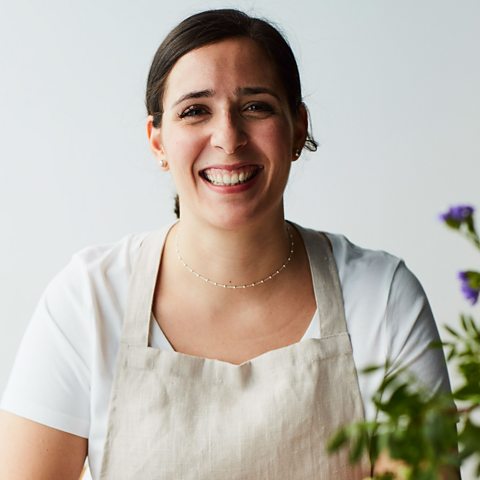
Cooking Moroccan food “can be very simple”
Moroccan cuisine is arguably best known for its tagines and slow-roast lamb, and for adding dried fruits to savoury dishes. But you don’t need specialist equipment or skills, or time for lots of chopping and simmering, to replicate it at home, according to Nargisse. “Don’t worry about how difficult a dish is before trying it. Moroccan cuisine can be surprisingly simple”, she says.
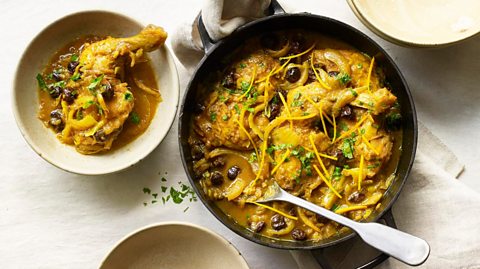
Chicken tagine, the brunch classic shakshuka and spiced roast lamb are already popular with home cooks. “A traditional tagine takes 5–6 hours to cook in a tagine pot, but modern Moroccans use regular casseroles, pots and even pressure cookers to save time”, says Nargisse.
So what could you try cooking beyond these classics? “Moroccan food is so diverse. We have many salads and starters, such as zaalouk (aubergine dip), grilled pepper salad and briouates (stuffed filo pastry). I also always like to mention bastilla, which is a sweet and savoury pie made of filo pastry, chicken, eggs and nuts”, Nargisse continues.
Try to stock up on a few things if you plan to cook Moroccan dishes. “If you have ras el hanout, cinnamon, ground turmeric, ground ginger, canned chickpeas, garlic, onions, dried fruits and honey, you can make a delicious tagine at any time”, she says. But don’t panic if you don’t have the right meat or vegetables for your tagine. “You can always swap a protein or vegetable with another one.”
How can you find the best food in Marrakesh?
When we are able to travel abroad again, where should we be eating in Marrakesh? “If someone came to London and ate fish and chips at Piccadilly and thought that was English food, it just wouldn’t be representative. If you get out of that centre and find a great chip shop on the Essex Road, then bingo! That’s what you want”, says Andi.
In Remarkable Places to Eat, we see Andi and Fred discuss how criticism of Marrakesh’s food is centred around the iconic medina – a labyrinth of small narrow streets filled to the rafters with shops and cafes, with a large market square in the centre which from late afternoon is packed with food stalls.
“It’s very easy to eat a rubbish tourist tagine there. You just have to step outside of that market and tourist catchment. For me the way to discover the best places is through people. When you’re in a shop, chat to people and ask for their recommendations”, says Andi.
Slow-roast lamb and food so good it makes you cry
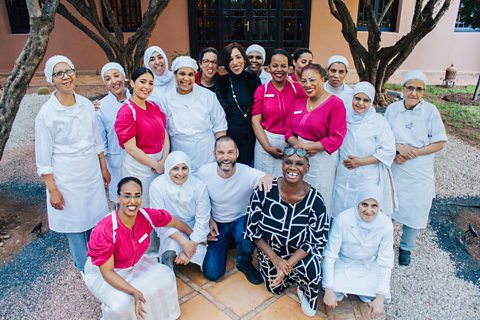
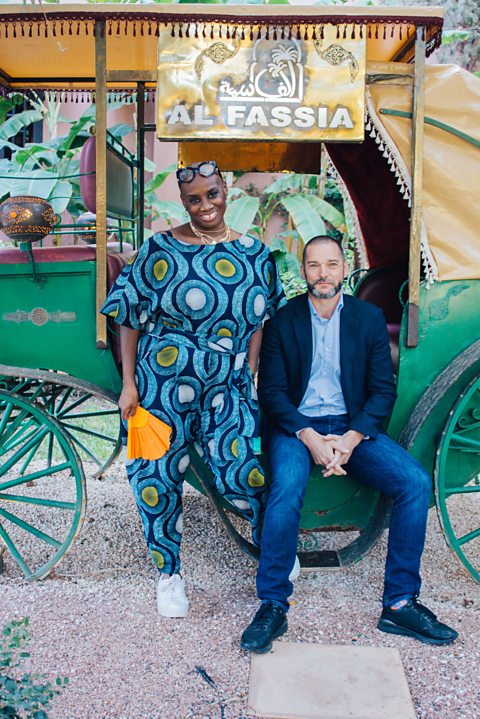
Andi is keen to show Fred the food of Marrakesh is of the highest quality. So they head to Al Fassia – a restaurant out of the city centre and run by two sisters.
“It’s just the most extraordinary place. The sisters that run it are the most beautiful women”. Andi has pre-ordered their food, including slow-roast lamb with almonds and caramelised onions. When eating it, she starts to cry because she loves it so much, and she explains this isn’t the only time she’s shed tears there. “I just found it all so incredibly moving. How they [the chefs] do what they do every day, in this beautiful, quiet, intimate way.”
Breakfast Marrakesh-style
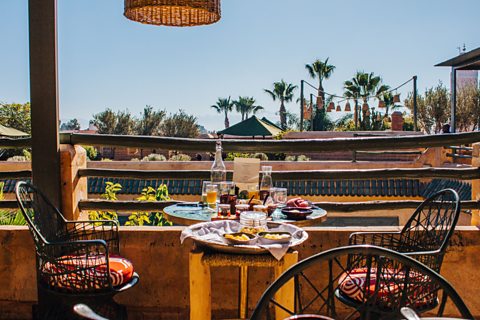
The second eatery they visit is a former palace, which is now a high-end hotel: El Fenn. Andi has discovered that non-hotel guests can have breakfast on the roof terrace too.
Here we are introduced to Moroccan breads beyond the familiar French-influenced baguettes and flatbreads – batbout and harcha. They are thick, almost bun-like, and include semolina flour, which gives them a crumbly texture. You can see on-screen just how satisfying they are.
Andi and Fred spread a delicious almond butter on the bread – homemade on the premises using local ingredients. That’s just the start. Fred orders shakshuka, while Andi opts for a light and fluffy omelette which comes filled with dried lamb.
What really impresses the two is how important the local community is to the restaurant.“They’re very good at making sure the money coming in is spread throughout the community… The dairy comes from just outside, the lamb from a local farm, the bakery is right on the corner, the fabric for the cushions is woven just down the road”, explains Andi.
The secret of a great tagine
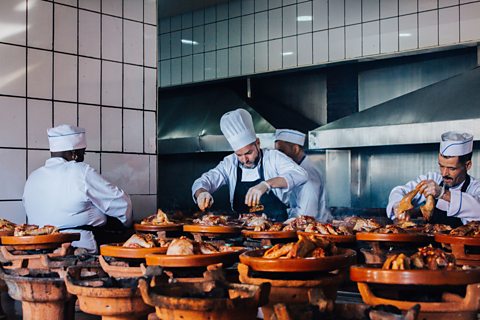
Next up is a service station. Yes, you read that right. Andi and Fred pull up to a roadside cafe. Fred looks confused, but Al Baraka really is a locals’ favourite – and for one main reason: its chicken tagines.
“The heat is distributed through the tagine pot in a particular way, so where you place the chicken, olives, garlic, the spices, how much water goes in, every tiny bit of nuance is really important because it changes the flavour and you have to do it right”, says Andi.
Andi and Fred don their chef’s whites and lend a hand, but it’s a nerve-wracking experience. “We were thinking ‘we have to get it right, we don’t want to mess up their 10,000-year-old recipe’”, she continues, laughing as she thinks back to being VERY closely monitored.
Arabic, African and French flavours in sweet treats
The final destination on the trip sees them visit a patisserie. Proving there are hidden gems even in the medina, they choose Corne de Gazelle, which serves up bite-sized sweet treats. “It’s a mix of the Arabic world, the African world and the French-European world, all within one tiny bite. And it is a case of, ‘Oh I’ve eaten so much I can’t eat any more, oh okay well maybe just one tiny little bite’.
“I mean, they are incredibly sweet and I don’t have a massively sweet tooth. But they’re perfect because it’s just one bite of complex sweetness. It’s nuts, dates and molasses and then you’re done”.
Here their trip ends, but having highlighted how rich and diverse Marrakesh cuisine is, there is only one negative. Fred finishes the trip by showing his dance moves, while Andi looks on horrified.
Why Andi keeps returning to Marrakesh (and its food)
“I went there when I was much younger. It was just one of those places me and my friends would visit”, Andi muses. “It’s a really fascinating place. It feels like all the world is in Marrakesh. If you stand there long enough, you’ll probably see and meet everyone you need to meet.”