Race Across the World: Eat the route!
Take your tastebuds on an Asian adventure inspired by the route of the most recent series
The newest series of Race Across the World is underway on BBC One (catch it on Wednesdays at 9pm, or anytime on iPlayer). This beloved cross-continent dash is really heating up with the finish line – and that £20,000 cash prize – in sight.
The determined duos have been making their way across Asia, snaking through China, Nepal and India.
It almost sounds like a dream foodie holiday, until you’re hit with the reality of the small budget they’re given: £1,000 per person for travel, food, accommodation and everything else they need to fork out for along the way.
There has been a modest peppering of envy-inducing, authentic Asian meals, but they are few and far between, coming courtesy of friendly locals who’ve taken pity on the travellers with home-cooked food.
The rest of the time? They’ve been living off whatever they can spare the change for. It’s no surprise, then, that instant noodles have been a solid fixture.
Sure, the contestants might have to forego the region’s best eats, but there’s nothing to stop us taking you on a delicious journey through the RATW route. We’ll reveal the local specialities of each region and show you how to explore this part of the world through food.
China
The starting line: Beijing
“Dumplings, noodles and steamed buns are staples here,” explains food writer Angela Hui, author of Takeaway: Stories from a Childhood Behind the Counter.
“This is warming comfort food as it gets quite cold. The flavours aren’t overly spicy, but there’s lots of soy sauce, vinegar, garlic and spring onions involved.”
Place your order: “Some dishes have this grand, banquet-y feel to them, but they’re part of everyday eating now. Peking duck is the obvious one. Crispy skin, thin pancakes and sweet bean sauce.
“Then there’s zhajiangmian, a kind of Beijing-style spaghetti with a thick fermented bean paste and lamb hotpot, which shows the Mongol influence.”
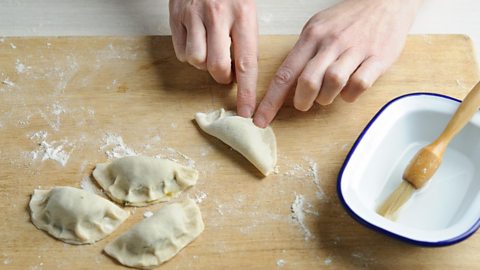
Chinese potsticker dumplings
Dumplings are popular in Beijing
Checkpoint 1: Jiangxi Province
You’d be forgiven for not having heard much about this region’s food, but, as Hui says, “it deserves way more attention.
“The spice isn’t like the numbing heat you get in Sichuan. Instead, it’s straight chilli heat – fresh, dried or pickled – and they use it generously.”
In fact, Huangling, which the contestants have to travel to for the checkpoint, is famous for its rooftop displays of chillies, laid out to dry in the sun.
“The local cooking style is called Gan cuisine and it’s all about intense flavours, lots of oil and salty, savoury hits.”
Place your order: “One of the most well-known dishes is stir-fried cured pork with dried bamboo shoots. The pork is smoky and salty, the bamboo shoots are chewy and earthy and the whole thing is cooked in chilli oil until it’s properly punchy.”
Race Across The World. video
Watch series five of Race Across the World on BBC One at 9pm on Wednesdays or catch up on BBC iPlayer

Checkpoint 2: Hainan Island
“The island vibe really comes through in the food here,” says Hui. “It’s lighter, fresher and all about clean flavours because it’s tropical and surrounded by sea. There’s loads of seafood, coconut and tropical fruit in the cooking.”
Place your order: “The most famous dish is Hainanese chicken rice. It actually became more well-known abroad, especially in Singapore and Malaysia, but it started in Hainan. It’s poached chicken served with rice that’s cooked in chicken fat and broth, along with a dipping sauce made with ginger, garlic and chilli.
“It looks simple, but it’s all in the detail: the texture of the chicken, the fragrance of the rice and the balance of the sauce.
“There’s also lots of congee, tropical-style stir-fries and soups that feel light but still comforting.”
RATW contestants Brian and Melvyn are in for a treat with a home-cooked meal – catch up on BBC iPlayer
Checkpoint 3: Yunnan Province
“Yunnan food is earthy and full of character. It’s a mash-up of Chinese and Southeast Asian flavours, thanks to the province’s location near Vietnam, Laos and Myanmar,” explains Hui.
“You get lots of herbs and mushrooms, and there’s a real love for sour and spicy tastes. The food isn’t just one style, because the region is so diverse.
“You also see a lot of cured ham, goat’s cheese and chilli-pickled vegetables. The food has a sour edge, often from pickles or citrus and there’s always a fresh punch from herbs like mint, coriander and lemongrass.”
Mushroom and broccoli stir fry
Use mushrooms in a stir-fry
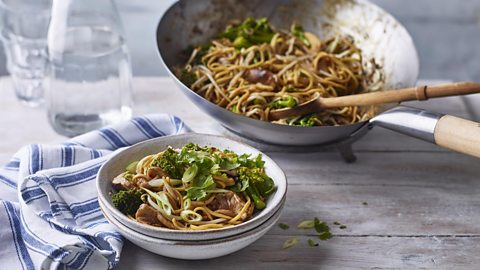
“Mushrooms are a huge thing in Yunnan. There are so many wild varieties that get used in everything from stir-fries to soups. When mushroom season hits, it’s a big deal.”
Place your order: “One of the standout dishes is guoqiao mixian or ‘crossing-the-bridge’ noodles. It’s a big bowl of hot broth and you add raw meat, vegetables and rice noodles.”
Nepal
Reset: Kathmandu
“Nepali cuisine is warm, bold and full of heart,” explains Niti Karki, chef and owner of Manchester café, Momo Shop.
“From India, we’ve embraced rich spices and lentils, from China, techniques like stir-frying and noodle dishes. And, from Tibet, we’ve inherited dishes like momo, a beloved dumpling that started as a Tibetan dish but has become a staple in Nepali food culture.
“Nepali people love spicy food – not just heat, but layered, flavourful spice like garlic, ginger, cumin, chilli, turmeric and timir (Nepali Sichuan pepper) are essentials in most of our family kitchens.”
Place your order: If you find yourself in a Nepalese restaurant, you’ve got to go momo – meat or vegetable dumplings that come steamed or fried. “Buffalo, chicken and veg are the usual fillings,” says Karki.
India
Checkpoint 4: Uttar Pradesh
If the Race Across the World teams were going to take the time to make some dishes from state capital Lucknow, they’d absolutely come in last.
Rohit Ghai, chef of London’s Kutir restaurant, explains: “The food is heavily influenced by Mughlai and Awadhi cuisine and with Awadhi food, most of the recipes are lengthy and time consuming. But it’s worth every minute. The dishes taste so good and the flavours are outstanding.
“Dal, roti, subzi (stir-fried vegetables) and rice are essential daily foods for the locals. Pooris and kachoris (both deep-fried snacks) are special occasion treats too.”
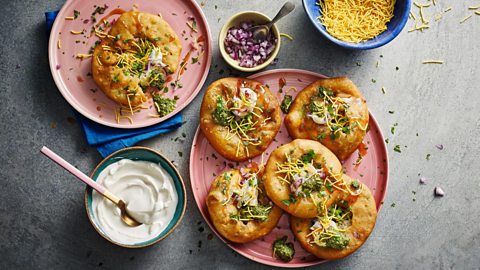
Kachori chaat
It's hard to go wrong with deep-fried pastry!
Place your order: “Dum biryani, kebabs and kulcha nihari are really great choices,” says Ghai. “Associated with royal cuisines, the meat stew called kulcha nihari is worth seeking out. It takes five hours to prepare though, so it’s often saved for special occasions.”
Checkpoint 5: Himachal Pradesh
The contestants will need comfort by this leg of the race, but will they have time to get it from Himachal Pradesh cuisine?
Chef Jolly from London’s The Great Indian gastro pub explains: “It’s a cuisine built around hearty, nourishing dishes that bring warmth and comfort, using locally sourced ingredients like lentils, yoghurt, river fish and seasonal vegetables.
“What makes Himachali food truly special is its simplicity combined with layers of subtle, aromatic spices – not overwhelming, but deeply satisfying.”
Place your order: Jolly recommends “Chha gosht, a beautiful lamb curry from Chamba made with yoghurt and roasted gram flour. The richness of the mutton, the tang of the yoghurt and the earthy warmth of the spices make it unforgettable.”
Checkpoint 6: Gujarat India
Can’t take the heat of some spicy Indian dishes? Gujarat food could be right up your street.
“Some Indian cuisines lean heavily on heat or richness, but Gujarati food is lighter and milder,” says Mehak Kansal of Bindas Eatery and author of the cookbook Bindas.
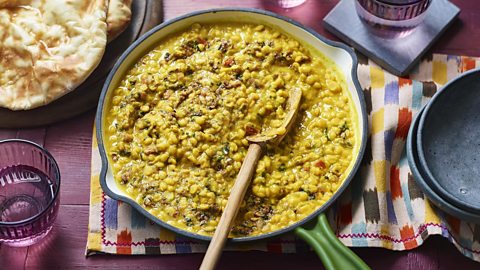
“It’s primarily vegetarian focused, with meat, fish or eggs rarely consumed, plus the dishes are deeply seasonal. A perfect example would be a plate of chana daal, steamed basmati rice, fried papad, lime pickle and yoghurt.”
Easy chana dal
Chana dal is simple, tasty and comforting
It’s worth noting it’s unlikely you’ll find garlic or onion on the menu – that’s due to the influence of Jain and Vaishnav traditions, says Kansal.
Instead, “jaggery or sugar, chillies, lemon, curd, yoghurt and tamarind are core ingredients.”
Place your order: “Steamed dhokla. This savoury cake’s made primarily from a fermented batter of gram flour (besan) or rice and lentils and is one of the most iconic snacks from Gujarati cuisine.
Checkpoint 7: Goa, India
So close, yet so far! The teams aren’t quite at the finish line but will make their way there via the state of Goa. If only they could take time to appreciate the food, which is “deeply influenced by its Konkani roots and over 450 years of Portuguese rule,” explains Jolly.
“The food is vibrant and rich, featuring ingredients like seafood, coconut, rice and a variety of spices. The flavours are bold, with the tanginess of kokum and toddy vinegar being key characteristics.”
Goan fish curry
Any white fish will suit a Goan fish curry
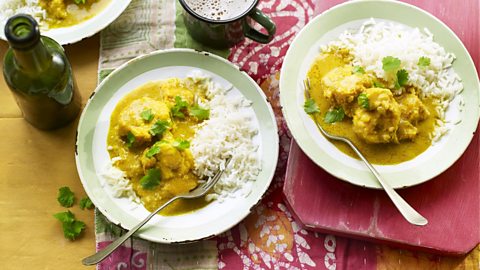
Place your order: “Fish curry rice (kadi or ambotik) are staples in most Goan households,” he explains, but adds there are some Goan-influenced dishes that could surprise you. “We cook pork belly sliders because the Portuguese brought ingredients like pork and various cooking methods to Goa.
“The rich, tender pork belly with its crispy texture is a perfect example of how these traditions have been adapted and celebrated in Goan cooking.”
The finish line: Tamil Nadu
All good things must come to an end – including this most mouthwatering trip. Here’s hoping the contestants get to try this region’s tangy, vibrant and varied food once the race is over.
Chef Peter Joseph owner and head chef of London’s Kahani, says the cuisine here matches the region: “Colourful and diverse.
“It ranges from the mildly tangy taste of sambar (a lentil curry) to the hot and spicy notes of rasam (soup). It’s all about rice, lentils and spices like tamarind, coriander, chilli peppers, cinnamon, curry leaves and cardamom, as well as coconut.”
Place your order: “Dosa and idli are iconic dishes enjoyed across Tamil Nadu. People love them because they have a unique combination of textures – light, soft and crispy all at once. They’re made from fermented batter of rice and lentils.”
Whether you’re planning a food-drenched trip abroad or just a takeaway, now you know what to order to get a taste of what the RATW contestants can only dream of.
Watch Race Across the World on BBC One, Wednesdays at 9pm or catch up on BBC iPlayer
Originally published May 2025
Want more? Visit BBC Food on Instagram, Facebook and Pinterest or watch the latest Food TV programmes on BBC iPlayer.