The most popular puds of the Queen's reign may surprise you
We've seen a lot of dessert crazes over the last seven decades, but which have stood the test of time to stand at your Jubilee party?
In The Jubilee Pudding: 70 Years in the Baking Jemma Melvin’s Lemon Swiss roll and amaretti trifle won the title of the Platinum Pudding. Like the Victoria sponge it celebrates this special moment in the Queen's reign, but will it sustain the popular vote over time?
Perhaps history holds a clue. Food historian Regula Ysewijn takes us on a tour of the most popular cakes and puddings from each decade of the Queen’s rule. “Cakes and puddings can really tell us what’s happening at that point in history”, she says. Which ones deserve a place on the Platinum Jubilee cake table? You decide.
1950s: The chiffon cake
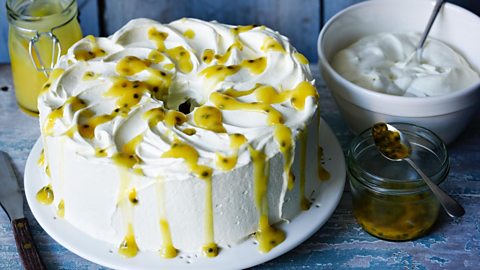
“In the 1950s, we'd just got out of the war, and people loved big, tall puddings to bring joy onto the table,” says Regula. We could certainly use some joy on our table, so what is a chiffon cake? Like its cousin the angel cake (pictured) they are light and fluffy from copious amounts of whisked egg whites, cooked in a tube pan almost cloud-like in texture. The difference between the two is that chiffon cakes are made with oil and egg yolks, but angel cakes contain no fat at all (until you cover them with cream, as Mary Berry did for the Great British Bake Off technical challenge).
When baking these tall, airy cakes, GBBO finalist Mary-Anne Boermans has a few tips: “Use the proper pan. A chiffon cake requires baking in an ungreased tube pan and when removed from the oven, they must be cooled upside down, resting on teacups or similar. If you rest it the 'right way up' it will deflate.” And don’t grease the pan either, otherwise it won’t rise properly, and its height is key.
Mary Berry’s angel cake with lemon curd is a lovely summery option. Serve the cream on the side and with fresh strawberries for a British vibe.
1960s: Lemon meringue pie
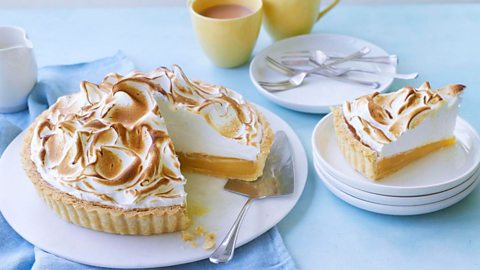
It’s no wonder that the decade of ‘flower power’ saw lemon meringue pie climb to the top of the pudding charts. Bright colours were the trend both in fashion and on the dinner table and this zingy, bright yellow pie slotted straight in alongside vibrant pineapple upside-down cake and technicolour jellies. "You can really tell people loved colour at that time," says Rugula.
To prove it's still going strong, Mary Berry adds: “Can you beat a lemon meringue pie? I love it! I make it quite often for special occasions, everybody loves it!” Indeed Mary's lemon and lime meringue pie appeared in her latest series.
With three elements to make – pastry, lemon filling and meringue – there are some tricks to getting it right. Cooking the lemon filling until it's really thick is essential to stop it flowing out of the pie when cut, as is keeping the pie very cold as it's assembled. Mary-Anne explains: “Chill your pie and the filling before spooning on the meringue. A warm filling will make the meringue 'weep' [not hold its shape and effectively melt]. Also, make sure the meringue is spread right to the edge of the pastry, sealing the filling.”
1970s: Carrot cake
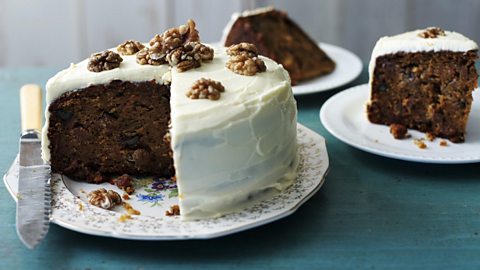
The 1970s brought a less decadent attitude to home baking. And so the Tom and Barbara of desserts, the carrot cake, gained in popularity, with people impressed by its ‘healthier’ label. (They were kidding themselves, with all that cream cheese icing on top.) It’s just as popular today as it was back then, and it’s now a stalwart of the bake sale.
It's a simple cake, but still requires some attention to detail, says Mary-Anne. “Be sure to grate your carrots finely – you don't want to end up with an al dente cake.” And if you’re tempted to modernise it with more exotic ingredients, think again: “Don't overload your carrot cake with add-ins: coconut, pineapple, raisins will weigh down the cake mixture and make it heavy. Carrots, nuts and spices are all that's needed. Less is definitely more.”
1980s: Black Forest gâteau
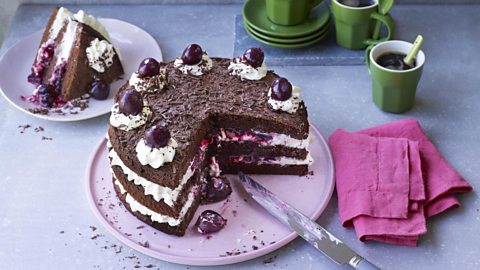
The decade which saw ‘yuppie culture’ descend on the UK and excess celebrated, saw its cakes reflect the mood of the nation. With three layers and multiple fillings, a Black Forest gâteau is ostentatious but still delicious. The most challenging aspect is the feather-light Genoise chocolate sponge made without baking powder. It requires a steady hand not to knock all the air out of the batter. The somewhat dry cake layers stand up to the juicy, boozy cherries and thick whipped cream filling.
Summertime or not, don’t be tempted to use fresh cherries. Tinned ones are part of the deal! Mary-Anne adds that you can add to their syrup to kick the flavour up a notch: “Keep the juice from the tinned cherries and sweeten it with sugar and add a little kirsch. Then, use the syrup to soak your cake layers as you assemble the cake. It will keep the finished gâteau wonderfully moist.”
1990s: Baked cheesecake
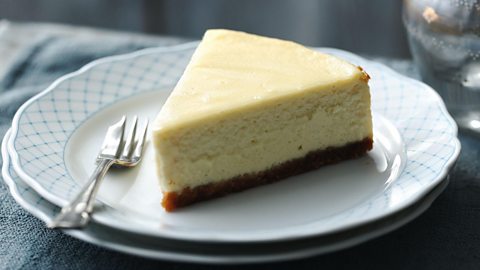
According to Regula Ysewijn: “The 1990s is all about rustic baking.” And so the baked cheesecake became our national obsession. Of course, cheesecakes have been around since ancient Greece, arriving in the UK with the Romans, but the baked cheesecake in the 90s bakery windows is New York style.
Baked, with the addition of eggs and sometimes cream as well as sugar, the dense New York cheesecake is served plain by purists and covered with fruit by everyone else, especially when needed to hide those embarrassing cracks. The 1990s also saw the birth of one of today's trends, the Basque cheesecake
The secret to achieving a creamy texture, without it turning grainy, is to be extra gentle in the baking. “Always bake your cheesecake in a water bath, to keep the filling tender,” says Mary-Anne. “Be sure to wrap the base of the tin in foil to prevent leaking. When the middle third [centre] is still wobbly, turn off the oven, prop the door open with a wooden spoon and allow your cheesecake to cool slowly in the oven to help prevent cracking.”
2000s: Cupcakes + red velvet
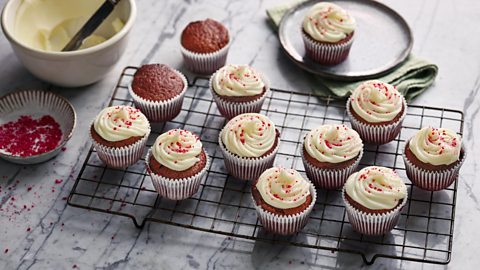
As the new century arrived (without a Y2K apocalypse) so did a new/old type of cake. The cupcake, with a bouffant of perfectly swirled icing, was on everyone's wish list. As we saw them pop up on our TV screens and feature in magazine articles, often associated with expensive high-heeled shoes and champagne, cupcakes edged out bigger cakes with their cuteness.
Red velvet cake also had a resurgence. Even though it has been around since the 1800s, it burst back onto the cake scene in the early 2000s with its statement colour and tangy cream cheese icing that keep that love of cheesecake alive. Combining the two trends, and red velvet cupcakes might just win the noughties.
While the cupcakes of the early 2000s came with more icing than cake, Mary-Anne suggests that you change things up a bit for 2022. “Cupcakes may be small but there's no need for them to be dull. Make sure the cake, filling, icing and decoration all go well together; no one part should dominate. Also bear in mind that they are generally eaten in the hand, so use a little restraint in your toppings.”
2010s: Insta-worthy cakes
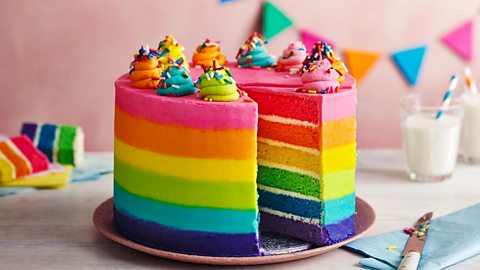
“People would sometimes spend a week creating a cake just for the looks and not for the flavour. That's a big change in the 2010s,” explains Regula. As our love for both baking and social media grew, so did our ambition. And, of course, the phenomenon that is the Great British Bake Off definitely raised our game.
Red velvet wasn't enough, we needed a whole rainbow cake. Every cake needed at least four layers, an explosion of funfetti sprinkles and many, many hashtags.
We love a project bake, but if time and money (and your sanity) are at stake, there are ways to keep it simple and still impress.
“It’s much better to have a simple design executed well than an ambitious design which can be very stressful and prone to go wrong. My best advice is to bake thin sheet cakes that you can cut out and layer up into the design you want, rather than large cakes that take longer and are trickier to bake,” says Mary-Anne – and having made a few showstoppers in her time, she perhaps knows better than most, the importance of getting both elements right!
Even if you’ve got one eye on social media when making a bake, also remember just how exciting it can be when you take that first forkful of cake.
Which pud from the last 70 years are you now tempted to try? Let us know by voting below!
Originally published May 2022