How to make the perfect potato salad
So easy to make and so very rewarding to eat, this is the side dish of the moment. Here's my foolproof method for making it.
Poppy's potato salad
This potato salad is super easy to make, says Poppy. You just need to follow a few golden rules...
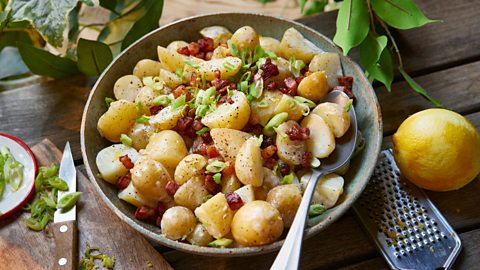
We’re officially in potato salad season (PSS). I’ll serve this staple side all summer long with literally any dish. A sandwich? Potato salad. Barbecue food? Potato salad. Steak and chips? Potato salad. Honestly, I’m yet to find a meal that it doesn’t improve in the summer.
Here’s everything you need to know to nail that perfect potato salad this PSS.
The potato choice
As with many potato dishes, the type of potato you use is key. For this one, you need a spud that’s waxy because it will be more likely to hold its shape. If you go for a floury potato (like a Maris Piper, say) be warned: it’ll likely crumble after boiling and you’ll have a stodgy mix of mash and mayo on your hands.
A thin skin is important too. This means you can keep it on, which adds flavour (nutrients, too!). Plus, it saves time peeling and reduces food waste – so a win all round.
Finally, small varieties are perfect here – because the less chopping you have to do the better.
There are a few potatoes that fit the bill:
New potatoes: This is the ideal choice. New potatoes are robust little guys that can be served whole or halved in your salad. They have soft, thin skins and are low in starch so hold their shape when cooked. The only downside is they are only in season between April and July – after that they won’t be in their prime (although you’ll still be able to find them in supermarkets).
Jersey Royal: These also make for a lovely potato in a salad. Again, best used between April and July, this little British potato boils up nicely and has a good bite.
Charlotte: Unlike most potato varieties, this grows well throughout the year, making it perfect for that Christmas potato salad too (yes, it’s a thing). These are nice and waxy with a delicate skin.
The fundamentals
The basics elements of a potato salad are boiled potatoes, mayonnaise and seasoning. It’s really that simple. However, there are a few tricks to bear in mind when it comes to the method.
Make sure the potatoes are cooked evenly
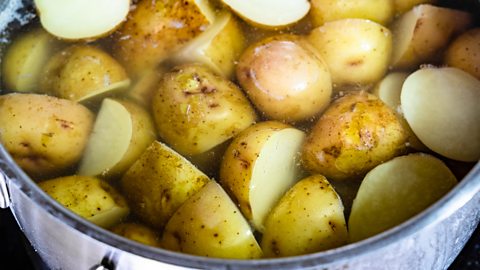
Your spuds should all be similar sizes before they’re cooked. If there are a few weighty ones in there, cut them into halves or quarters. Then, add the potatoes to cold, salted water (you want quite a lot of salt – the water should taste like the sea) before bringing to the boil.
By following these steps, you’re ensuring the potatoes all cook evenly and at the same speed, helping to prevent the dreaded mush that comes from overcooking.
Get the timing right
Cooking time will always vary based on the potato variety, their size and the amount of them in the pan. One tip I always use is to boil the potatoes just until ‘knife tender’. This is when you prick a potato with a knife and it falls off when you raise it from the water. If your spud passes the test, get the pan off the heat, stat.
Finally, always drain your potatoes immediately and thoroughly, so they dry out nicely. You don’t want any of them sitting in water while you leave them to cool – watery potatoes are no good for anything. Avoid leaving them piled up on each other while drying too, as this will trap the steam and could mean they keep cooking.
Tailor your mayo to your tastes
Mayo is the preferred mixer for classic potato salads and I personally love the tang you get from it. However, it’s possible to use alternatives like sour cream, crème fraiche or even yoghurt for a creamier texture and a change in flavour. It’s all down to your personal tastes – and what’s in your fridge.
Think about the potato to mayo ratio, too. Go by eye and lead with your heart. Some people like their salads really creamy, others find too much mayo makes the whole affair claggy and heavy. Remember you can always add more mayo, but you can’t take it out. So, dollop it in a spoonful at a time.
Either way, only add your mayo once the potatoes are totally dry, otherwise you’ll end up with sad, soggy spuds.
Related stories
How to take your potato salad to the next level
Now we have the fundamentals, it’s time for the fun bit. You can experiment and mix up your potato salad however you want.
For inspiration, I tend to think of the flavours you usually find in other potato dishes and go from there. For example, adding garlic to roasties is a no-brainer, and who doesn’t love a bit of cheese in their mash? Pop some into your potato salad mix!
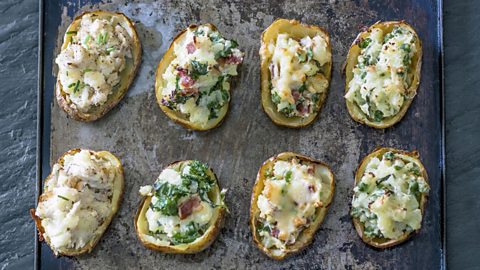
When I created my ultimate potato salad recipe, I was thinking about potato skins, stuffed with that delicious mixture of chives, spring onions and bacon. Then I considered how those elements could work in a potato salad.
Potatoes in their skins
Poppy O'Toole was inspired by the flavours she enjoys in loaded potato skins when she was developing her perfect potato salad recipe
You can approach it from the other way too – think of what you normally have mayonnaise with. For example, coronation chicken is made with that delicious curried mayo. Bring this to your potato salad by adding one or two teaspoons of mild curry powder, a spoonful of mango chutney, a small handful of chopped coriander leaves and a squeeze of lime to your base.
Mustard mayo is another winner, especially if you’re serving with barbecued meat. Add a teaspoon of wholegrain mustard, a teaspoon of honey and some chopped dill.
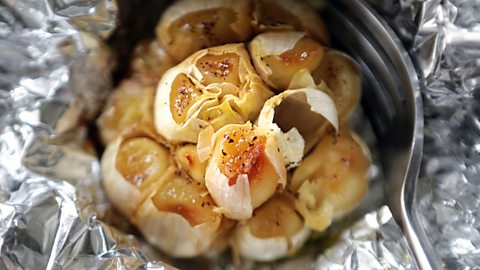
Or maybe go for the classic combo of garlic and mayo. You could buy readymade garlic mayo for ultimate ease, but for the best flavour, wrap a whole bulb of garlic in foil, adding a splash of oil, salt and pepper. Then, roast for around 30 minutes at 200C/180C Fan/Gas 6 before squeezing the softened, silky garlic out of its papery skin and into your mayo. A delicious, indulgent roasted garlic potato salad. You’re welcome.
However you mix it up, I highly recommend adding a dash of vinegar and lemon – it will bring important acidity, cutting through the creaminess of the mayo. Delicious.
Up the presentation
Let’s admit it, potato salad doesn’t always look the prettiest. It’s often just a mound of beige lumps in a bowl. There are some easy ways to make it stand out on your spread, though.
First, pile your potatoes high in your nicest serving bowl. Then get set to garnish. When mixing ingredients into my salad, I always save some to finish the dish with. So, if I’m using sliced spring onions and bacon, I’ll keep a handful of the green parts of the onions and some crispy bacon bits to sprinkle on top. Crispy onion, freshly chopped herbs or a drizzle of olive oil will also help make your salad look like the VIP (very important potato) that it is.
If there is any leftover – and that is a big if – then keep it in an air-tight container or covered in the fridge for up to three days for optimum deliciousness.
Originally published June 2023