The one change experts say would stop food waste
Food waste is a global issue that contributes significantly to climate change. Is there anything we can do to help tackle this at home, or is the food we throw away destined to be wasted because of our flawed food system?
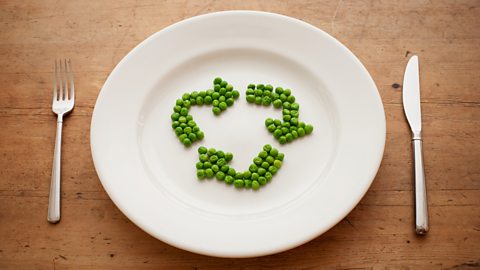
It’s estimated that the UK throws away 9.5 million tonnes of food every year. And we’re not just talking off-cuts or inedible parts like roots or bones, either. In fact, 70% of what we put in the bin is perfectly edible food that was always intended for consumption.
That’s a lot of waste. Not only is this hard to swallow when 4.7 million people in the UK alone experienced issues accessing or affording food in 2021 and 2022, but it also has an impact on the environment. That’s because food rotting in landfill produces a greenhouse gas and accounts for a significant proportion of the harmful emissions we produce on earth.
In the UK, more than half of food waste happens in the home. There’s plenty of advice out there on how we can individually reduce our waste, but while that could no doubt have a positive impact on everything from our grocery bills to climate change, do we actually need larger shifts in the way we produce and distribute food to improve things more dramatically?
We spoke to industry experts and asked them what they thought would really help. For many, it came down to a wider, more systemic change: namely, creating a ‘circular economy’. But what does that mean, how could we achieve it and why isn’t it being done already?
What comes around goes around
“A linear take-make-use-discard model” is how Rosa Rolle from the Food and Agriculture Organisation of the United Nations describes our current food system.
This is very different to a circular economy, where waste prevention would be at the forefront of the production, packaging and distribution processes, as well as the consumption.
For instance, a food producer could use regenerative farming – a practice which generally involves traditional methods, including minimal or no use of chemicals such as fertilisers, herbicides and pesticides (although it has no legal or precise definition). Then, the food would be packaged either loose or using materials that are easily recyclable or re-usable and sold as locally as possible to cut down on carbon emissions. Any food that wasn’t sold could either be distributed to those in need or go back into the ground (“composting food scraps enhances the nutrient content of the soil, benefitting soil health and plant growth,” says Rolle), which will see it avoiding landfill altogether.
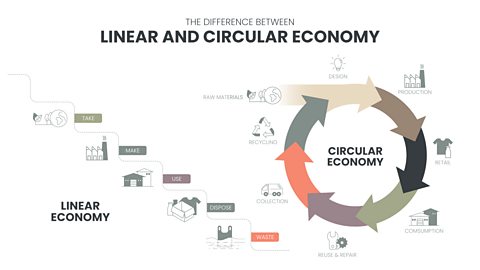
“There are many issues with the current system,” says Rolle. “Everything from the fertilizer through to the food we dispose of at home emits methane – a potent greenhouse gas.
“Secondly, we need to reduce food loss and waste to avert food insecurity and hunger. Across the globe, 828 million people suffer from hunger today, while 3.1 billion people cannot afford a healthy diet and a further 2.3 billion people were moderately or severely food insecure in 2021.
“Shifting to circular approaches keeps food waste out of landfills, thereby reducing greenhouse gas emissions and delivering economic gains through the upcycling of by-products and maximising the use of food such as ‘ugly fruits’. That’s all while addressing food security and improving nutrition, too”
So how could this work in practice? Let’s look at what the experts say the fundamental elements of a circular food system are and how each could tackle food waste in a meaningful way.
Local, quality food
Patrick Holden, CEO, Sustainable Food Trust
“Firstly, we need to start producing higher quality, nutrient dense, healthy food, so that it’s more valued by people.
“The high levels of food waste that we are experiencing today are actually a symptom of a sick and unsustainable food system which is no longer fit for purpose.
“If you think back to the Second World War when we had, quite literally, to ‘dig for victory’, food waste wasn’t even on the agenda. That’s partly because food was so scarce, but also because the food that people did grow during at that time was of really high nutritional quality.
“Since then, we’ve industrialised our farming systems and begun excessively processing most of the foods we eat. As a result, at some intuitive level people know that the foods they are consuming aren’t very good for them and as a consequence are quite happy to throw it in the bin.
“There’s all this talk about reducing food waste at the moment by giving it to food banks or selling wonky vegetables. Of course, you can’t be against that, but in reality, that is treating the symptom rather than the cause.
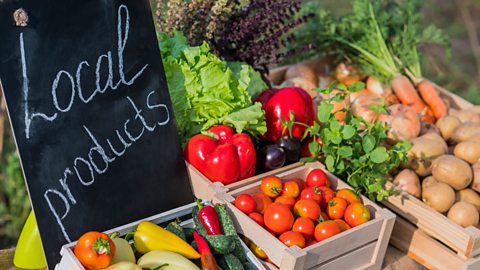
“If we re-localised our food systems globally and nationally and ate what the farmers near to us produced, we would come to understand what a circular economy really means in food terms.”
Proper reporting of food waste
Rebecca Tobi, senior business and investor engagement manager, Food Foundation
“Making it mandatory for large food businesses to publicly report on their levels of food waste would be hugely helpful in incentivising businesses across the food chain to act and allow us to track how much meaningful progress is actually being made.
“The majority of food waste in the UK happens in the home, but very often this is a result of the environment consumers find themselves in when doing their food shop. So, more food businesses implementing strategies such as clear and consistent date labelling and storage guidance, and developing more appropriate pack sizes and formats would all help to support households to reduce their food waste.”
Scrapping unnecessary packaging
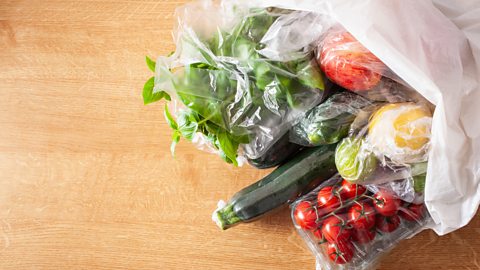 Image source, Scrapping unnecessary packaging
 Catherine David, director of Collaboration and Change, WRAP
“The number one way to help reduce food waste is to allow people to buy what they need and use their own judgment to decide when items are still good to eat.
“Our evidence shows that if we do this, we could prevent 100,000 tonnes of household food waste, more than 10,300 tonnes of plastic and 130,000 tonnes of CO2e. No good food should go in the bin and the UK is working towards an ambitious target to halve its own food waste by 2030.
“People throw away £3.8bn worth of edible fruit and veg each year – this is a cost neither we nor our planet can afford. Now is the time for action. I look forward to people joining us in liberating apples in plastic bags and assigning needless packaging to the history books.”
Leveraging our consumer power
Rebecca Hesketh, programme manager, Ellen MacArthur Foundation
“Individuals who want to support a circular economy for food can use their buying power by looking out for conscientiously produced, packaged and sold products. Consider buying local and seasonal produce to support your local businesses and landscape.
“When you’re shopping, try and think about reducing all waste associated with your food. Consider how much food goes to waste in your household, why and where it goes. Are you buying too much? Do you need to buy products in plastic packaging? Can it be composted?
“Using the principles of the circular economy to redesign our food and the systems that deliver it to our plates, we can not only eliminate waste, we can also restore biodiversity, address climate change and help nature thrive.”
Provide people with the tools they need to recycle
Martyn Odell, food waste influencer
“We need to build an infrastructure that allows for better recycling and provide clearer instructions, as well as encourage a belief that the system works.
“The main reason food waste is a massive issue is because so much of it ends up being dumped into landfill. South Korea recycles nearly 100% of their food waste, so why can’t we?
“Ultimately it comes down to cost and people willing to be involved, it’s expensive to process and transport – but it’s totally worth it.”
Redistribute unused food
George Wright, CEO at FareShare
“Three million tonnes of edible food surplus gets ploughed back into ground on UK farms yearly, yet millions are forced into food insecurity. That needs to change now and the answer is right before us. And it’s an answer that reduces food waste, reduces carbon emissions and instead results in significant quantities of healthy food for redistribution to families across the country.
“FareShare’s ground-breaking Surplus with Purpose scheme launched in 2019 took a £1.9m Government grant and turned it into 4,447 tonnes of fresh, nutritious food for redistribution, saving 16 tonnes of CO2e.
“But then the government stopped the funding. If the government could help to cover the costs incurred for farmers to harvest, package and deliver surplus food, it could help provide an extra 100 million meals a year to people who need it. It’s one change that would have an immediate effect. It’s a no-brainer.”
So, what’s stopping us?
By championing more ‘natural’ food production methods, cutting down on transportation and packaging, making it easier for people to recycle and becoming more contentious as consumers, we could see an end to the huge amount of food waste we produce each year, say the experts.
As to why we haven’t got there yet, Holden explains there are “four key barriers: lack of financial incentive, lack of enabling policy, lack of knowledge of practice, and lack of public awareness.”
Simply put, it’s more expensive to farm using regenerative practices, there’s not many regulations in place to stop “the worst practices,” good practices aren’t discussed and taught enough within the food industry and likewise, there’s not enough education for the wider public to learn about the importance of switching to a circular economy.
But that’s not to say that moving to this kind of system is impossible to achieve – and if we did make it happen, the benefits would be huge.
Rob Percival, head of food policy at the Soil Association, summarises: “A circular economy ensures all products and materials are designed for reuse, recycling, and recovery. This may initially be ‘more expensive’ but in the long run it will be cost-saving, preventing the erosion of the ecological systems that underpin human society.”
Originally published July 2023