How to get your comfort food fix while staying healthy, according to a nutritionist
It’s prime comfort food season – but also the time of year when many of us are trying to focus on our health. Here’s how to strike the balance, according to a nutritionist (who also happens to be a carb lover).
By Lily Soutter
I’m a London-based nutritionist and it’s my job to help people improve their diet and boost their health. You might think I’d avoid foods such as pie, pizza and pasta, but during the cold, dark winter months, leafy salads just aren’t going to hit the spot. It’s normal to gravitate towards heavier comfort foods at this time of year.
These kinds of dishes are usually loved for their sense of nostalgia, association with cosiness and their hearty, satisfying nature. However, it’s also true that comfort foods can be high in calories, fat and refined carbohydrates.
While enjoying these foods occasionally is fine, regular and excessive consumption could increase the risk of health issues, so it’s important to strike a balance between comfort and nourishment.
Here’s how you can create comforting dishes that are good for the body as well as the soul.
Nutrient boosting
There are some comfort foods which are already thought of as nutritious – such as soups, stews and casseroles. It’s easy to boost the nutritional value of these dishes further with root vegetables, lentils and wholegrains, which are high in fibre and will help keep hunger at bay.
Carrot, lentil and almond soup with wholemeal croutons
Treat yourself to this warming and satisfying soup – it’s full of goodness and also happens to be vegan

Choose a lean protein if you’re eating meat in these dishes, but also explore more plant-based stews. Try swapping meat for beans and chickpeas, which are good sources of protein while lower in saturated fat and more fibre-rich than meat.
Similarly, if cottage pie is your idea of a comforting dinner, try replacing half of the meat in your recipe with lentils to introduce an additional fibre boost.
You could also swap a takeaway pizza with a homemade one, which you can customise with your favourite toppings so you never get bored. I use wholemeal pizza dough which has more fibre than a regular base, and then add plenty of colourful veggies as toppings.
Related stories
Healthy twists
There are so many creative ways to add a healthy twist to traditional comfort ‘treat’ foods. For example, I love to make a delicious chicken pie using a lighter crème fraîche instead of double cream and topping it with filo instead of shortcrust pastry. Just by swapping out those two ingredients, the result is much lower in saturated fat while still having all the creamy flavour and crunchy texture of the classic version.
For a roast dinner, cooking potatoes in unsaturated fats such as olive oil rather than goose fat, butter, lard or ghee, reduces the saturated fat content which may play a role in maintaining healthy cholesterol levels. Lower-salt gravy can still be delicious too – try adding more herbs such as sage and thyme for flavour, in place of salt. And finally, finish your Sunday lunch with plenty of rainbow veggies.
Curries are simple to put a healthy spin on as well – use light coconut milk instead of the full-fat version to reduce your meal’s saturated fat, and eat it with brown rice, which contains more fibre and nutrients than its white counterpart.
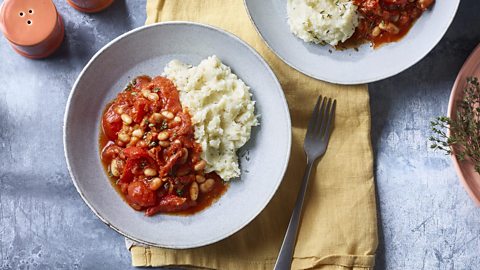
Smoky bean stew with creamy cauliflower mash
The ruby red colour of this dish comes from a plant pigment called lycopene which has antioxidant properties
Amazing all-rounder ingredients
You don’t have to spend money on expensive specialist ingredients to boost your health. The freezer section of your supermarket will have plenty of options.
Research has shown that frozen produce retains vitamins, minerals and even antioxidants, which are all beneficial to health – and it’s often cheaper than buying fresh. So, stock up on frozen fruit and veggies which are easy to add into dishes. Berries from the freezer can go into hot porridge or be whizzed into smoothies, for instance, while frozen spinach and kale are ideal for dropping straight into stews, curries and the like.
Slightly starchier frozen vegetables like butternut squash, parsnips and peas are perfect for ultra-comforting and satisfying recipes like pasta, risotto and soup.
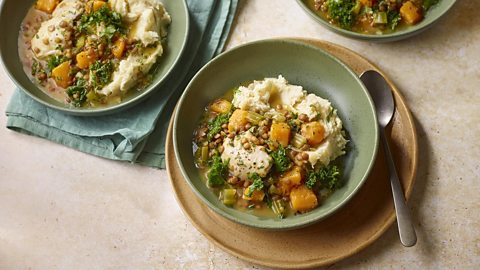
A comforting stew that’s also chocca with nutrients and could help support the immune system.
Frozen fish and lean chicken are convenient and efficient ingredients to give your recipes a protein boost.
Elsewhere in the supermarket, beans, lentils and chickpeas are cost-effective and versatile store cupboard ingredients that are great sources of plant-based protein and fibre. Their adaptability means they work well in a wide range of recipes, from Tex-Mex enchiladas to Indian dals and family-friendly veggie burgers.
Introducing nut butters into your recipes not only imparts an indulgent twist but also provides heart-friendly fats and nutrients such as vitamin E.
When it comes to the fresh aisle, potatoes (both white and sweet) are the ultimate comfort food and can be enjoyed mashed with a stew, as a topping for a pie, baked and filled or made into homemade chips. Leave the skin on for a hit of fibre.
And remember, you don’t need to cut out carbs
Talking of potatoes, many of us gravitate towards carbohydrate-rich foods for comfort but are often made to feel guilty for doing so. I’m here to tell you that you really don’t need to.
Carbohydrates play a role in the production of our happy hormone serotonin, which explains their appeal when seeking comfort. The key is in choosing carbohydrates with health benefits.
Choose options like wholemeal bread, wholemeal pasta, brown rice, oats and potatoes. Wholegrains not only provide fibre, but regular consumption may also reduce the risk of heart disease and type 2 diabetes.
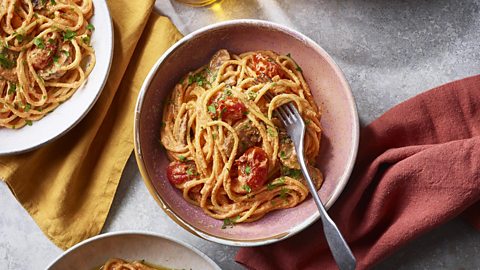
Creamy red pepper and cashew pasta
This creamy red pepper and cashew pasta satisfies carb cravings while promising a whole load of goodness
Also, when cooking carbs, I often replace butter (which is high in saturated fat) with heart-friendly olive oil. For instance, try using olive oil for an ultra-creamy and flavoursome mash or tasty banana bread.
So, go all out and embrace comfort food this winter, even if you’re trying to be mindful of your health. By making just a few tweaks to your dishes, you’ll be keeping both your mind and your body happy.
Originally published January 2024