How to finally master your culinary nemesis
Sometimes it’s the everyday dishes that we find the trickiest to nail. From scones to omelettes and cheese sauce, here’s how to master the basics.
Perhaps you can cater for a dinner party on little notice, are known among friends for your impressive baking skills and make such great family dinners that fights break out over leftovers every evening. Yet, little does everyone know, you're flummoxed as to why your Yorkshire puddings refuse point-blank to rise. If this sounds like you, you're in good company.
Recently, we asked for your cooking confessions, hoping to find out which seemingly simple dishes often end in disaster. You answered in your hundreds, with the same everyday recipes cropping up again and again. So, we've sought expert advice on five of the most talked about.
Scones
Scones are seen as super simple; they take little preparation and cook in just 15 minutes, more or less. Yet so often they don't rise to any meaningful height or are so dense they could cause an injury if they were to be dropped on an unsuspecting toe.
There are several reasons why your scones' texture might not be living up to your pillowy-soft expectations. Perhaps the most common is that you’re over-handling the dough, which makes them tough.
“Only knead the dough a little more than you would a shortcrust, just enough to make it smooth – you’re not making bread,” says chef Chris King of The Langham in London.
Next, to help give scones their soft, crumbly texture, chef patron of Mingary Castle in Ardnamurchan, Colin Nicholson, says you should let the dough chill out for a bit before cutting. “Allow for plenty of resting. Once the dough comes together, rest on the worktop covered with a tea towel for about 10 to 15 minutes, which allows the gluten to relax. Then lightly roll out the dough, cut your scones and place them on a tray to rest again for 15 minutes before baking.”
If your problem is that the scones aren’t rising, chef and author Alex Hollywood might have the solution. “When you’re using a pastry cutter, if you push the dough out you should then flip over the scone before baking it. By pushing the pastry down, you’re creating a little dent in the dough so it won’t rise as high.
“Then, when you put egg wash on top, you need to be careful it doesn’t drip down the sides as this will stop the scone from rising. The egg sets and then acts like a tent ropes, holding the dough down.”
This is something Paul Hollywood has spoken about too.
Flapjacks
Flapjacks should be firm enough to hold their shape while staying soft and chewy on the inside. Likewise, they should taste sweet without being overly sugary – and you definitely don’t want any bitterness.
When it comes to flavour, Tom Kerridge says everything can go wrong quite early in the process. “If the butter or syrup goes into a pan which is too hot then the syrup will burn or the butter will catch and brown quickly.” This will impact the taste of the end result.
To achieve the right texture, Alex has some top tips. “Firstly, don't put the mixture in a tray that's too big, because that means the flapjacks will be thin and dry out. Use a small but deep tray, then you’ll get that lovely chewiness.”
While Tom goes for jumbo oats, Alex is a fan of keeping the ingredients small. “If your oats are too big it can make them too crumbly. Likewise, if you’re putting nuts or dried fruit in, chop them up then so they’re small, then the syrup will hold it all together.”
There's a knack to cutting them into neat rectangles without them breaking too, Alex says. “When the mixture is still warm in the tin, mark the flapjacks out with a knife so they’re partially cut. This will make them a lot easier to cut properly once they’re cooled.”
Now make…
Cheese sauce
Quick to rustle up and made of just four ingredients, velvety cheese sauce may seem easy to make, yet many people end up buying it in a jar or using a packet mix. This humble staple can be intimidating, what with the dangers of lumps, stodginess and that off-putting floury flavour. But it doesn’t have to be.
Former MasterChef: The Professionals winner Steven Edwards says, “Follow the simple rule of equal amounts of butter and flour to make your roux and then 10 times the amount of milk – for example, 30g flour, 30g butter and 300g milk. Then, cook out the flour and butter before slowly adding the milk. Blitz any cheese through the sauce to taste – this keeps it nice and smooth.”
‘Cooking out’ the flour and butter is imperative, adds Mike Naidoo of Catch at The Old Fish Market in Weymouth. For the right consistency, you shouldn’t add the milk until your roux (the flour and butter mixture) has cooked into a paste. “It sounds simple but so many people put all the ingredients in at the same time and it doesn’t work!”
The amount of cheese you add will change the consistency, so if you’re happy with the thickness pre-cheese, use a strong cheddar as you’ll need much less. And, says Mark Hartstone from Dorset's La Fosse, “If you have lumps, it’s not the end of the world – a hand blender will quickly eliminate them.”
Omelettes
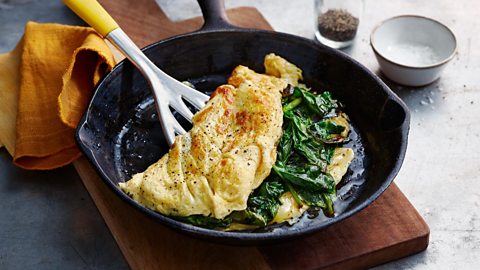
Omelettes are a great five-minute meal, but they can quickly end up turning into scrambled eggs. Great British Menu champion Ellis Barrie has perfected this egg-based dish and has a few golden rules.
Two eggs per omelette is plenty, thinks Barrie, who advises holding off on the seasoning until after the eggs are cooked. "The salt's going to break it down and pepper will make it grey," he says.
When you add butter to the pan and melt it, let it get foamy before adding the eggs. This will help the omelette to rise and take on a light, fluffy texture. Then, if you're adding cheese, grate it in while the eggs are still wet on top. This will mean you don't end up with a sad, dry omelette.
Rather than fold it in half and risk it breaking, Ellis rolls his omelette off the pan and onto the plate. To try it, just fold one edge (about a third of the whole omelette) over, then fold over again, then roll it onto the plate to fold in the rest.
Speed it key with omelettes, to avoid them overcooking. But there's no need to take it to the extreme, Mark says. “Try not to emulate the Saturday Kitchen celebs racing for the fastest omelette. A few seconds extra is not the end of the world. Remember, the eggs will continue to cook in their residual heat, so start to roll the omelette out of the pan while it's under-cooked. By the time you have it on the plate it should be perfect.”
Now make…
Yorkshire pudding
Seeing as Yorkshire puddings are just made of flour, eggs and milk, they should be easy to whip up, right? If you've ever pulled flat, dense puds out of the oven or watched them puff up handsomely as they cook, only for them to collapse into a flabby mess minutes later, you'll disagree. The good news is, the secrets to perfectly golden, crisp and puffy Yorkies shall evade you no longer.
“The key is to let the batter sit and get to room temperature. Oh, and get the oven really hot!" says Mike. "That’s how you get light Yorkshire puddings.”
To make them fluffier, Oliver Marlowe from London's Ganymede has a great tip: “Mix the ingredients together using a hand-held electric whisk until the batter is smooth and aerated.” That should give them a super-light texture. Better still, if possible, prep the day before. “Cover the mixture and leave it in the fridge overnight. Make sure you don’t season it until you’re just about to cook though, otherwise the salt can begin cooking the eggs and your Yorkshires won’t rise as well.
“For the best results, make sure the pudding moulds you’re using are non-stick, too. Prepare them by adding a good tablespoon of either beef dripping, vegetable oil or duck fat – don’t use olive oil as it burns at a much lower temperature.
“Get the moulds with your fat of choice in the oven at 220C, and wait until it's piping hot before adding your batter. Cook for 15 minutes and then turn the temperature down to 180C for a further 10. Be sure not to open the oven at any stage during cooking or your perfect Yorkshires will start to collapse.”
Short on time? Mary Berry has another method.
Now make
Originally published October 2022