Is your kitchen harbouring more germs than your loo?
About 2.4 million cases of food poisoning occur in the UK every year, according to the Food Standards Agency. While restaurants and takeaways are to blame for many of these, the cause of others lurks in the domestic kitchen.
Some germs could be introduced by you when cooking. Do you wash your hands when you get home and before you prepare food? When was the last time you cleaned your phone – especially important if you use it to read recipes? Do you know how clean your dishcloths and tea-towels are?
The winter vomiting bug, or norovirus, is the most common type of food poisoning. But other bacteria, viruses, fungi and parasites – including campylobacter and salmonella – are also making us sick. You might have as many questions about germs as there are bacteria on your chopping board (we’ll get to that later). So here we explore the many ways germs can make their way into your mouth, with the help of The Hygiene Doctor, Dr Lisa Ackerley.
There are thousands of germs on your hands
Lots of infectious diseases are spread by touch. Since your hands are reported to harbour around 3,000 bacteria from more than 150 species at any time (most of which are harmless), imagine how many germs you can introduce to your kitchen if you cook without washing them. To make matters worse, germs shed from your mouth and nose onto your hands.
Washing your hands in the right way helps get rid of these pathogens. Washing them with just water reduces bacteria levels to 23 percent, but washing them with soap and water can cut that to 8 percent, according to research. You’re not killing the pathogens though, you’re just washing them away. That’s why it doesn’t matter whether the water is hot or cold. It’s also why you need to clean your sink!
Dr Ackerley says, “When you come home, you wash your hands. When you arrive at work, you wash your hands. You don’t know what you’ve picked up on your way. Hand-washing is most important at key moments.”
One in six smartphones contaminated with poo
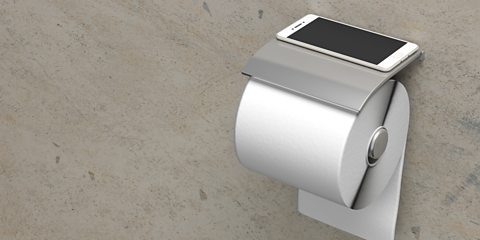
Your phone probably goes everywhere with you; even the bathroom. Faecal bacteria is found on one in six smartphones, according to a study commissioned by The UK Global Handwashing coalition – giving ‘dirty talk’ a whole new meaning. Around 57 percent of Brits use their phone on the toilet, YouGov reveals. No wonder so many phones are covered in poo germs.
These types of bacteria can survive on hands and surfaces for hours, especially when the surface is warm and away from sunlight, like a toasty phone in your pocket. From there, germs can be picked up by other people or transferred onto items such as food and door or pan handles.
“If you’ve been using your phone extensively with dirty hands, then you should wipe it and wash your hands before you start cooking”, says Dr Ackerley. She also cautions against spreading bacteria from food to phone: “If you have touched raw meat, wash your hands before touching your phone”.
60 percent dishcloths contaminated with e. coli
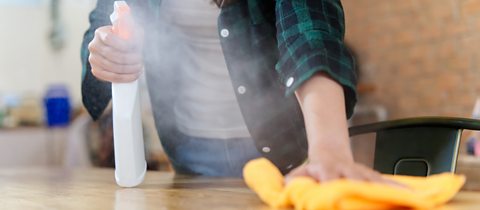
With 60 percent of dishcloths found to be contaminated with e. coli, according to a study commissioned by the Global Hygiene Council, and other cloths in the kitchen often being similarly germ-laden, what can you do to reduce the spread of germs? “A lot of people use cloths indiscriminately. They are probably the dirtiest item in the kitchen. You’re basically picking up bacteria as you clean and there comes a point where you’re actually dirtying the surface”, explains Dr Ackerley.
Here are tips for cloth cleanliness:
- Use separate cloths for the dishes, floor, drying hands and other surfaces.
- Put washing-up brushes in the dishwasher regularly.
- Wash your cloths regularly at hotter than 60C (ideally hotter than 80C).
- If you don’t have a boil wash on your machine, put your dishcloths in a large saucepan with some washing powder and bring to the boil.
Bathroom taps are cleaner than kitchen worktops
A whopping 32 percent of kitchen worktops tested positive for coliform bacteria (a family of bacteria including salmonella and e. coli and an indicator of potential faecal contamination) in a 2011 study. Just 9 percent of bathroom tap handles tested positive in the same study. Organisms can survive for anything from a couple of hours to several days, depending on what they are and the surface they are on.
But should we all reach for the antibacterial spray?
In 2018, the BBC series Trust Me I’m a Doctor found swabs of a family worktop, taken just 1 hour after a thorough clean with antibacterial wipes, showed evidence of bacteria and fungal growth. After 12 hours, the growth of bacteria and fungus was dramatic.
Writing for the BBC, Dr Michael Mosley said, “If you are using antibacterial products in the hope of keeping microbes at bay, you may well be wasting your time and money. Not only will they grow back, fast, but the vast majority of the microbes that live in our houses are harmless, and some are even important for maintaining good health.”
Nevertheless, Dr Ackerley believes it is important to use an antibacterial cleaner on work surfaces at key moments, such as after preparing raw meat or fish. “We must disinfect surfaces that are contaminated so that we’re not leaving a little present for someone who uses the kitchen afterwards.”
There’s more bacteria on your chopping board than on your loo seat
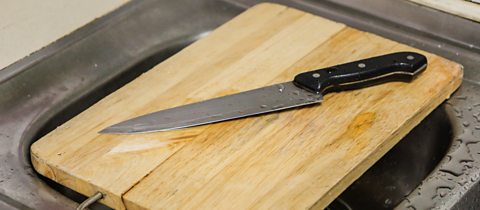
“Usually there are about 200 times more faecal bacteria on the average cutting board than on a toilet seat,” Dr Chuck Gerba, Professor of Microbiology at the University of Arizona, told the BBC. It doesn't necessarily get there through contact with faeces, but rather with raw meat.
When it comes to washing kitchen equipment that comes into contact with meat, “a dishwasher is best”, says Dr Ackerley. If you don’t have access to one, there are two ways of disinfecting a chopping board: with chemicals or heat.
To wash a chopping board, place it in the sink and spray with an antibacterial chemical, leaving it for a few minutes before washing. Alternatively, carefully pour boiling water over it to sterilise the bacteria. Scrubbing a board without first sterilising it runs the risk of contaminating your cleaning cloth or brush.
It’s best practice to have one chopping board and knife for meat and fish and another for everything else.
Is your sink making you sick?
There could be “millions of bacteria down the drain but, it’s how it gets into someone’s body and causes illness” that is the main issue, says Dr Ackerley.
We often wash our hands in the kitchen sink, but “when doing that you could be making the sink dirty”, she says. The bacteria is washed into the sink and drain. This, coupled with washing contaminated items such as knives and chopping boards used for raw meat, may be cause for concern. “If you then fill the sink with water and wash a lettuce, there is a risk you are contaminating your lettuce”, says Dr Ackerley. The same goes for plates and cups.
So what can you do to minimise the risk of contamination from your sink? Disinfect it from time to time, preferably using an antibacterial cleaner, and wash vegetables under running water rather than filling up the sink.
Is there e. coli in your fridge?
The main purpose of a fridge is to slow the growth of bacteria and prolong the life of food. However, once the bacteria has grown and sits on a surface, Dr Ackerley says “e. coli has been found to live in refrigerators for weeks”.
More than 40 percent of homes failed tests on bacteria and mould build-up inside fridges in a 2010 Hygiene in the Home Study, which tested 180 homes in various countries, including the UK.
“You need to disinfect any surfaces that might be contaminated”, says Dr Ackerley.
3-second rule?
We’ve all heard it, and we’re probably all guilty of following it. But is it really OK to eat food off the floor if it’s only been there for 3 seconds?
“If it’s going to be peeled or cooked, I wouldn’t be so worried, but if it’s going to be eaten as it is, then no, don’t take the risk. So if you drop an unpeeled potato on the floor, it really doesn’t matter. But if you drop a sandwich, you don’t know what that sandwich has landed in; it doesn’t matter how long it’s on the floor, it could be contaminated.”
3 top tips
The good news is, you don’t need to spend all your time cleaning and worrying about germs in the kitchen. Good hygiene comes down to:
- Key moments of cleanliness, such as hand washing in the right way at the right time.
- Targetted cleaning of contaminated areas, such as after preparing raw chicken.
- Preparation of cleaning equipment, such as segregated clean cloths for different jobs around the kitchen.
It’s also a good idea to avoid eating food that’s been on the floor!