The secrets to game changing jerk
Want to create Caribbean-style jerk dishes that pack a flavourful punch? Here’s everything you need to know, according to an expert cook.
Chef and food writer Elainea Emmott has been cooking jerk dishes for years and eating them for even longer. “My mother was born in Jamaica – and her mother and mother before her,” she says. “When I was a child, we only ate food from our heritage.
“The Jerk flavour is deep and comforting and comes with a kick of spice from Scotch bonnets. It makes me instantly relax and feel at home. Although the chilli gives it heat, the dish is still mellow – like Jamaican culture. I think that’s why people like it.
“Jerk has a rich history which is thought to have started with South American tribes who cooked in pits in the ground. The style developed over time in the mountains of Jamaica where escaped enslaved Africans settled. This way of cooking was likely favoured as it helped avoid detection. They eventually developed ways to preserve and slow cook meat on an open fire.”
Jerk continued to evolve over the following centuries and has been adapted for more modern cooking methods. “Today there are lots of different ways to cook jerk,” says Emmott, “including on the barbecue, in the oven, on the hob – or a mixture. All can give a beautiful flavour.”
What actually is jerk?
One thing Emmott is keen to clear up is what ‘jerk’ really means. “People assume jerk is just about spice and seasoning, but it’s a whole style of cooking. It’s about marinating, it’s about the cooking processes that gives you something hot, smoky and tender.”
There are of course key ingredients too though – these are vital to get that distinctive jerk flavour.
“You’ll have flavours in jerk such as Scotch bonnet, thyme and different spices, but the most important one is allspice, also known as pimento. It has a freshness that cuts through fat and pairs well with citrus and meat.”
Making your own jerk
If you want to have a go at making your own version, “It’s important to play around with seasonings and to not be afraid to experiment,” says Emmott, explaining that after decades of cooking jerk, she still regularly changes her recipe.
“When you have a dish in your family which is made every week, it tends to evolve. I’ve always experimented with different levels of spices and seasoning as my tastes have changed over the years. So my jerk is always developing.”
As you can imagine, each family has its own version.
“Personally, I like to use freshly grated nutmeg and pimento berries crushed with fresh herbs,” says Emmott. These are combined with warming spices such as cinnamon, ginger and black pepper, acidity from vinegar and sweetness from brown sugar.
Jerk may incorporate lots of different flavours and spices, but it’s still easy to pull together, says Emmott.
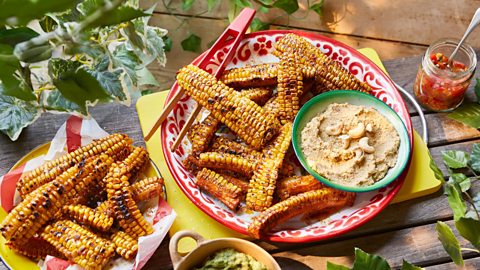
Barbecued sweetcorn ribs with plantain hummus
If you’re making jerk dishes on the barbecue, get these sweetcorn ribs on the go at the same time
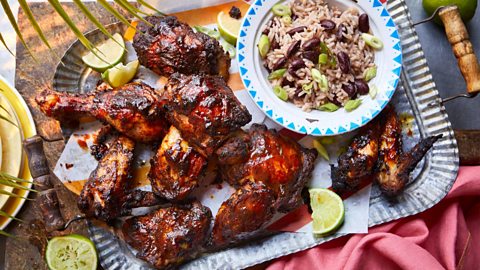
In her recipe for jerk chicken, Emmott combines various store cupboard spices and seasonings with soy sauce, vinegar, garlic, chillies, onion and thyme, and blends it all into a paste with a dash of water.
The key is to make sure you prep in advance – the longer you can leave your ingredients in the rub to marinate, the better the outcome.
“I think the greatest extra ingredient is patience. Marinating for 30 minutes is fine, although if you can leave it a few hours – or ideally overnight – all the better for those flavours to really develop and penetrate the food. It also helps to use your hands to work the spices into the vegetables or meat.”
If you make more marinade than you need, it will keep for a little while – though the type of jerk you make will dictate how long it lasts. “Wet marinades usually keep in the fridge for about one week. Dry seasoning can last up to a year when properly stored in a cool, dark place in an air-tight glass bottle.”
What foods suit the jerk treatment?
Chicken is a given but there are plenty more dishes that jerk is perfect for, thinks Emmott: “Jerk seasonings work really well with pork – not just belly either, but everyday sausages and roast joints.
Emmott also recommends using jerk on “fish such as salmon, mackerel and snapper.” Any firm fish, with the skin left on, will take on the flavours well.
Jerk aubergine tacos
Jerk doesn’t just go well with meat – use it on meaty veg like aubergine
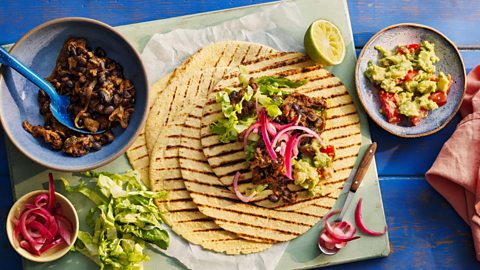
“Meaty vegetables like aubergines and mushrooms work well too, although you may want to combine your jerk with olive oil to stop the dishes becoming dry. You could even use the seasonings with vegetables such as carrots with some added honey and soy for roasting.
“Firm tofu marinated in jerk with olive oil also works beautifully.”
Originally published August 2023