How to help your community through food
As part of the coronation events this May, people are being encouraged to sign up as volunteers for local charities and organisations. Here’s how you can make a difference in your community through food – and where to go if you’re looking for support.
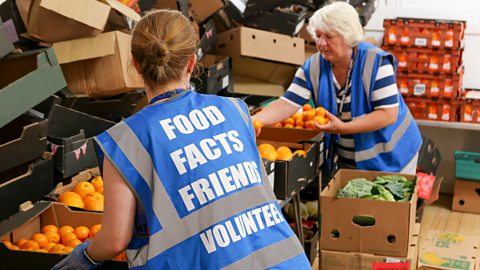
This year’s one-off bank holiday on 8 May is being dedicated to championing charities and organisations across the UK, and helping people discover ways to make a difference in their local communities.
On BBC Sounds, BBC Royal Correspondent Sarah Campbell explained: “The hope is that the legacy of the coronation weekend will be a big increase in the number of regular volunteers, and so over 1,500 charities and organisations – more are doing so all the time – are adding their details to The Big Help Out app. People can download it, they’ll be asked where they live, what their interests are and then they’ll be matched with the charities and organisations in their area which really need their help.”
Food charities are particularly in need of support, with demand for their services growing as more people start to experience food insecurity. In fact, The Trussell Trust, the UK’s largest foodbank provider, recently announced that over the past year, it has had to distribute 3 million food parcels – a 37% increase on the previous year.
Why is ‘food poverty’ such a big issue?
With rising energy bills and the cost of food increasing, food poverty is a reality for many. Some households are forced to choose between heating and eating, and some parents are going without food so their children can eat.
The Food Foundation runs regular surveys with YouGov to measure food insecurity levels. In January 2023, it found that 17.7% of UK households had experienced food insecurity in the previous month – that's up from 7.3% in July 2021. It equates to approximately 9.3 million adults and around 4 million children.
Regardless of whether you plan to take part in the coronation initiative, there are lots of ways you can help those impacted by food insecurity – from donating unused food in your cupboard to giving your time to a community group.
Here, four organisations who are seeing increased demand for their services, explain how people can get involved.
Food banks
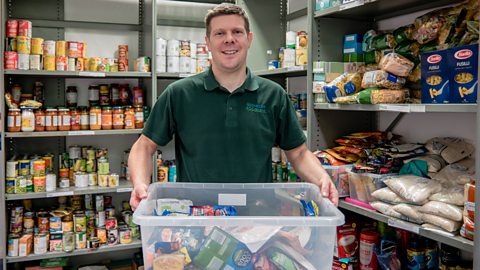
Food banks are on the front line of food poverty as one of the best known types of resources. However, there have been recent reports that some of them are struggling to meet the required level of donations. This is something Justin Wylie, associate director of public engagement at the Trussell Trust – home to more than 1,600 food banks – is concerned about.
“Across our network, we’re hearing from food banks who have seen a decrease in donation levels. Right now, too many families are already making impossible decisions between heating and eating, and we know that people are skipping meals, unable to afford to run cookers and fridges, and taking on debt to buy the essentials. We are deeply concerned that the cost of living crisis risks forcing many more people through the doors of food banks in the coming months, and beyond.”
To use a food bank, people ordinarily need a referral, something Citizens Advice or your local council can help with.
“Once someone has been referred,” says Wylie, “they can exchange their voucher at their nearest food bank for an emergency food parcel containing a minimum of three days’ nutritionally balanced, non-perishable food.”
How to contribute to a food bank
Food banks have designated times when people can drop off donations, and your local supermarket will likely have a collection point.
While these centres are always grateful for donations, there are some items they may not be able to take, explains Wylie. “Most food banks in our network do not have cold storage facilities so we generally ask people to donate non-perishable, in-date food items. Small packets also tend to be easier for food banks to distribute.”
You can also check online for up to date requests from your local food bank.
If donating your time is more achievable than donating food, your local food bank may have volunteering opportunities available, including positions like warehouse volunteer, delivery driver or social media advocate.
Community fridges

Set up to tackle food waste, community fridges allow people and businesses to donate fresh food which would otherwise go to waste, so that others in the community can take what they need.
Aoife Allen is a director at Hubbub, which operate 450 community fridges around the UK. They anticipate they will have 500 community fridges operating by the end of 2023.
“A lot of the food that is shared by retailers is fresh food that's coming towards the end of a shelf life. So, community fridges are good places to pick up fruit and veg, along with other staples.
“We've already seen a massive hike in the number of people using community fridges. Not just as a result of the cost of living increase but during the pandemic, when people's work was disrupted, or when people lost access to support.”
The fridges operate on an honesty system with no referrals needed: people can just turn up when they’re open, no questions asked, says Allen. “We have an ethos that they are open to everyone and that everybody is treated with dignity and respect when they visit.”
The coordinators do request people take only what they need, so there’s more to go around. Hubbub has a map on its site so you can see if there is a location near you.
How to contribute to a community fridge
Whether you grow your own fruit or veg and have a glut to share, or have food at home that’s in danger of going to waste, your community fridge will gratefully receive it. The food just needs to be fully packaged and in date or, if homegrown, in good condition.
And it’s not just fresh food that these hubs will take: tinned and packet foods are also welcome.
If you have time to spare, community fridges are usually looking for volunteers: “It could just be just an hour or two a week. It might just be driving by a retailer on your way home from work and picking up a crate of food and dropping it off at a fridge,” says Allen.
If you’d like to go one step further and are interested in setting up a new community fridge, Hubbub has guidance on how to get started.
Food sharing apps
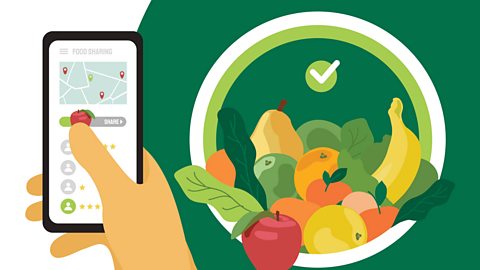
There is a range of apps designed to help rehome excess food. It works by allowing people – as well as supermarkets and other high street chains – to list their surplus or unsold food, and connect directly with a person who's willing to pick it up.
“This isn't about charity. This is about community,” says Tessa Clarke, co-founder and CEO of one such app, Olio. “Someone might have a head of broccoli or half a bag of potatoes and because they’re going away, aren’t going to use them. And people aren't recognising this is something others would want. But half of all the food added to the app is requested in 21 minutes.”
How to contribute to a food sharing app
Clarke highlights one of the main ways people can help is just to regularly go through their cupboards, fridge and freezer and give away what they won’t use. She says it just takes 10 seconds to list an item.
Just don’t be tempted to stipulate that a donation is specifically for those especially in need, says Clarke. While well-intentioned, this often causes issues.
“Sometimes we see people putting on their listing things like, ‘This is only for people who are struggling or hungry’ and those listings don't get picked up. Because if you're having a hard time, the last thing you want to do is feel like you're being judged by someone.
“Give with an open heart and just be happy that someone else is enjoying something that you weren't using.”
Community meals
There are a growing number of community kitchens which turn potential food waste into hot meals. Carly Shutes works as head of marketing for FoodCycle, which hosts weekly three-course vegetarian meals in 48 locations throughout the country.
“We've been seeing our numbers increase week-on-week,” says Shutes, whose aim is for FoodCycle to have 100 locations by the end of 2024. “For lots of people it's the only day in the week they’ll eat a hot meal and for others, the only time they'll leave the house,” she says.
Community kitchens are often run from local community centres or churches, so may not have a website. However, your local Citizens Advice branch may know whether there is one near you.
FoodCycle, like many others, allows people to turn up on the day with no booking and aims to make the meal a welcoming and valuable experience.
“We know when people come once, they'll come again, says Shutes. “Just don't be afraid to reach out!”
How to help at a community meal
Rather than food donations, FoodCycle want volunteers – for collecting food from businesses, cooking and hosting.
Meanwhile, if you would like to set up new a community kitchen, there’s lots of advice out there – FoodCycle can offer information on the process, too. You’ll need a venue with a kitchen, volunteers with food safety training and a steady stream of donated food. Community kitchens often work with networks such as FareShare, which redistributes surplus food, to get access to donations.
Food banks, community fridges and community kitchens not only offer food and meals but are great places to go for more general support and information, too. Their coordinators often have in-depth knowledge of other local organisations that can offer guidance and practical support with things like financial advice, benefits and debt management.
If you, or someone you know, have been affected by hardship, debt or homelessness, there are organisations that may be able to help with advice on accessing benefits and services.
Originally published, May 2023