The basics of making great Thai food
Love Thai food but can’t seem to replicate the flavours in your own kitchen? Pro cook Marni Xuto has advice on how to create classic Thai dishes using ingredients from your local supermarket.
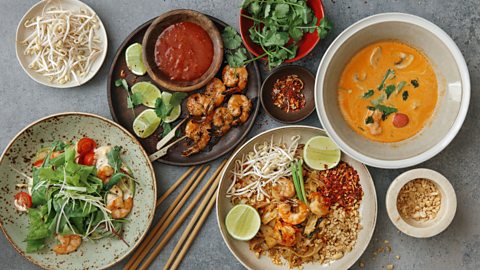
Originally from Bangkok, Marni Xuto moved to Yorkshire in 2003. A keen cook, she worked to replicate the dishes she knew and loved from back home with ingredients that she could find locally. This took a lot of experimenting.
Fast-forward 20 years and Xuto has grown a significant following on social media and gives demonstrations at food festivals, sharing recipes and championing Thai food, showing how easy it can be to cook.
Here’s her advice on how to make traditional Thai food without having to hunt down or spend a fortune on specialist ingredients.
The key flavour notes
“In Thai cooking we try to make sure we have all five flavour notes in our meals – sweet, salty, spicy, sour and bitterness. As long as you include this core flavour profile you can cook Thai food at home,” says Xuto.
“That doesn’t mean you need to have all the flavours in one dish, but across a meal. Thai food has such a vast array of flavours and when Thai people eat food, we eat a few dishes in order to counterbalance the flavours.”
“One of my favourite memories from childhood is when me and my family would sit down to eat with so many dishes in front of us that we had to get up and walk around to serve ourselves.”
One myth about Thai food that Xuto is keen to dispel is that all the food is very hot and spicy.
“That’s not true. Even if you do have a spicy dish, you can add something to it to lessen the impact. For example, there’s a street food in Thailand – a spicy stir-fry dish – called pad-kra-pao. From an early age, we knew when we ordered it to ask for a crispy fried egg on top, then you mix the two together and the creamy yolk mellows the whole dish.”
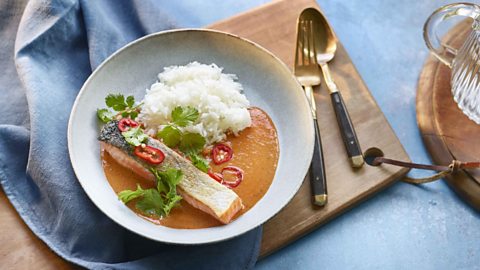
Salmon panang
This salmon curry has chillies in it but the creamy coconut milk helps to balance the heat
Preparation is key
Cooking Thai food isn’t tricky, says Xuto. “It’s all about preparation. For Thai food, we prepare a lot of ingredients, but the cooking method itself is very quick.”
Xuto advises you have all your ingredients measured and prepped before you start to cook. This is especially true when you’re making a stir-fry.
“By the time you’re cooking you’re going to be dealing with a hot, hot pan and hot oil and you’re going to really want to be able to concentrate on what’s in front of you. It will be cooked in a matter of minutes, so have everything ready to go.”
Not only does prepping ahead ease cooking stress, but it also delivers better results for ingredients like typically Thai rice noodles. “Rather than boiling my noodles at the last minute, I soak [them] in room-temperature water for about an hour until they’re slightly softened. Then I add them to the frying pan and continue to cook with a little bit of water. By doing this you won’t risk your noodles becoming gloopy and they won’t stick together.”
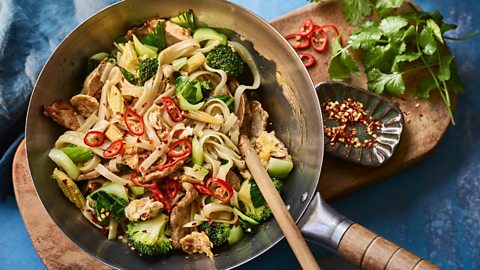
Pad see ew (Thai stir-fried noodles)
Soak the noodles rather than boil them – then you won't risk them becoming gloopy, says Xuto
Cheap and easy substitutions
Xuto has spent the last 20 years finding readily available UK ingredients that make ideal replacements for hard-to-come-by Thai items. Although, she says, it’s becoming easier and easier to find those traditional Thai ingredients on these shores now.
“When I first moved, there were barely any Thai ingredients in Yorkshire, but over the last five years, my city of Leeds has become a lot more cosmopolitan and there’s a lot more Thai ingredients now available.”
Still, there are some substitutions that are so successful that she continues to use them regardless. So, if you live in a part of the country where it’s still hard to access imported ingredients, you can still whip up a Thai feast.
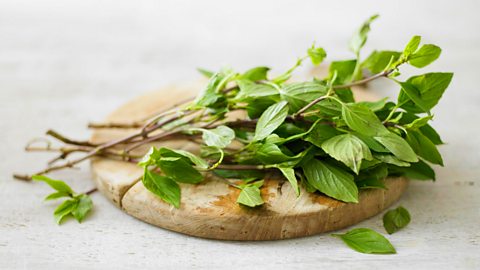
Basil
“I use regular basil instead of Thai sweet or holy basil (both of which have a darker colour, narrower leaves, and a slightly peppery flavour with an aniseed-like aroma). The rounder, lighter leaves of Italian-style basil give dishes a bit more sweetness which isn’t a bad thing, as then you don’t have to use quite so much sugar.”
Banana shallots
“In Thailand we use red shallots a lot but these are easy to replace with banana shallots. They work perfectly and don’t change the flavour.”
Yeast extract
A lot of Thai recipes use shrimp paste and, while that’s possible to buy here now, yeast extract is a really good, affordable alternative. It also means that if you’re making a vegetarian or vegan dish you can still get that umami flavour you expect from Thai food.”
Ginger
“When making a Thai curry paste, we traditionally include galangal in it, instead, I just use ginger. You need a little less than you would galangal, but you can use it in the same way.”
When substituting ingredients, it’s a good idea to check whether you need to change the quantity. Xuto learnt this from experience.
Before moving to the UK, she lived in the Caribbean and decided to make a Thai dish but couldn’t get hold of her usual chillies. “All I could find were Scotch bonnets, so I used them just like I would Thai chillies. My tongue was on fire and my tummy didn’t thank me much that night. That was a lesson learned!”
Master one element to make multiple dishes
You can make life easier for yourself and save money in the process by creating dishes that use the same ingredients.
“If you’re making larb or nam tok (Thai salad), you’re essentially using the same dressing, which is called jim jaew. This is a very versatile sauce from the north-east of Thailand. If you learn how to make it, you can conquer a lot of dishes.”
Thai beef salad (nam tok) with jim jaew dressing
This dish uses jim jaew dressing, which is well worth mastering
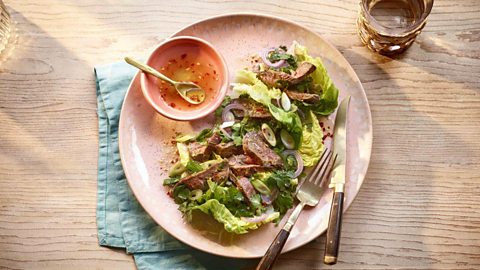
“If you made these two dishes (larb and nam tok) you could also create som tum which is a papaya salad – using that same dressing.
“My last tip? Make sure you share your food with someone… Our food always tastes better when you share it.”
Originally published August 2023