What is the secret to making perfect pancakes?
Shrove Tuesday – otherwise known as Pancake Day – is on 13 February. Whether you like them thin and folded or big and fluffy, make this year's pancakes the best ever with these tips from a pro chef.
For something so simple, I don’t think there can be many knottier subjects than pancakes. Emotions run high when it comes to this dish that doubles up as both a breakfast and dessert, and with so much written on them, there is a lot to unpack.
The pancakes of my childhood were always cooked and sprinkled with white granulated sugar and a good squeeze of lemon juice. Sometimes, if my brother and I hadn’t managed to demolish our usual quota, or if my mum had doubled the recipe and had enough time to fry more pancakes, we would eat them again the next day, served savoury, stuffed with bacon and mushrooms or spinach and cream. At the time, we thought this was extremely fancy.
In my 20s, while cooking in restaurants for a living, I came across smaller, fluffier pancakes, piled high and served with bacon and banana. Well, this truly was ground-breaking – a definite departure from my mum’s (or should I say Delia’s?) version.
Whichever way you like yours – thin and lacy, crêpe style, or fat and fluffy, so-called American style – there are some easy rules to follow to achieve pancake perfection.
Tips for perfect crêpes
Claire Thomson's tips for making the perfect pancakes
Batter basics
For crêpes or thin pancakes, when it comes to the liquid ingredients, there are some who swear by a straight mix of milk and eggs. Not me: I like to use a mix of water and milk in my pancake batter, as it makes for a lighter, frillier-edged pancake.
If you’re playing around with the ingredients, extra egg yolks can lend a richness. Likewise a couple of tablespoons of melted butter will make for a more luxurious batter and, some believe, help the pancakes not to stick in the pan. If you’re feeling really decadent, you could even add a splash of cream to the batter, or try a glug of beer for a malty flavour and really lacy edges.
I also love to experiment with different types of flour. I often switch out half the plain flour for buckwheat, which introduces earthy, savoury tones, or chestnut flour which gives a lovely nutty flavour. As with most sweet dishes, a touch of salt is a never a bad thing and I tend to add a good pinch of it.
The batter should be the consistency of single cream and free of any lumps. The secret to lump-free batter is to whisk the milk in gradually, making a very thick batter to begin with, which will essentially squash any lumps out, and then thin it to the right consistency.
And rest….
After all that whisking, allowing the batter to rest is a jolly good thing. It allows the gluten to relax, resulting in tender pancakes, and the flour to hydrate fully, which improves texture. Resting for 15 minutes is good, 30 minutes is even better – and you can also leave it in the fridge overnight if you’re being organised and planning ahead. However, I must confess that under the unique kind of pressure that only ravenous and impatient children can impress on you, I have skipped the resting time and the pancakes have still turned out absolutely fine.
How to make thin pancakes
These classic crêpes will be a hit on Pancake Day
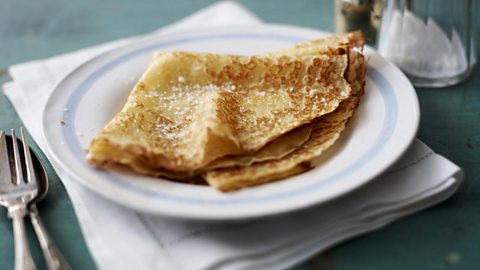
Get a handle on it
Whether you're making thin and delicate pancakes or prefer them light and fluffy, it’s essential the pan you use is non-stick – for obvious reasons. Cast-iron is a good option so long as the pan is well seasoned and you have strong arms! You can cook the pancakes in oil or butter, but sometimes I find that butter can go a little dark when the pan gets hot. I don’t mind a little browned butter flavour, but you need to be careful it doesn’t tip over into having an acrid, burnt taste. Oil is a safer option.
Cook them over a medium-high heat and use a cup or ladle of a known quantity to ensure you get the thinnest possible pancake for your pan. Just tilt it round to coat the base as soon as the batter hits the surface.
Tips for the fluffiest American-style pancakes
There are three key components to getting the fluffiest pancakes ever: the raising agent, the acid and egg whites. Let’s break them down.
All rise
A raising agent is essential for lift. Most recipes will call for baking powder, but if you also add in a little bicarbonate of soda you’re going to get an extra boost.
Bicarb is powerful stuff but too much of it can lead to a very unpleasant metallic or soapy flavour. Likewise, little lumps of it in the batter will taste horrible, so make sure you sift it in with the flour. Sifting is a good idea anyway because it’s going to get lots of air into the flour and help create a light pancake.
While baking powder already has an acid added in it, in order for the bicarbonate of soda to work, it needs to react with an acid, which bring us neatly on to…
Choosing your acid
Buttermilk is the classic choice for an American style pancake. These days it’s made by adding bacteria cultures to pasteurised milk, which is left to ferment. This process of fermentation converts the milk sugars to lactic acid, giving it its tangy flavour.
However, buttermilk is not your only option. My preferred choice of acid is kefir, which is also a cultured milk, made by fermenting milk with kefir grains. It has a slightly sour taste and is a little bit fizzy due to the carbon dioxide that’s released during the fermentation process. You could also use yoghurt, crème fraîche or soured cream. But even a teaspoon of lemon juice added to the milk 15 minutes before it’s whisked into the batter will stand in.
When stirring the batter together, unlike when making thin pancakes, don’t go at it hammer and tongs to avoid lumps. A few floury lumps are not going to cause any issues here, but tough, overworked gluten will make the pancakes heavy and rubbery. Stir the batter until it’s just combined, then it’s ready to cook.
There is however, a third way to make those pancakes still fluffier. It takes a little bit of effort, and an extra bowl but, believe me, it’s worth it.
Whisk the egg whites
If you mix the egg yolks into the batter with the milk and kefir (or acid of your choice) but set the whites aside, you can then whisk the whites to firm peaks and fold them into the batter. All the extra air bubbles trapped in the egg whites will expand as the pancakes cook, giving them additional height.
Fold the egg whites gently into the batter and don’t worry about the lumps – the most important thing is not to overwork the batter.
Fluffiest ever pancakes
If you prefer American-style pancakes, these are wonderfully fluffy
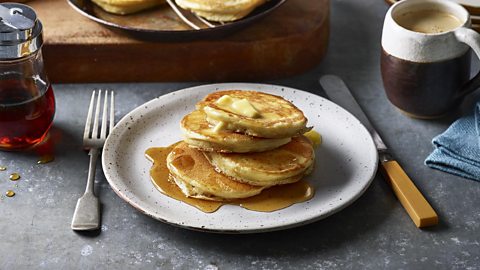
Look for the bubbles
Spoon the batter into a fairly hot non-stick pan, again greased with either butter or oil – and be gentle about it. The raising agents get to work producing bubbles immediately, and those bubbles will start escaping more quickly if you are rough with the batter or keep stirring it.
Getting the heat level right is essential so that the thick, fluffy pancakes are cooked through without overly browning on the outside. It’s time to flip when the bubbles start to pop, the surface has one or two small craters and the edges look firmed up. If the pancakes are too brown when you flip, just reduce the heat a little. A very fluffy pancake will rise again when you flip it. Very satisfying to watch.
Get creative
A classic serving of American pancakes with blueberries, yoghurt and a generous drizzle of maple syrup is hard to beat – but there are endless ways to serve your pancakes. Ricotta and honey is a great combination, or try apple purée with a sprinkle of cinnamon. Ice cream is always an unbeatable treat. So too is peanut butter, a drizzle of honey and fat coins of sliced banana. Chocolate spread has also been known to make an appearance on high days and holidays.
Whether you opt for crêpes or American style, savoury or sweet fillings, I hope you’ll enjoy cooking pancakes at home this Shrove Tuesday. Don’t relegate them to a once-a-year treat – they make a brilliant meal or snack at any time of year.
Originally published February 2023