The Gateshead pensioners who revolutionised takeaways
How a 20p Greggs sausage roll, ski jackets and an army of India's dabbawalas paved the way for modern-day food delivery apps.
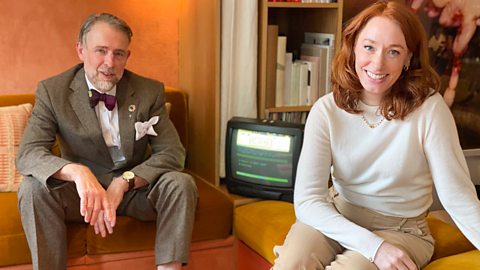
In the new BBC Two series, The Secret Genius Of Modern Life, Prof. Hannah Fry uncovers the secrets behind the miraculous technologies of the modern world. In the second episode the mathematician unpicks the logistical and technological phenomenon used by 24 million people in the UK – food delivery apps.
Using screens to order before the internet
In 1984 a "smart" TV couldn't stream thousands of programmes, but it could share up to the minute news and information via Ceefax and Teletext. This text-based data service was far more accessible than the nascent internet, but only sent information one-way – from broadcaster to televisions.
Lesser known is Videotex which allowed two-way communication, so that people selected what would appear on their screen by typing in numbers on their remote control.
Technology entrepreneur Michael Aldridge thought Videotex could double up as a food and shopping service, in which the remote control could be used to pick items on a food menu, sending instructions via a phone line directly to a retailer.
So, who to trial this game-changing tech? Step up older residents of the North East who were struggling to get to the new out-of-town shopping centres.
Aldridge enlisted the help of Gateshead Council to try the bleeding-edge technology with three retailers: Tesco, Lloyds Pharmacy and Greggs in ‘The Gateshead Shopping Experiment’. Tap in a couple of numbers, and a 20p Greggs sausage roll would be winging its way to you. (That's right: 20p.)
Next time you’re ordering a Friday night curry think of 74 year-old Jane Snowball, recovering from a broken hip almost 40 years ago, choosing a sausage roll by pressing '2' on her TV remote. She paved the way.
The earliest phone-in takeaway order
In 1922 telephones were growing in popularity and Los Angeles had the largest switchboard in the world. Local Chinese restaurant, Kin-Chu Café took advantage of the technology surge to increase their business and cut waiting times in the restaurant. They encouraged customers to call in their orders between the times of 11am-1am. It was the first-time people could order their food from the comfort of their own home before collecting it.
The world’s first mass meal delivery system
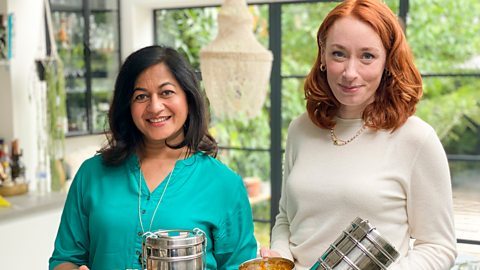
It's not enough to be able to take orders from a distance, the logistics of getting the food to us is another complex technical challenge. But the idea of having couriers transporting hot meals pre-dates modern tech by more than a hundred years.
In 19th century India people would travel into Mumbai to work in the city’s offices, however they wouldn’t be able to keep a home-cooked meal hot until their lunch break.
Rather than ordering from a restaurant, a network of dabbawalas was organised to bring your lunch from home – still hot.
Mahadeo Havaji Bachche came up with the idea that food couriers could pick up meals from homes, write an address code on top of their tiffin tins, and travel by train via the dabbawalas into the city. There the tins were loaded onto bicycles and whizzed to hungry workers at lunchtime.
You might think that food delivery apps would make the work of dabbawalas redundant, but they are still going strong – delivering to 200,000 city workers a day. They are so revered there has been a Harvard Business School study into how the system manages to be so accurate and efficient.
Ski wear keeps your takeaways warm
American Ingrid Kosar also tackled the tricky problem of keeping deliveries hot. Kosar was working as a buyer for a steel company. However, she was keen to set up her own business using her technical knowledge.
Up to the early 1980s, pizza companies had tried various methods to keep their pizzas warm when out for delivery. From wrapping the boxes in blankets to using electric heaters in the back of cars (unsurprisingly, a massive fire hazard).
Kosar had a lightbulb moment – if the material for ski wear kept people warm in freezing conditions, could it do the same for pizzas? While trying to drum up investors, she met with Domino's pizza. They set her a challenge: if Kosar could create a bag which would keep pizza at 140C for 30 minutes they’d give her a manufacturing contract.
After numerous test runs, in 1983 she (literally) tasted success, filed a patent and the rest is history. To this day, Kosar’s basic design is still used for food deliveries.
Watch The Secret Genius Of Modern Life: Food Delivery App on Thursday 17 November, BBC Two at 8pm, or on BBC iPlayer.