The surprising way Hugh reduced his stress
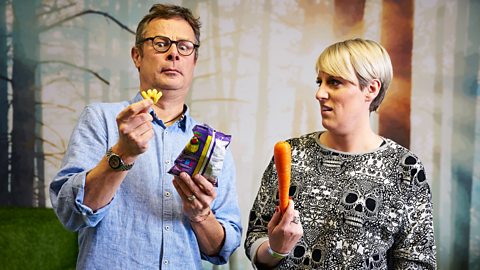
As Steph McGovern drives, she cracks open a bag of crisps. Hugh Fearnley-Whittingstall sits in the passenger seat next to her and, looking appalled by her snack, bites into his apple. A few minutes later he reaches into the glove compartment for his next ‘treat’. Steph is horrified: “Who brings a raw carrot with them on a road trip Hugh? It’s all about crisps and sweets and chocolate when you’re on a road trip”, says the former BBC Breakfast presenter.
The two are driving to a Welsh GP surgery to oversee a challenge as part of the new BBC One show, Easy Ways to Live Well. The three-part series sees Hugh and Steph join forces with a bunch of willing volunteers to try to find out if emerging scientific research focused on improving people’s wellbeing – including their diet and physical and mental health – really works. And the pair aren’t just presenting the programme, they’re taking on challenges too.
Given Hugh’s experience of growing and cooking food, examining diets and investigating the obesity crisis, you might think he’d be best suited to taking on the dietary challenges. But, as Steph says, “Hugh is like the poster boy for having a healthy life. Not like me, poppity-ping in the microwave”.
This means in the first episode it’s Steph who attempts to improve her gut health – with the support of Hugh, who introduces her to his own homemade kombucha. Instead, the celebrity chef takes on a challenge which is literally out of his comfort zone.
“I get stressed, I’m a stressy kind of person… I know I need to do something about that”, he says.
The show’s resident doctor, Dr Zoe Williams, prescribes Hugh with a course of cold-water therapy – which involves having cold showers every day.
The River Cottage cook received this challenge in January 2019. A year on, Hugh explains how the simple experiment changed his life.
The importance of having an open mind
“Steph and I had to go into all of the challenges with an open mind about emerging science that suggests there are ways to help take care of ourselves. These aren’t medical fixes, but they could bring benefits – not necessarily for everyone, we have to be clear about that.”
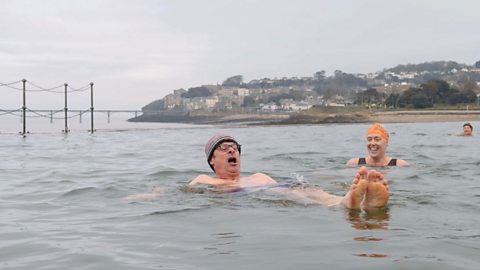
I had my first cold shower, then I went to a pond to swim soon after, and a week or two later I went for an icy cold sea swim. The coldest one I’ve done was swimming in the sea – which you see in episode one. It was about three or four degrees and there had been a frost overnight. It was a shallow, tidal lagoon… I found it very hard. I was in the water for two to three minutes.” And how long did it feel? “About two to three years! I was in there long enough to do a couple of chattering pieces to camera, but you can see I could barely speak”, he says.
“People get mental health benefits from it”
While Hugh is obviously in discomfort when he goes into the sea, when he steps out it’s a different story. With the initial shock having passed, he explains “I feel invigorated, I feel ready for anything actually, I feel alive.”
It’s this mix of both physical and emotional responses that kept Hugh persisting with the challenge.
He was also intrigued by the positive conversations he had with the people he entered the sea with on that cold and frosty January morning. “They were really lovely people and talking to them was part of what led to me to make a go of it. They were swearing about the benefits.”
“I think there was a variety (of responses), but you could loosely say people get mental health benefits from it and it gives a genuine boost.”
The science behind it
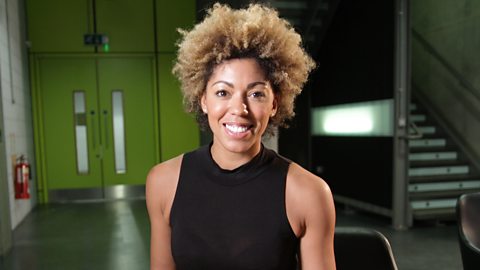
Dr Zoe Williams explains what the theory behind cold-water therapy is and why it might suit Hugh.
“The cold water is a ‘shock to the system’ or, more scientifically, it evokes a stress response that many of us know as ‘fight or flight’. We’ve evolved to have this response, which primes us for danger and is extremely helpful if faced with a bear, or indeed if we fall into cold water. But that same ‘stress response’ can be triggered by much less dangerous experiences in modern-day life, such as missing a bus or having an argument.
“We are designed, as human beings, to deal with infrequent, short bursts of stress. But Hugh, like many of us, was experiencing constant, daily stress, which we know is dangerous for our health and has been linked to many lifestyle-related diseases, such as type-2 diabetes, heart disease and mental health problems.
“So how does the cold-water therapy help? One way to think of it is that our stress ‘alert system’ has become over-sensitive in today’s world, and a short blast of freezing cold water every morning reminds it what a real threat feels like, and makes those everyday irritabilities less likely to trigger the full stress response.”
Becoming a routine
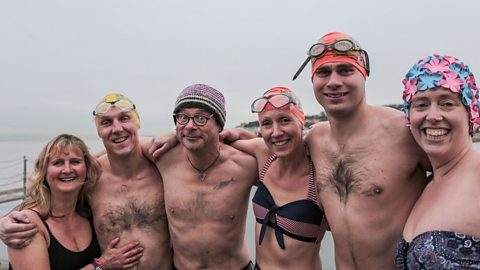
When the cold-water challenge ended, Hugh decided to keep going. “I thought it would be something I’d do once in the while, but I’ve now done a year, and I’m absolutely sure I haven’t missed a single day.”
Hugh mixes doing cold-water showers with a programme of cold-water swimming. He starts each morning with a warm shower, but towards the end “I whack down the cold tap for the blast and I do a minimum of a couple of minutes, but sometimes I’ll do 3–4 minutes.
“At the weekend, I try to get to the sea or pond”, he adds. Occasionally, through necessity, he has to opt for the type of cold-water therapy he says is the hardest – an ice-cold bath. “When you’re in the shower already, you’ve just got to turn it to cold. When you’re in the sea or pond, you’re out in the wilds and embracing nature. But to climb into an ice-cold bath willingly?
“If I’m travelling for work and in a hotel, sometimes the water is cool rather than properly cold, so my daily worry now isn’t that the water won’t be warm enough, but that it won’t be cold enough!”. When that happens, if there’s a bath available, he fills it with cold water and then “chucks in a bucket of ice” before climbing in.
You might think that on the days when that’s the only viable option, Hugh would choose to have a day off from the therapy, but that simply isn’t a choice for him. “I know from people who’ve taken a break from the cold showers that it’s very hard to get back into them… I want to keep it going!”
A year down the line, is Hugh less stressed?
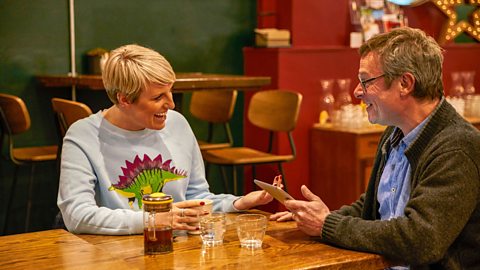
“With stress, you feel it in your body as well as your mind… I think (cold-water therapy) helps you cope with stress better, I think that’s been the benefit for me. Also, I go through phases of sleeping quite poorly, and my sleep in the past year has been better than the previous year – not perfect but better – and I think it’s been a factor in that.”
Early on in the experiment, you see Hugh and Dr Zoe Williams discussing that he gets stressed out by small things, so has that improved? “I can be a stressed out traveller – planes and trains not connecting in the way they should – I can get frustrated and wound up, and I think I’m better about that. Of course, it’s impossible to say, ‘I no longer get annoyed by a delayed train because I had a cold shower this morning’. It doesn’t occur in the brain quite like that, but what I can say is that I really like the way the cold shower starts my day.
“I definitely like the way it wakes me up and sets me about the day with a bit more of a spring in my step, and I’m quite prepared to accept the hypothesis that it’s to do with improving your ability to deal with stress. I feel like I’m getting that sort of benefit.”
He adds “It’s like a concentrated version of a walk on a cold, rainy and windy day. You come in afterwards and you suddenly feel all comforted, warm and lovely, and so there’s an upside to it.”
But, it won’t be for everyone…
Hugh admits that one reason he’s been able to continue with the experiment every day is that he’s not been ill – other than a couple of short-lived “sniffles” over the last year. “I have asked myself if it would be sensible to get under cold water when not feeling 100 percent… if I got a really bad cold or flu there would be a real dilemma there.”
Very cold water can be dangerous – especially for people with a heart condition – so if you’re considering attempting cold-water therapy, check with your GP first.
Watch Easy Ways To Live Well on BBC One at 8pm on January 22, or catch up on BBC iPlayer.