Structures, trends, chemical reactions, quantitative chemistry and analysis
Atomic structure
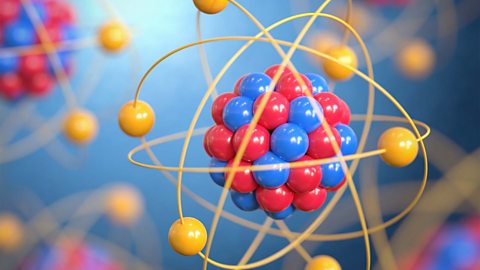
Atoms have a positively-charged nucleus made of protons and neutrons, and negatively-charged electrons that orbit the nucleus in shells.
Bonding
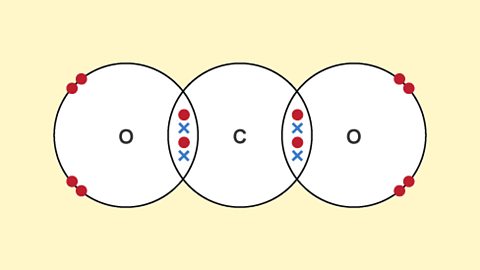
Revise the difference between ionic, covalent and metallic bonding, and understand how to interpret dot and cross diagrams.
Structures
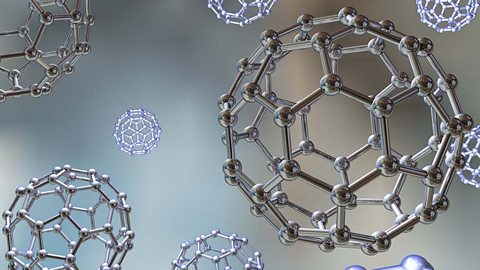
Revise covalent and ionic compounds and structures, and see how the two types of bond give rise to different physical properties in the resulting substance.

Nanoparticles
Learn about nanoparticle properties and their surface area to volume ratio.
Symbols, formulae and equations
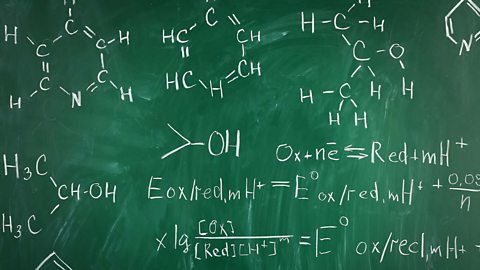
Learn how symbols, formulae and equations help chemists explain chemical reactions in detail.
The periodic table
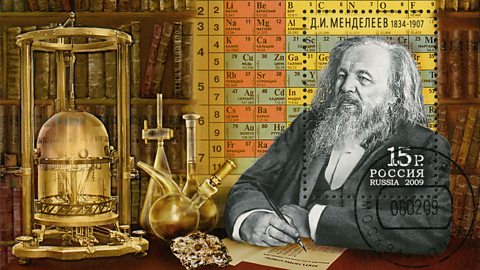
Revise the history, patterns and structure of the periodic table including; groups and periods; group 1 metals; transition metals; non-metals; reactivity.
Quantitative chemistry (1)
Learn about how chemists use relative atomic masses and relative formula masses to carry out mole calculations.

Acids, bases and salts
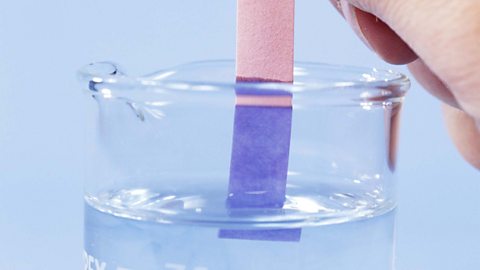
Learn about how many chemicals are acidic, neutral or alkaline and how we can distinguish one from another using indicators.
Chemical analysis
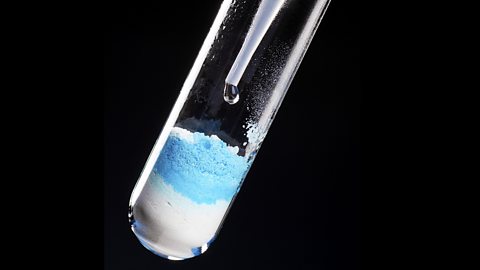
Learn how to separate and analyse chemicals using filtration; crystallisation; paper chromatography; simple and fractional distillation; flame tests.
Links
- External linkExternal link
- SubscriptionSubscription
- External linkExternal link
- External linkExternal link
- SubscriptionSubscription
- External linkExternal link
- External linkExternal link
- SubscriptionSubscription