19 June is Sickle Cell Day 2021, a day which aims to raise awareness of the disease and what it means for people who live with it - like Courteney.
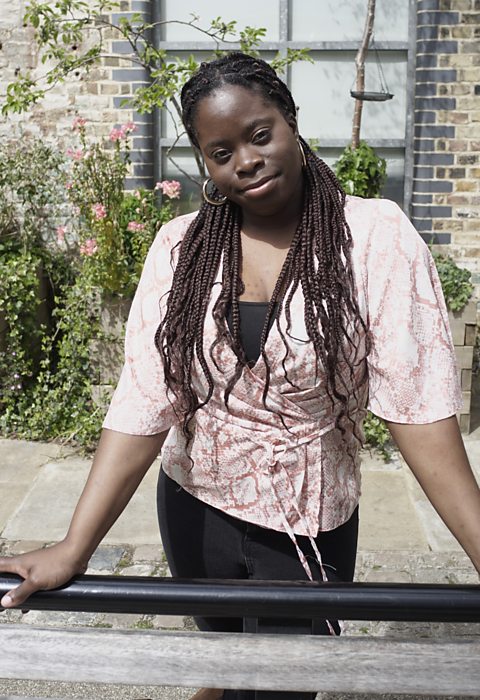 Image source, Courteney
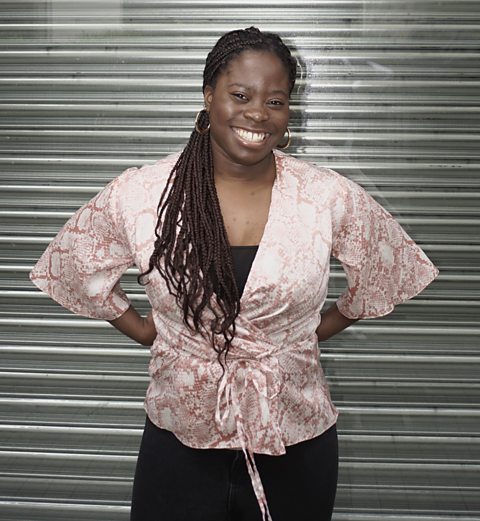
Courteney is a 23-year-old entrepreneurship graduate who has recently started a job as a business administrator. She enjoys reading and cooking in her spare time, and she has sickle cell disease.
Blood cells are round – this allows them to travel around your body easily. But if you have sickle cell disease, your red blood cells are shaped differently. This means they can get ‘stuck’ in blood vessels, which “causes a lot of pain and a lot of other complicated issues”, Courteney explains.
Not everyone with the condition will have the same symptoms, but some of the things Courteney personally experiences include a condition that means you have too little red blood cells, or they don't work properly tiredness or lack of energy when parts of your body, for example your skin or whites of your eyes, turn yellow (in her eyes), and when your body doesn't have as much water as it needs
These symptoms also serve as warning signs that she may be gearing up towards a sickle cell crisis that day. Sickle cell crises are painful episodes which occur when the blood vessels get blocked, and can last up to a week. Having been diagnosed before she was born, Courteney has had a long time to learn how to pay attention to her body and prepare for such occurrences:
“As I've grown up, I've learned to notice the signs… and my mum has helped me learn. [She might say] your eyes look a bit yellow today, you need to drink more to prevent a crisis, or if you're going to be in cold situations you have extra layers to keep yourself warm.”
She feels most comfortable managing her symptoms at home, as she says it's her “safe space”, but she preps a lot in advance before going out and about to make sure she can manage elsewhere, too. As well as doing things like remembering to drink lots of water, she has a card that she can give to people if she has a crisis in public.
Image source, Courteney
WATCH: Courteney busts five myths about sickle cell disease
Over time, Courteney has figured out how to communicate how she feels. For example, she and her family developed a scale system to describe her pain ranging from one to ten, which is manageable to very serious.
Her mum in particular has been brilliant at helping her learn to cope with the pain, and to do things that help alleviate it: “She'll be there if I can't sleep, she’ll massage the pain areas.”
Of course, living with the condition hasn’t always been easy. Courtney says she “used to think a lot of it as a hindrance”, and that she “didn't really want to talk about it to people.” But now, she embraces it, and has found positives.
She says it’s taught her tons about resilience, as “you don't have control in the way that you'll probably want to control of your life”, but she doesn’t that let her stop her from doing the things she wants to do, like hang out with friends and build a career.
Courteney says that the Sickle Cell Society has also helped her get in touch with people her age with the condition, which has been a massive help. Occasionally she’ll get texts asking if she's got similar symptoms coming on, which always come as a nice surprise: “It helps you not feel lonely, which is definitely a positive with a condition like this because it can be very isolating.”
Even though everyone’s experience will be different, you can have a completely normal, fun-filled life with sickle cell disease. Courteney’s advice to those who might be newly diagnosed would be “it will take a while, but it's not as overwhelming as it might at first appear”. In other words, just keep learning from your experiences: “There are ways to cope and deal. It's not always going to be that way, sometimes the pain just comes and you can't stop it, but you can help alleviate it.”
If you have a mate with sickle cell disease, listening to them and crucially believing them when they tell you how they feel is something that Courteney says is vital. It’s important in her view to remember that sickle cell is an “invisible disability”, as “you really can't really tell how much pain someone is in unless it's overwhelming.” On the flip side though, she says it’s equally frustrating when people don’t believe she’s feeling fine, or that she can cope with certain symptoms: “Don't over assume; I don't need to be watched or coddled, I will explain to you where I'm at.”
And if you’re someone who has caring responsibilities, such as a teacher or a manager, Courteney says that communication is just as crucial, if not more so: “I just think it's about talking to them about how they feel what they need to have in place. What do they feel like, what can help manage; I think it's always good to have at least one meeting early on to say ‘how can I help you?’, and then go from there.”
Learning Disability Week 2021: 'I loved going to secondary school because it was so exciting'
Actor George Webster tells us about what school was like for him, what he enjoyed and how he overcame some of the challenges he faced.

Lucy Edwards: My disability, my career and me
TikTok influencer and journalist Lucy Edwards gives the low down on her career.

The small steps that made a difference to my wellbeing during lockdown
Blogger Nancy Lova talks about the acts of self-care that shifted her perspective.