Twenty-five years on since we last saw them stomp across our screens, a new series of Walking With Dinosaurs showcases the lives of six incredible dinosaurs like never before.
Some like the beloved Triceratops and ferocious Spinosaurus are regulars on pencil cases and in the movies, but others such as the gigantic Lusotitan or the smaller, bump-nosed Pachyrhinosaurus you might meet for the first time.
Please allow BBC Bitesize to introduce you to those with main character energy:
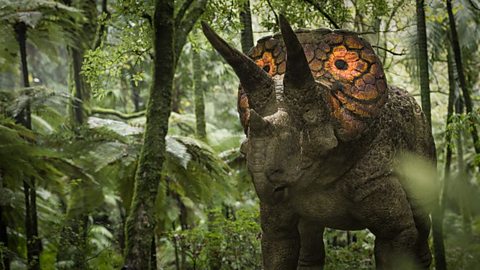 Image source, BBC Studios
Triceratops
Possibly one of the most recognisable ‘Rock Star’ dinosaurs, Triceratops was named after its three distinct horns, literally "three-horned face" in Greek.
Scientists have long debated whether these horns and their bony neck frill were used as defensive weapons. But when blood vessels holes were discovered within these structures, this suggested their use in courtship and dominance displays.
Triceratops grew up to nine metres long, and could weigh as much as 10-tonnes, sharing some physical similarities with modern-day rhinoceroses. They were plant eaters and lived in the Cretaceous period between 68 and 66 million years ago.
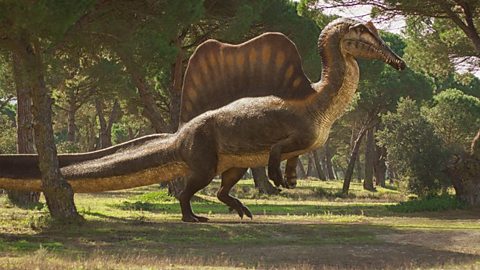 Image source, BBC Studios
Spinosaurus
Spinosaurus means ‘spine lizard’ in Greek after the sail-like structure running down its back. Scientists believe this sail, raised on bones two metres long, may have helped regulate body temperature and be used in courtship and territorial displays.
They were one of the largest of the Carnivorous dinosaurs that walked on two legs meat-eating dinosaurs, possibly larger than some T. rex, measuring nose to tail up to 14 metres long and weighing as much as eight tonnes.
Spinosaurus’ skull was long and narrow, similar to crocodiles today and scientist believe they would prey on fish and other smaller dinosaurs in the swampy areas of modern North Africa in the Late Cretaceous period, 100 million years ago.
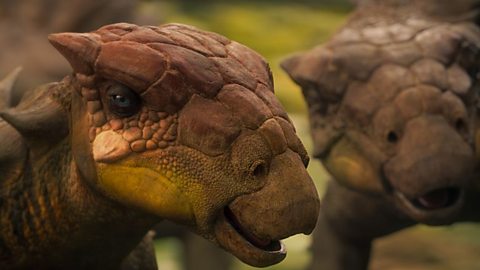 Image source, BBC Studios
Gastonia
Gastonia belonged to the family of armoured dinosaurs, the polacanthines. Protected by bony deposits that formed plates and blade-sharp spikes on their skin, the bone that connected the neck to the head acted as a shock absorber, with headbutting thought to be a social activity to show their assertiveness.
This armour and weaponry was crucial for defence but also useful for display and territorial combat with rivals. At four metres long, heavy and low slung, Gastonia was not an easy snack or pushover in battle.
They were plant-eating forest dwellers living 130 million years ago in the Early Cretaceous period
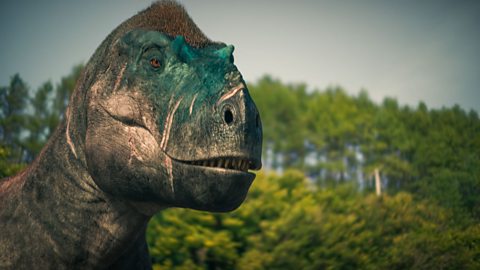 Image source, BBC Studios
Albertosaurus
A theropod cousin of T. rex, the Albertosaurus was a leaner, lighter and faster relative. Despite being nine metres long they had slender hind limbs, weighing more like two tonnes compared to Tyrannosaurus rex’s eight tonnes, they were designed for speed.
Albertosaurus may well have been the top predator in their locality, 71 million years ago in the Late Cretaceous period.
Scientists suggest they hunted their prey in packs through the forests of Alberta, Canada as a large group of skeletons were found all together there. Hence the name.
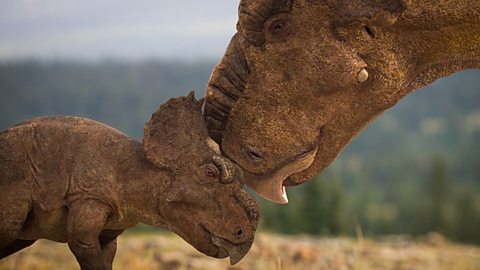 Image source, BBC Studios
Pachyrhinosaurus
From the same Plant-eating dinosaurs with beaks, bony frills and occasionally horns. family as the Triceratops, Pachyrhinosaurus was smaller at six metres long and lived before them during the Late Cretaceous period, 73 million years ago.
Unlike other horned relatives, Pachyrhinosaurus had a unique bony lump above their nose (called a nasal boss) and on their face, neck frill and above the eyes.
Scientists believe Pachyrhinosaurus moved in large herds grazing across forested areas, based on clues found in fossils of family groups discovered together in the North American regions of Alberta and Alaska.
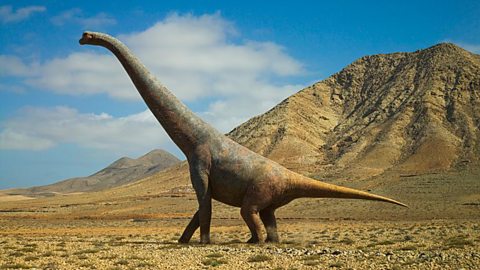 Image source, BBC Studios
Lusotitan
Lusotitan was one of the Jurassic era’s giants! Within the group of Very large herbivores that walked on four legs and had long necks, small heads and long tails, known for their massive size and long necks, Lusotitan is amongst the greats.
Herbivores who stood at nine metres tall and 25 metres long, with huge pillar-like legs, Lusotitan weighed 40 tonnes.
Living 145 million years ago, when the Earth’s land mass was splitting apart into what eventually became the different continents, Lusotitan roamed the forests of what is now modern day Portugal and Spain.
When first discovered, scientists believed the skeleton to be a A large four legged dinosaur that lived in the Late Jurassic period, 152-145 million years ago. It was around 22 metres long but further study revealed enough differences to establish this as a brand new species.
This article was published in May 2025
Dinosaurs: The Final Day quiz
How much do you know about the prehistoric creatures in the new David Attenborough documentary?
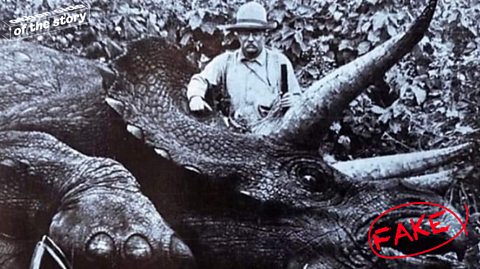
Why did this fake dinosaur image go viral?
How a picture of a former US president went viral - and how to spot fake images
Five amazing prehistoric sites you can visit today in the UK
Find out more about the interesting stories behind these locations in the UK