People often say that laughter is the best medicine - so it makes sense that science plays a part in why we find some things universally funny.
From slapstick to stand-up, we all have our own sense of humour and favourites that tickle our funny bones? But what are the ways you can nearly almost guarantee giving someone the giggles?
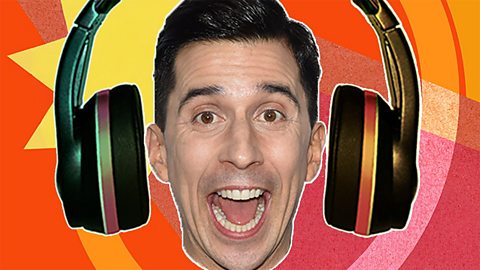
BBC Bitesize spoke to British comedian and 'Professor of Laughter' Dr Oliver Double to find out the scientifically proven ways of making someone laugh.

1. Funny animal videos
Lots of people find clips of cats and dogs cute - but showing one to a friend can also be a sure-fire way to make them laugh.
But according to Dr Oliver, it's one specific thing they do that can set us off - when it seems as if they're acting like people.
The humour comes from imposing human qualities onto the world of animals. When those two planes of reality intersect it’s the incongruity, or the unexpected, that makes us laugh.
That's why we find it so funny if we see a dog sat at a piano, or a grumpy cat mid-sulk - any maybe why the engineering, philosophising, knitting Gromit is seen as one of the funniest silent film characters of all time.

2. Kids saying the funniest things
Children blurting out whatever they're thinking, regardless of how appropriate it is, can definitely be funny - it's even formed the basis of television shows around the world. But why do we find it amusing?
Dr Oliver says it's similar to why an animal clip makes us laugh and it's all to do with something called incongruity theory.
This is all about unexpected mismatches - the idea that anything contrary to our normal expectations makes us laugh.
When it comes to kids, Dr Oliver says a child saying something they don't fully understand the meaning or gravity of, or that just sounds too old to come out of their young mouths, can lead to lots of laughter.

Finding your sense of humour

Developmental psychologists have worked out a series of stages that we all go through in order to be able to joke and share humour.
It starts as babies when we begin to develop verbal humour – this stage is called pre-riddles. In young children the brain then begins to form the idea of a riddle and understands that it is funny.
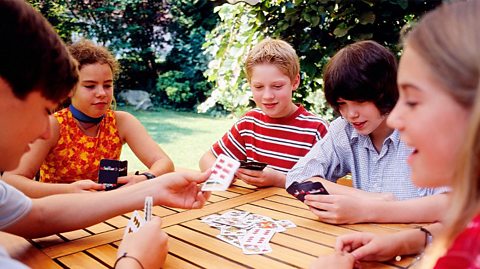
As we get older and hit the tween and teen stage, socialising becomes a big part of development – and for Dr Oliver, laughter is key. He says with teens you can sometimes get “laughter like you've never heard”.
He finds it often happens when people at this stage talk about social experiences, the kind fraught with anxiety: “If you can get them into a situation where they feel safe to talk about experiences they've had - sometimes they can make a confession to the group that everybody just cracks up because everybody can relate to it”.
3. A comedy TV show
While it might seem obvious to say that a sitcom will make someone laugh - the experience of watching something with someone else might just make them find it even more amusing.
Comedy shows are, of course, cleverly written with the aim of being funny and often by appealing to mass audiences.
Ever noticed a joke or a line in a programme that got the adults giggling while the children looked confused? Writers for shows for all ages will often include jokes that specifically allude to something only a grown-up will know about - but in a way that still won't offend younger viewers. Even shows like Bluey do this - with jokes for the adults deliberately written to go over the kids' heads.
But while these shows clearly aim to be funny - there's something in the collective experience of watching it with someone that will make the group laugh. As Dr Oliver explains, watching a show with friends or family is a much more enjoyable experience than watching it alone. Laughter is said to be contagious - so to make someone else giggle, put something you find funny on and laugh your socks off.

4. Being tickled
This is a divisive one - because while tickling will often make someone laugh, there's a decent chance they'll absolutely hate it at the same time.
According to Dr Oliver, one scientific theory behind why tickling makes us laugh is because tickling is a form of a “mock attack”. This means that you can pretend that you’re in danger, but you're not. You know you’re safe and being tickled by someone you’re familiar with.
But why does something that we hate make us laugh? Dr Oliver says it's down to the gap between your body going into fight-or-flight mode and your brain knowing it's not a real threat - and that the person tickling you won't actually do you any harm.
So, tickling can be a very easy way to get somebody else to laugh - but it's also important to remember that not everybody wants to be touched in that way and you may need to establish some boundaries to make sure everyone feels safe.

5. Babies reacting to their own reflection
Slightly trickier to achieve than sticking on a classic episode of Ghosts if there's not a baby in the household - but newborns can, surprisingly, be a rich source of comedy.
“What's interesting about babies is they're kind of like us, but they’re at such an early stage of their development that they’re not quite like us,” Dr Oliver says.
It's precisely those early development stages and their curiosity and exploration can can lead to classic chuckles. The humour comes, Dr Oliver suggests, from them doing things “where we see the seed of the fully fledged adult and what they’re going to become”.
For Dr Oliver, that's precisely where the amusement comes from - and in particular, because of the sheer authentic and genuine nature of their behaviour. We find babies reacting to themselves in mirrors hilarious because they are fascinated with what they see in front of them in a very serious way - a heightened and often over-exaggerated response to something most of us find fairly mundane.
Learning to tell jokes

To make someone laugh, Dr Oliver says you need to be aware who you are talking to. He explains that you can tap into a playfulness in yourself that comes from informality. You learn to read non-verbal cues, listening to what’s being said by the person you’re talking to and then play with the things you say back.
He told us that for teaching stand-up he invented a method called “microphone conversations”. These conversations are like putting a gigantic magnifying glass over the person speaking. They allow everyone else to notice all the small things a person does that are not normally picked up on. “That can become part of what makes you funny, because it's like a persona,” Dr Oliver explains.
"It's almost like making a collage out of your quirks and foibles, putting those together,” he says.
6. Watching someone try not to laugh
Trying not to laugh is almost nailed on to actually make you laugh. It's knowing that you're not supposed to do it that makes it funnier - and probably the reason why a hit comedy franchise has found success around the world by forcing comedians to not laugh at each other.
Dr Oliver says this theory comes to light in an essay, called Jokes, which was written by an called Mary Douglas.
He explains that joking and laughter always represents informality over formality, a lack of control over actual control. “Everything’s telling you not to laugh, and because everything's telling you not to laugh, you eventually crack up” Dr Oliver says.
So the easiest way to make someone else laugh might actually be to not laugh yourself.

7. Someone getting the giggles in a serious situation
Trying not to laugh and knowing you definitely shouldn't laugh often go hand-in-hand - but why do seriously unfunny things often lead to sniggers and smirks?
It's all about the release of pressure and tension according to Dr Oliver. Those serious situations, such as a telling off, force us to squash all the things that make us feel playful or silly down.
But hiding all of those fun thoughts and feelings is too much for too long and the pressure can get to us - and often leads to uncontrollable laughing. Which leads to a bigger telling off, and almost certainly more laughter.
Dr Oliver Double was speaking to BBC Bitesize following a recent research project in partnership with Cartoon Network to celebrate the launch of The Wonderfully Weird World of Gumball.
This article was published in November 2025