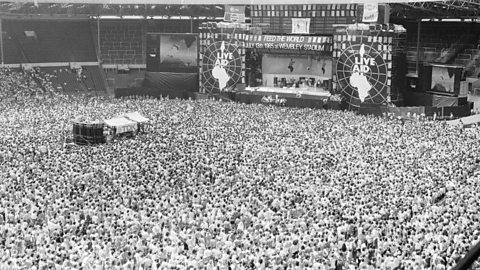
On the July 13 1985, a cross-continental concert changed live music forever. Live Aid was broadcast directly from Wembley Stadium in London and JFK Stadium in Philadelphia right across the world. Bob Geldof spearheaded the idea, after working with Midge Ure on the charity single ‘Do They Know it’s Christmas’. The idea to hold a worldwide concert was laughed out of numerous US TV network offices as it was seen to be an impossible production. Yet in just 12 short weeks, Bob Geldof’s idea became reality and more that 1.5 billion people tuned in to watch.
It was a whirlwind event and it has been celebrated and criticised throughout the years, but here are some facts about the lead up and actual production of the show you may not have heard before.
Not everyone on the bill was confirmed
Just four weeks before Live Aid was due to take place Bob Geldof and Harvey Goldsmith held a press conference where Geldof announced the artists who were ‘confirmed’ to play. However many of these acts were not confirmed, and in some cases had not even been asked.
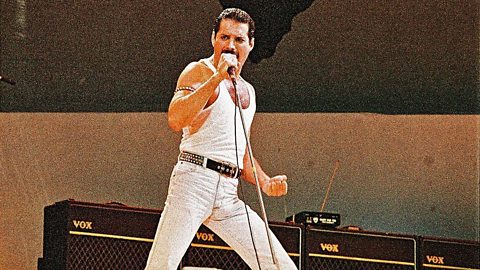
One of them was Queen - who went on to give one of the most iconic performances of the entire event. When Queen were somewhat prematurely announced, their manager Jim Beach called Goldsmith immediately. Goldsmith recalls that at that point the manager of Queen had no idea what Live Aid even was, let alone whether Queen could play it.
‘Band Aid ‘blacklist’'
In 1985 The Voice, a black British press outlet, criticised Live Aid for deliberately excluding black British artists. They used the headline ‘Band Aid ‘blacklist’ with the sub heading ‘Black acts dismayed at exclusions on mega concert’.
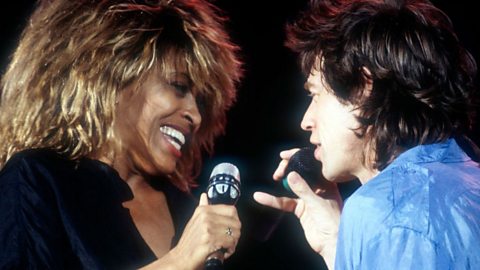
Across the pond in the USA, Michael Jackson and Lionel Ritchie had written the charity single ‘We are the World’ in association with Band Aid to raise money for the Ethiopian famine. Many of the black artists who were part of this song declined to participate in the concert. Although some American artists like Tina Turner and Patti LaBelle did perform, other artists like Michael Jackson and Stevie Wonder did not.
From Wembley Stadium to the Wembley arena
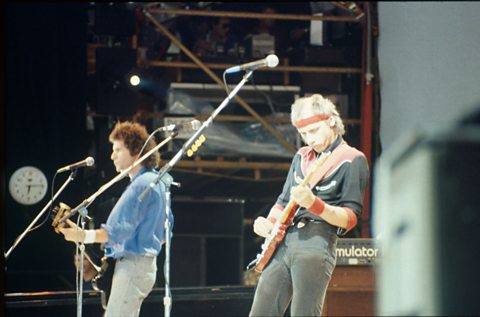
The band Dire Straits were doing a sell out tour at the time, and on July 13 1985 they were due to play Wembley arena, down the road from Wembley Stadium where Live Aid would be staged. Dire Straits place for the Live Aid running order left them with just one hour to get to their own gig.
Dire Straits manager Ed Bicknell recalled that they ‘had to go back immediately'. Two policewomen helped the band get out of the stadium, without having a clue on who they were, mistaking the name of the band for the predicament they found themselves in. It is reported that they told Wembley security ‘these blokes are in dire straits and they need to get out quick'.
Cross-continental by Concorde
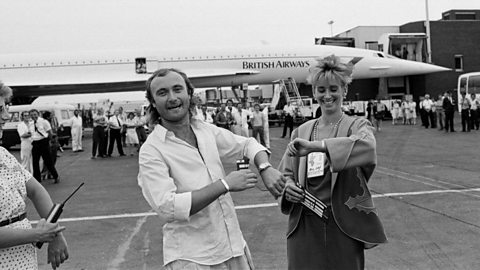
One artist, Phil Collins, performed in both the Wembley and Philadelphia concerts by playing in London then flying to the US on Concorde. This was a supersonic passenger-carrying commercial aeroplane, capable of travelling from London to New York in three and a half hours. A journey that takes most aeroplanes seven to eight hours today.
During his flight, producers thought it would be fun to speak to Collins live. Unfortunately the line was not very clear, and instead of hearing his voice, the viewers at home heard very loud, distorted aeroplane noises.
When he landed, Collins was rushed off to join Led Zeppelin in Philadelphia. However, the performance did not go as well as expected and Led Zeppelin blamed Collins for having a bad show. Since then, the band have withheld permission for any of the footage of their Live aid performance to be broadcast.
Transmission gone wrong in Moscow
Live Aid was broadcast globally, the BBC has previously reported that 60 countries tuned in, but other sources like the Guinness Book of Records, claim that the show was broadcast to 150 countries.
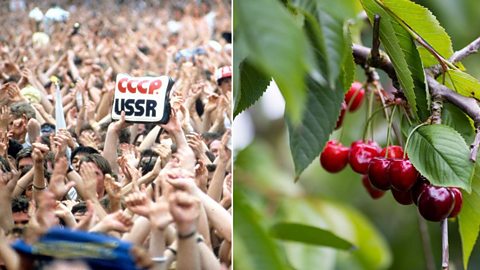
The producers worked with TV networks right across the world in an attempt to make the concert a truly global event. On top of this, eight countries, including Japan, Yugoslavia and Russia, went live as part of the show. The idea was that they would have their own live segment to showcase a band.
However when the show went live to Moscow, you could hear the band Autograph playing, but the pictures shown were from a documentary about a cherry harvest. Around two minutes into the performance, someone at the Russian end was able to switch the feed so people could see as well as hear the band.
No sound check
Due to the fast-paced nature of the show, bands and acts did not have a chance to sound check before playing live. This caused some problems, including for the band U2 who threatened to pull-out last minute.
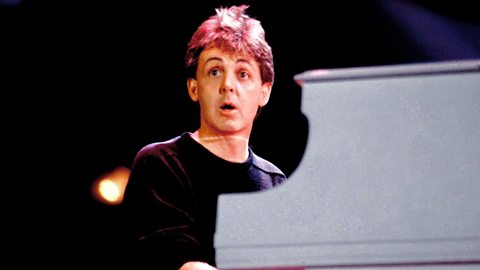
On top of this, the penultimate act of the London show was Paul McCartney. When he started to play no sound came out to the arena, and only partial sound could be heard by audiences watching the event at home. After a couple of minutes, sound engineers went on stage and turned the sound on.
Published in July 2025
Quiz: How much do you know about these history-making concerts?
Think you're a know it all when it comes to era-defining gigs? Take our quiz to find out!
Five of the world’s most remarkable concert venues
Cornish clifftops, Swedish meteorite sites and where The Beatles first played in Japan
Five times girl bands made a statement with their music
How women and pop have been a powerful force for decades