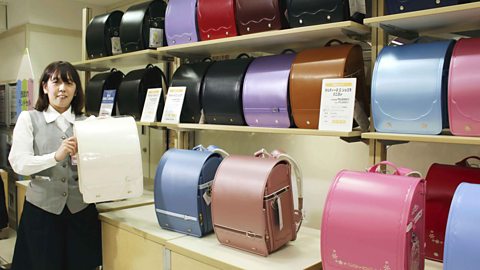
We can still get a kick from treating ourselves to a new t-shirt or pair of trainers. But can that possibly compete with the thrill of shopping for stationery in the weeks leading up to the new school year?
Pencils, erasers, ballpoint pens - it was always fun to start a new term with a new brace of equipment in your pencil case. And have you ever thought about the history behind those school essentials? Some of them have fascinating stories to tell.
Read on to find out how a monk became a pencil pioneer and the surprising foodstuff once used to rub away pencil marks.
How pencils made a mark on the world
When you’re preparing a speech for your subjects, or listing the day’s events at the Colosseum, you can’t risk trusting it to memory. In Ancient Rome, a thin piece of metal called a stylus was used to leave marks on surfaces such as papyrus (an early form of paper), or a wax layer on a piece of wood.
Some styluses were made of lead, which became popular - but as the centuries rolled on, graphite found favour from the mid-1500s as it leaves a darker impression on paper.
Compared to lead, graphite was brittle to handle, so had to be encased in a stronger material to enable the user to keep a firm grip. The graphite rods were inserted into a wooden holder, which the user could grip - and the pencil as we know it was born. Germany began mass-producing pencils in the 17th Century. In the late 18th Century, the Frenchman Nicolas-Jacques Conté pioneered a way of blending graphite and clay into a pencil lead - the birth of the pencils we still use today.
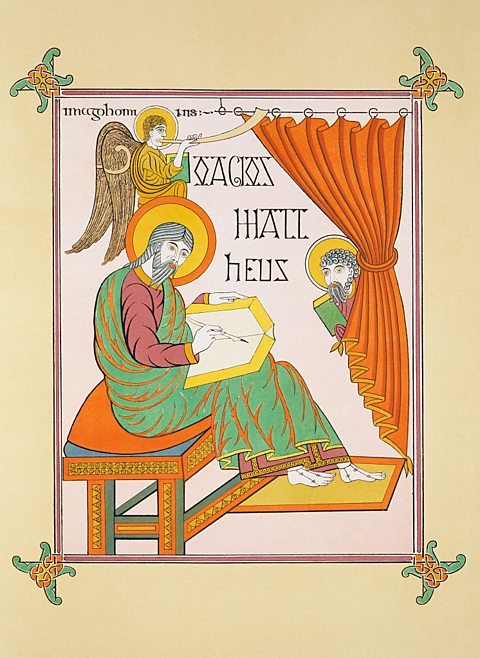
As well as the Romans’ use of the stylus, the 8th-Century monk who created the illuminated letters and imagery of the An example of early medieval European book painting created in Anglo-Saxon Northumbria in the 8th Century. It contains the Gospels of the Saints; Matthew, Mark, Luke and John - and was made for ceremonial use in honour of St Cuthbert. used a lead point in his drawing, pre-dating the modern pencil by three centuries.
Would the inventor of the pencil sharpener please raise their hand?
History contains many names linked to the invention of the pencil sharpener. One of them is the African American inventor John Lee Love, who remains something of a mystery. Other than his patents, little is known about his life.
What is known is that he worked as a carpenter in Massachusetts where he developed a portable sharpener, operated by a hand crank, which also collected the shavings. Known as the Love Sharpener, he applied for the patent in 1897 and it is still in use today.
The small, hand-held model we associate with our pencil cases is known as a prism sharpener - with its conical hole just below the shaving blade. Versions of it date back earlier than Love’s design. In 1847, the French nobleman Thierry des Estivaux improved on a design first patented by his compatriot Bernard Lassimone 19 years earlier. This was developed further by the American Walter K Foster in 1851, in order for the pencil sharpener to be mass produced.
We mustn’t forget the Styloxynon either, patented by Cooper & Eckstein in England in 1833. It was simply two blades set at right angles to each other in a small block of rosewood. One user explained in a letter which appeared in an 1837 publication: “The mode of using it is merely to rub the pencil carefully backward and forward with the point slightly depressed in the angular groove.” - sounds as though it needed a certain knack to get it right.
Rub it out and start it again
It can’t have been long after the invention of the pencil that people realised they occasionally made mistakes while using it. Prior to the invention of the rubber eraser we know today, wax was used to remove stray marks or misspelt words. Stones such as pumice were also used to make corrections on papyrus. Soft, crustless bread was also used to wipe away pencil markings.
It was around 1770 when things got more rubbery. The engineer Edward Nairne was responsible for the first widely available eraser in Europe to be made from rubber. It is said Nairne made the discovery after picking up a piece of India gum (it was not called rubber yet) instead of breadcrumbs when he needed to erase something and realised its potential completely by accident. When he began selling the erasers, a half-inch cube would cost three shillings - but they perished easily.
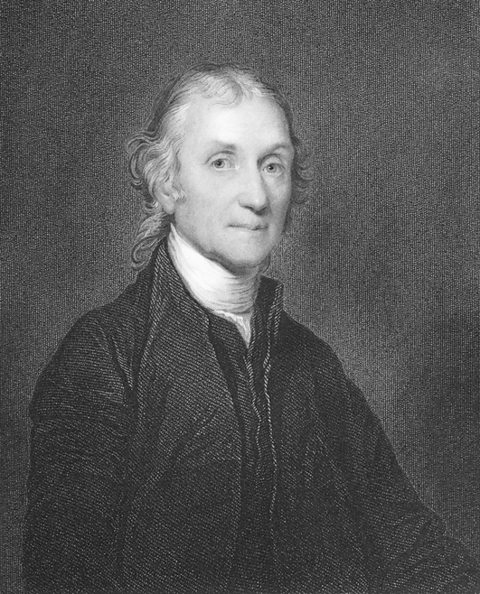
Someone else aware of this gum’s potential at the same time was the philosopher Joseph Priestley, the man who also discovered oxygen and carbon dioxide as well as inventing the fizzy drink.
Priestley said it was “excellently adapted to the purpose of wiping from paper the mark of black lead pencil.” Priestley is also said to have re-named the gum as rubber - because it was good at ‘rubbing out’. It wasn’t until Charles Goodyear invented the The treatment of rubber to give it greater strength and durability. One method is to heat the rubber with sulphur. process in 1839 which made rubber more durable and the eraser went on to become the sturdy piece of stationery we know today.
Say it Loud - Bíró didn’t (quite) invent the ballpoint
The first patent for a ballpoint pen went to America’s John J Loud in 1888. His rolling ball design worked, but it wasn’t well suited to writing on paper. The patent lapsed. But that wasn’t the end of the story.
In the 1930s, the Hungarian journalist László Bíró worked on another ballpoint design alongside his brother, György - a dentist who also knew chemistry. They needed to come up with the A type of liquid that is thick and does not flow easily. , quick drying ink that this new kind of pen required, as traditional fountain pen ink was just too free-flowing. László received a patent for the pen in London in 1938 but the Second World War disrupted further plans for it. The brothers, who were Jewish, left Europe and the Nazi threat in 1941 for Argentina. The ‘birome’ pen was released there in 1943. It roused a lot of interest, including the visiting head of the USA’s Reynolds International Pen Company, who released their own version at a New York department store in 1945 - with enough tweaks in the design to avoid infringing the Bíró patent.
These early ballpoints were expensive, and required refills. It wasn’t until Marcel Bich from France created the Bic company, that cheap, disposable ballpoint pens hit the market. The first Bic cost a shilling in the UK, compared to 55 shillings for a refillable ballpoint. The Bic Cristal, launched in 1950, had sold 100 billion by 2006.
But disposability can lead to plastic waste. Manufacturers have worked on making ballpoint pens from recycled plastic in recent years - or even turning to natural materials such as wood and metal for the casings. Producers are also looking at making cheaper ballpoint pens refillable to cut down on further waste.
Back in my day: What was school like in the 1940s?
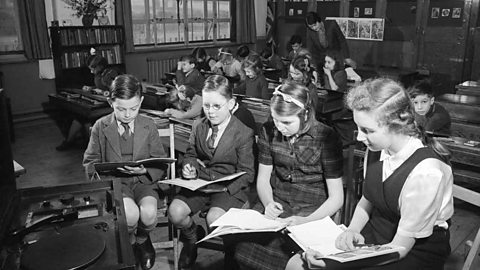
85-year-old David tells BBC Bitesize about what school was like in the 1940s.
The back-to-school geography quiz
Test your geography knowledge with this back-to-school quiz.

Three lovely back-to-school traditions from around the world
Some inspiration to make returning to the classroom a bit more magical.