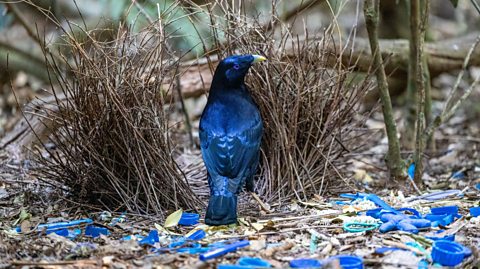
If a nature documentary can take on a cinematic scale on the screens in our homes, imagine how it must look when you’re part of the film crew.
Liv Grant is a researcher at the BBC’s Natural History Unit in Bristol. She has been part of some of the biggest documentaries in recent years, including Planet Earth III and has even worked alongside her childhood hero Sir David Attenborough.
 Image source, LIV GRANT
For the new BBC One series Asia, Liv spent three years researching different creatures that could feature in the series, and then travelled to the world’s largest continent to see many of them up close during filming. As the first of the seven episodes prepares to launch, Liv shared some of her remarkable experiences with BBC Bitesize, from mounds of bird poo to one very clever fox.
Cook’s Swift: Hundreds of thousands of them
In the rainforest-covered mountains of Thailand is a gigantic cave thought to be home to the largest population of swifts in the world - around 300,000 in total.
Liv told Bitesize: “Three hundred thousand swift in a cave is incredibly loud. You can barely hear a person speaking to you one metre away because the calls are amplified by the echoes in the cave. They also generate a huge amount of faeces. There are masses and masses of it.”
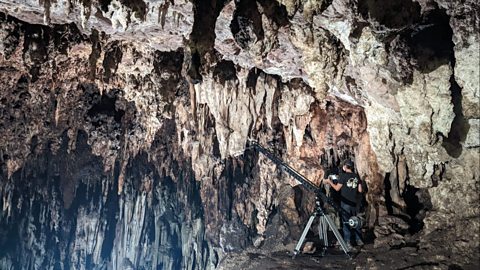 Image source, LIV GRANT
The smell of bird poo was so potent that crew members could smell it from, Liv estimated, around 50 to 100 metres (164ft to 328ft) from the cave entrance. Once they became used to the pong, they were able to learn even more about the birds, who navigate a subterranean world as well as avoiding peregrine falcon predators in the skies outside it.
Liv remembered: “It was almost pitch black in the cave and there were many thousands of tiny nests that they had built in the roof. Somehow, the adults were all able to find their mates, and find their chicks. We assume they do that through vocalisations, but they could also be using echolocation.”
Markhor: Undisputed GOATs of the mountains
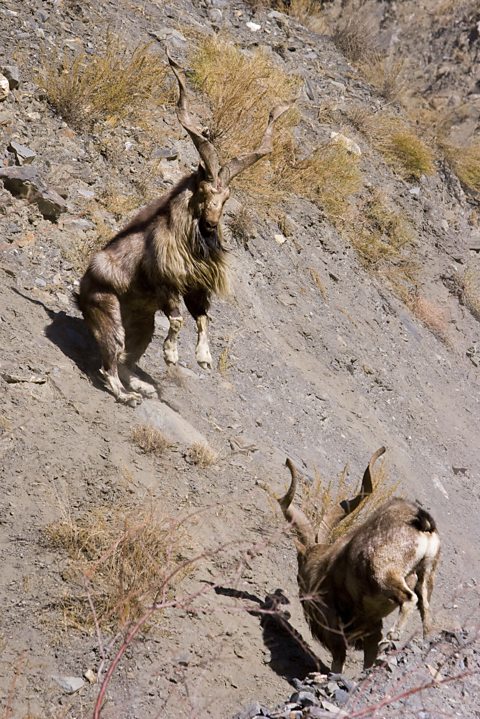
Filming sequences for a nature documentary can bring you close to some pretty angry creatures. For Liv this meant a month observing her favourite animal, the markhor - the world’s largest goat species - in Pakistan.
Male markhors have horns measuring more than 150cm (just under 5ft) and shaped like corkscrew spirals. They also fight over access to the herd’s females. These clashes can be intense, Liv remembered: “They do this ritualistic sort of sizing up of one another, where they would spend hours and hours walking sort-of side-by-side up and down the mountain slopes.”
She continued: “When they decided to actually fight, they would begin to kneel to one another, almost as if to compare the size of their horns. They would sniff each others foreheads, which is where they emit lots of scent, which is really important for communication in goats.”
Although the crew is at a safe distance when filming, when big goats fight in the mountains, there is a danger of falling rubble. This is when, Liv said, special ‘spotters’ work with each camera operator, to make sure they’re not in any danger.
Snow leopards: Be patient and they will appear
This animal is a little unusual as Liv never saw one in person. To film a snow leopard, the crew had to rely on something called a camera trap, which can be operated remotely, or triggered by the animal walking past it.
According to Liv, snow leopards and wolves - another creature she has never seen in the wild - have something in common in that they are both elusive, making it hard work to gather footage. It’s where one of the most important factors in filming a nature documentary come into play - patience.
Liv said: “A commitment to understanding the fieldcraft for that particular animal is really important. What I mean by that is, thinking about how this animal might react to human presence. Do you need to camouflage yourself? Do you need to ensure that you're very quiet?
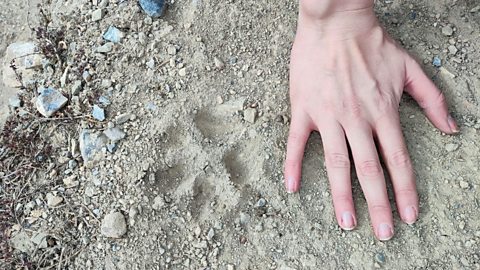 Image source, LIV GRANT
“If you film in a A camouflaged shelter enabling wildlife to be observed up close. that can be quite tricky. You often have to enter the hide before dawn and leave after dusk. You can't leave it during that time, so you've got to bring in your food and water." Crew members in hides also have to think of their toilet needs too - so a bottle to wee in is often a necessity.
Tree Shrew: A bloom full of sugar
The island of Borneo in South East Asia has volcanically formed mountains so far apart from each other, the animals living on them can adapt to life on one specific mountain.
“Different mountains can be home to different species, which is quite cool,” said Liv. “We filmed the Bornean tree shrew on Mount Kinabalu. It feeds on the sugary secretions from a pitcher plant, which is a plant with three enormous modified leaves which form cups. In the bottom of these cups are enzymes. Insects fall into these cups and are dissolved and that’s how the plants get their nutrients.”
Liv explained that the high elevation of the mountains and the heavy rainfall makes it difficult for nutritious food to be found at such a height - but the pitcher plant and the tree shrew work together, even if they don’t quite realise it, to feed each other.
She said: “The plants create sugary liquid around the rim of the pitcher. The shrew is very attracted and will lick it to gets lots of wonderful sugar and be very happy. But there’s a little sting in the tail because the sugary secretions have a laxative effect. So the little shrew, after having a lick, will go to the bathroom in the pitcher plant and the plant will profit from that and have its own treat.”
Research into this relationship between the plant and the shrew have found that the shrew's deposits into the plant provide it with a source of nitrogen.
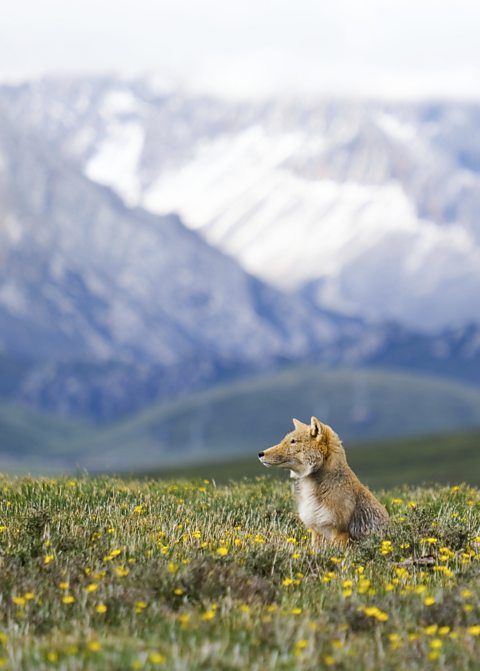
Tibetan Fox: Popping round the back of a yak
We may not think that animals we spot in the UK have relatives on the other side of the world, but that’s true of the red foxes we see in our towns and cities from time to time.
These foxes don’t play under the streetlights at night, however - they live on the Tibetan Plateau.
“It’s extremely barren there,” said Liv, “life is really tough and they’ve got to use all their foxy wits to survive. The one that we filmed, it’s a very special fox because she had learned to hide behind yak, which are farmed in Tibet but there are some wild populations.”
Popping behind different yak helped this Tibetan fox to get close to, then jump out on, pika - a species of rodent which is their prey. It can be a nerve-wracking watch for a documentary crew, however - they were concerned that the much larger yak may step on the fox and her cubs. “But actually,” Liv admitted, “she’s just being clever.”
This article was published in October 2024
Asia is on BBC One from Sunday 3 November. You can also catch up with the series on BBC iPlayer.
Looking for quizzes, amazing stories and fun facts?
Bitesize Topical has it all!

The amazing ways animals communicate with each other
Explore the ways monkeys, frogs, slugs and birds keep in touch
Five of the most fantastic caves on the planet
From Vietnam to Scotland - explore the world's beautiful cavernous spaces
Five fun behaviours we have in common with animals
Do animals share our creature comforts? Find out with these five fabulous animal facts.