BBC Bitesize looks at how this beautifully decorated pastry plays an important role in the Chinese Mid-Autumn Festival. We visited Wong Wong Bakery in Manchester’s China Town. We learned how to make mooncakes, the most traditional flavour, and which flavour is the luckiest…
What are mooncakes?
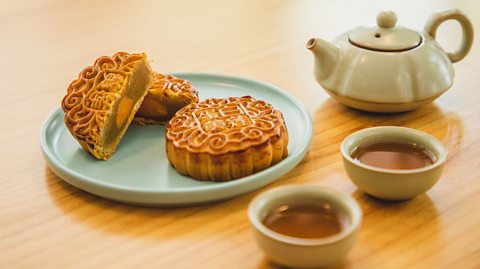
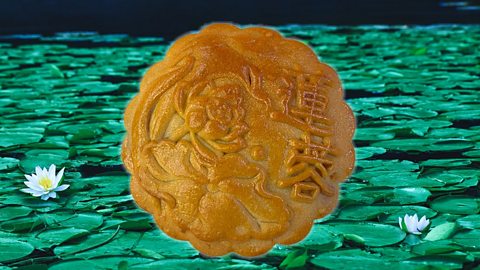
A traditional Chinese pastry, that is usually shaped in a circle to represent the moon. They are eaten during the Mid-Autumn festival, which is the second biggest festival in China. The festival falls on the fifteenth day of the eighth month, following the traditional This calendar follows the cycle of the moon, each month begins with a new moon.. The event is also celebrated across other East Asian countries, like Japan, Singapore and Vietnam.
The mooncake has a dense filling and is usually sweet. Lin Chan, the manager of Wong Wong Bakery explained one cake is often cut into 4 slices. This is commonly shared with family, and eaten with a cup of Chinese tea. Mooncake is only eaten during the festival.
How do you make them?
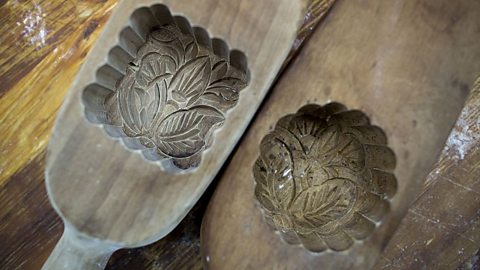
The traditional way to make the shape and intricate design of a mooncake is by using a wooden paddle. The paddle has a mould inside, and you shape the cake by whacking the paddle.
20 years ago, Lin told us that her bakery used wooden paddles to produce all their mooncakes. Before they got machines to do the job.
What does it taste like?
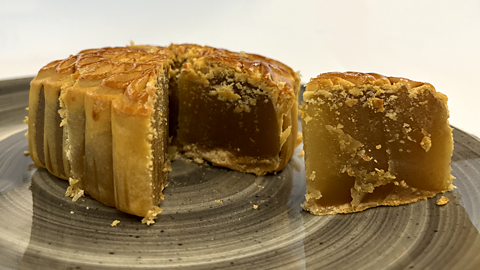
BBC Bitesize did many taste tests and has come to the conclusion that the outer layer of pastry is similar to a shortcrust - like you’d find on savoury pies - but it’s thinly rolled and quite delicate.
The fillings are different, some are jelly like, for example the white lotus flavour which tastes like fruit cake. Others, like red bean, have the texture of fig roll filling.
Our best recommendation is to try one and decide for yourself.
What is the most popular (and luckiest) flavour?
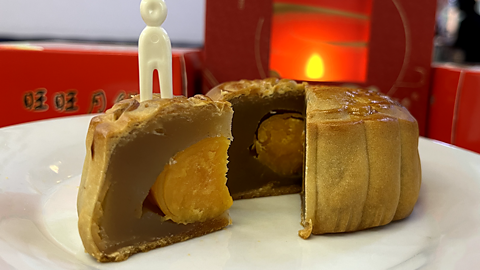
Lin said a well-known traditional flavour - egg yolk and white lotus - is the most popular.
It has a salted egg yolk in the centre and is surrounded by a sweet white lotus jelly. The the yolk represents the moon.
Lin remembers her Mum making her eat them as a child, even though she didn’t like the flavour. Lin said she had to have even the smallest slice because this mooncake is the one supposed to bring good luck.
The salted egg yolk and white lotus flavour is unusual and in our experience quite divisive - either you love it or you hate it - but surely it’s worth a tiny slice for luck?
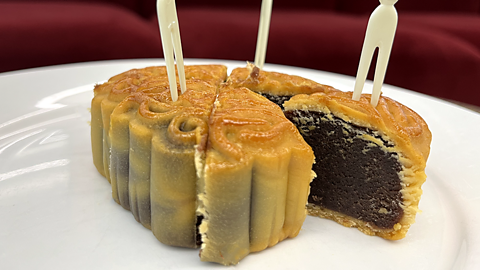
The second most popular flavour is red bean, a sweet, smooth paste used in many East Asian desserts. The sweetness contrasts well with the pastry.
Some may think it’s too sweet, we found pairing it with a cup of Chinese tea helps.
Where did the mooncake tradition come from?
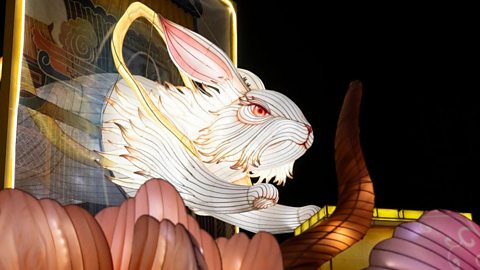
The Mid-Autumn festival is believed to have started over 2000 years ago. There are many different versions of the story of how this festival came about, and how mooncakes became part of it.
The most famous story involves mooncakes playing a vital role in liberating China from the Mongols in the 14th century. The legend goes that the Han people baked paper messages into their mooncakes, which laid out plans of rebellion. This helped bring about the collapse of the Mongols and the beginning of the Ming dynasty in 1368.
Can anyone eat mooncake?
Yes!
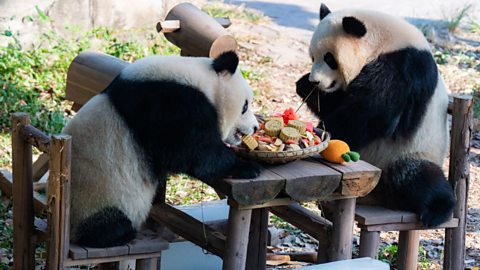
Even animals can eat mooncakes.
In 2024 the Hangzhou zoo made animal-friendly mooncakes. The giant pandas enjoyed a cornmeal, soybean flour, and bran made mooncake, and the elephants had a mooncake tower to celebrate the festival.
This article was published in September 2025
Cake Britain: Eight traditional treats from around the UK
Ever made Fifteens in a fridge, or tried a slice of Selkirk bannock?