“It’s a whole different world and it was hard to adjust”
Singer Calum Scott shot to fame in 2015 on Britain’s Got Talent after Simon Cowell pressed his golden buzzer - putting the singer straight through to the live shows. In the ten years since that ticker-tape moment, life has been a whirlwind for the 36-year-old from Hull. From stadium tours with Ed Sheeran, to performing for King Charles. Not to mention releasing two albums, with a third about to drop.
But fame can come at a cost. BBC Bitesize caught up with Calum to find out about the highs and lows of life in the spotlight, his support network, and how his personable approach led to a ‘virtual duet’ with the queen of ballads - Whitney Houston.
Singer Calum Scott talks to BBC Bitesize about fame, mental health and coping strategies
Kimberley: Calum, let's take it back to where it all started for you. So 2015, you are covered in golden confetti because Simon Cowell has hit his golden buzzer for you. Did you realise in that moment how big a deal it was?
Calum: Short answer is no. It's a thing that I'll never forget. I mean, it was the birth of my professional career.
Kimberley: You've collaborated with the likes of Lost Frequencies, Jax Jones… can you believe the life you've created for yourself?
Calum: I used to work at Asda… So, like, for me, as the guy who was responsible for going to collect all the shopping trolleys, is now singing with Ed Sheeran with billions of streams, it's quite surreal.
Kimberley: Calum, you've talked really openly and eloquently about the difficulties you've faced. Could you just talk to me a little bit about the more tricky times that you've been through?
Calum: I had my first panic attack after the audition had aired. This weird rush that went through my body of like, adrenaline, but it wasn't like excitement, it was panic and it was worrying. I felt myself shaking and I felt like I couldn't control my breathing.And because your body's going into a fight or flight and because there's no immediate danger, it's hard to process it. For me, it was a case of taking a minute to just breathe through it and just taking stock of things like counting things is a really good way of coming down from a panic attack or, you know, keep in mind that, you know, you are fine, that you're making it worse in your own mind, and to just breathe through it and, you know, it passes.
Kimberley: Discussing kind of coping strategies like that, like you say, things you can see, hear, taste, smell are very helpful. You've also spoken really openly about body dysmorphia, which is something that even now a lot of people, particularly men, struggle to talkabout. Why is it for you important to have these discussions and talk about it so honestly?
Calum: I'd gone through a lot, growing up. You know, I didn't have my dad present really in my life until I was a lot older, I had issues with my sexuality, so I'd gone through a lot and I was suppressing a lot. And I think not talking about things and not,sort of, trying to attack the problem had meant that I had started to, in some ways, scrutinise myself and bully myself. I guess through my experience, it's just talking, just getting it from here out, whether it's on paper, whether it's to a therapist, whetherit's to a friend, whether it's to a complete stranger from a charity.
Kimberley: As you've discussed there, you know, talking to people's huge, finding a safe support network if you have one.
Calum: As soon as I'm finished with work in London, I go straight back up to Hull and I spend time with my friends from before music. You know, my mum, my sister, my nephew and I surround myself with people who I know love me and want the best for me, and that's kept me on the straight and narrow in this industry. I've just got a new puppy called Elvis. There's nothing more humbling than going back up after performing to 80,000 people with Ed Sheeran, going and picking up my dog's poo. It's a very humbling feeling.
Kimberley: If you could go back in time and speak to your 16 year old self and speak to little Calum; what would you say to him?
Calum: When it feels dark and when it feels like it's not going anywhere, keep believing in it, keep trusting in it. You know, when people tell you no, don't be scared to keep knocking on the door. Be resilient and you'll earn the fruits of your labour.
“I felt adrenaline, but it wasn’t excitement, it was panic and it was worrying”
Calum says that overnight fame was hard to wrap his head around. To date, he’s featured three times in the UK official singles chart top 40. The video for his single You Are The Reason has had over one billion plays on YouTube. For many it’s what dreams are made of. But right from that first appearance on Britain’s Got Talent Calum experienced difficulties.
Calum explains: “I had my first panic attack after the audition had aired.” He describes how he was shaking and couldn’t control his breathing. “Because there was no immediate danger it was hard to process it,” Calum tells us. The singer was able to come through it by taking a minute to just breathe and take stock. To anyone facing a similar situation Calum suggests a coping strategy he’s tried: “Keep in mind that you are fine… and just breath through it.”
“I have a big heart, big dreams and a lot of time for people”
Another massive source of support for Calum is the network of people he spends time with. He says: “I surround myself with people that I know love me, and want the best for me. That’s kept me on the straight and narrow in this industry.”
That network also includes his young puppy Elvis. Calum describes heading home to pick up puppy poo after performing to 80,000 people with Ed Sheeran as a “very humbling” thing to have to do. He also places a big emphasis on talking to those same people about any worries and concerns he has. He says (pointing to his head): “Just getting it from here, out, whether it’s on paper, to a therapist, to a friend, to a complete stranger from a charity, getting it out just helps so much.”
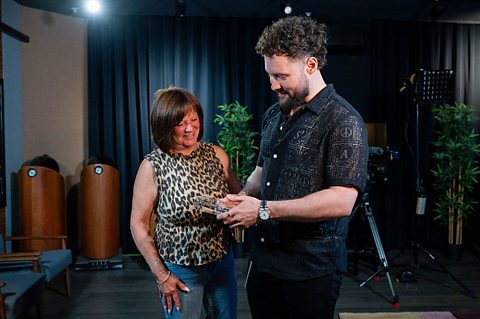
“Being nice gets you so much further than being a diva”
Calum is in awe of his community of fans. “It’s beautiful to see such solid support, such loyalty,” he says. This loyalty works both ways. Calum tells us: “Whether it’s just 15 or 15,000 I will feel the same way about the crowd and sing my songs in the exact same way.”
For the singer, the connection runs deeper than just his music. He explains: “At all times I try to use my platform for raising awareness of mental health.” Continuing he says: “Sometimes I’ll put a picture up of me feeling sad and not wanting to get out of bed.” Calum tells us that the outcome of doing this is often a lot of his fans telling him “I needed this today”.
As for what people can do for each other, Calum says: “Being nice should just be a staple.” He explains that more recently he’s tried to think with a more compassionate head on too, especially if someone does something frustrating. He says: “They could have had a really bad day. They could have just lost a job, or be poorly. Anything could have happened. So using niceness as compassion is a good tip for me.”

From self-doubt to dazzling-duets
Through many moments of doubt, and times of imposter-syndrome, Calum has forged ahead to achieve a stellar career. He’s about to embark on a new world tour for his latest album titled Avenoir. It features a version of the iconic track, I Wanna Dance With Somebody, by the late Whitney Houston who Calum suggests is “arguably the queen of ballads”. He describes being given the chance to use Whitney’s original vocals as “one of the honours” of his career.
It’s one of many things he thinks 16-year-old Calum would not believe would ever happen. His advice to his younger self: “Just strap in. When it feels dark and that it’s not going anywhere, keep believing in it, keep trusting in it. Be resilient and you’ll earn the fruits of your labour.”

If you need support
You should always tell someone about the things you’re worried about. You can tell a friend, parent, guardian, teacher, or another trusted adult. If you're struggling with your mental health, going to your GP can be a good place to start to find help. Your GP can let you know what support is available to you, suggest different types of treatment and offer regular check-ups to see how you’re doing.
If you’re in need of in-the-moment support you can contact Childline, where you can speak to a counsellor. Their lines are open 24 hours a day, 7 days a week.
There are more links to helpful organisations on the BBC Bitesize Action Line page for young people.
Doodling - what are the hidden wellbeing benefits?
BBC Bitesize explores the hidden wellbeing benefits of picking up a pen and doodling

Glow Up: How make-up helps with my wellbeing
Rahual on the ways a new look on himself and others can really boost a mood

World of Wellbeing: What is wellbeing and how to tell if yours is good or bad?
Wellbeing and education influencer Kit Brown asks Dr T what is wellbeing? They reflect on their own wellbeing struggles and learn practical tools to improve their wellbeing.