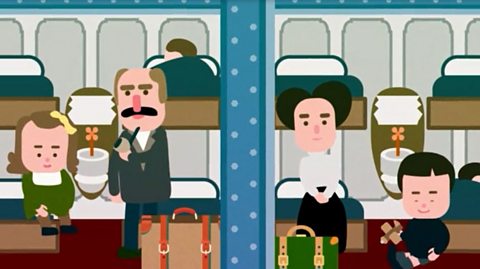
The sinking of Titanic on 15 April 1912 was an incredibly tragic event.
Commemorated in countless ways, from poems to films and videogames, it's one of those stories that keeps being told.
But this means there are also many myths about what happened. Here are some of them, debunked.

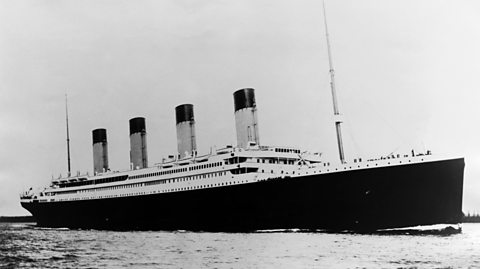
1. Titanic's crew was trying to create a speed record
It is fiction that Titanic's crew was attempting to create a speed record on its maiden voyage.
The ship was built for luxury, not for speed, and wouldn't have been able to compete with the smaller but faster Atlantic ships.
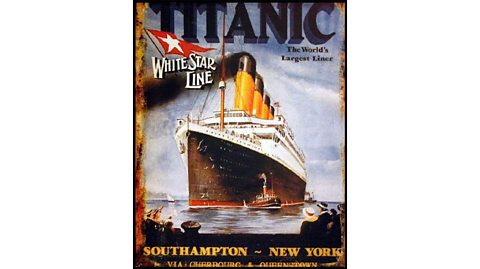
2. Titanic was carrying gold bullion and an Egyptian mummy
One of the most widely-told stories about Titanic is that there were an Egyptian Mummy and gold bullion onboard.
The reality is that the ship's cargo listings never had a record of gold bullion. In fact, it was another White Star ship, the HMS Laurentic, which came out of the same shipyard as Titanic and sank in 1917, that was carrying gold bullion.
Also, a rumour arose that a mysterious mummy was loaded into the ship as cargo. Titanic carried very valuable objects on behalf of the passengers, such as art and artefacts, all of which were lost. Many passengers subsequently submitted huge and very detailed insurance claims. An Egyptian Mummy was not one of those objects.
3. The champagne bottle used to christen Titanic didn’t break
It was claimed that when Titanic was launched and christened, a champagne bottle was smashed against her hull but didn't break, which supposedly brought bad luck.
But there is no evidence to prove that this happened. None of the White Star Line ships was ‘christened’ in this way.
Titanic facts and figures
- Titanic was 269 metres long, 28 metres wide and more than 53 metres tall - the same height as Nelson's Column in London
- It had ten decks, three engines and its furnaces burnt through over 600 tonnes of coal
- Titanic's construction cost was £1.5 million, which is around £170 million in today's money
- A third class ticket cost around £7 in 1912, which today would be nearly £800
Find out more amazing Titanic facts and figures on BBC Bitesize.
4. Third-class passengers were locked below
According to this story, third-class passengers were locked down below, and so they weren't able to access the lifeboats.
Many of the third-class passengers on board died, but despite popular opinion, they were not denied places on lifeboats.
One of them, an Irishman named Daniel Buckley, later told about how he'd been sleeping in his bunk in steerage when he heard and felt the impact of hitting the iceberg. He headed up to the deck - the gate leading up from steerage was not locked - and was given a lifebelt by a first-class passenger. He then got on a lifeboat, which took him to safety.
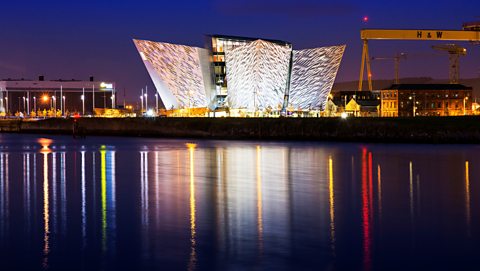
5. One man was able to get a spot on a lifeboat by dressing as a woman
A newspaper report claimed that a passenger named William Sloper disguised himself as a woman to get onboard a lifeboat. While the story was untrue, William Sloper never lived it down.
In Edwardian times, there was a view that men took a back seat for women and children, which may be where this myth comes from.
Many men did board the lifeboats and nearly 50% of survivors were male, although the vast majority of those on board the ship were men.
This article was first published in April 2022 and amended in December 2025
Four iconic maiden journeys in history
Looking back on some historical first voyages over land, air and sea.
How was Titanic built?
Find out the different types of materials used when Titanic was built in this Bitesize - KS2 guide.
What was life like on board Titanic?
What was life like for the passengers in first, second and third class on Titanic? Find out more with Bitesize - KS2.