You might be wondering why so many missions to Mars are taking place this summer.
Perseverance and Tianwen-1 have both launched recently. But why? Because every two years Mars reaches its closest point to Earth in orbit, so there’s less distance for the rockets to travel.
This also means that it’s loads easier for you to see it in the sky! With the help of the Royal Astronomical Society, we’ve brought you information on Mars’s opposition, and the other events in the sky you can look forward to over the next few months.

August 12: Perseid Meteor Shower
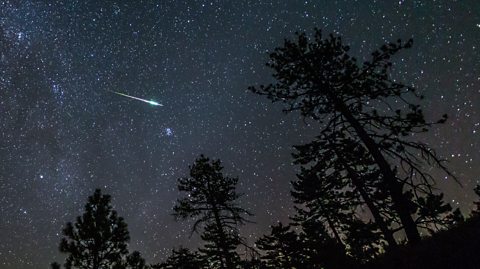
This is one of the most popular meteor showers of the year, due to the sheer number you should be able to see (if the conditions are good that is).
At its peak, you might be able to spot a meteor a minute. However, its peak is in the pre-dawn hours, so to see it most clearly, try and have a peek before midnight.


Throughout September: The Great Square of Pegasus
The Great Square of Pegasus is a group of stars in a, you guessed it, square shape, that you can see when looking eastwards in the sky before midnight. They're a very visible part of the Autumn sky, so try and spot them when the leaves start falling off the trees.
September 11: Neptune reaches opposition with the Sun
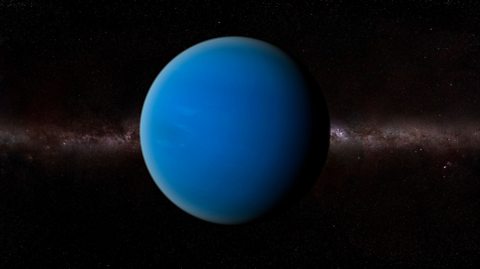
Opposition is the point at which the blue giant is directly opposite the Sun in the sky relative to Earth, and so is at its most visible to us. It’s the best time of year to catch a glimpse of the distant planet and will be visible all night, however it’s so far away in the Solar System that you won’t be able to see it with the naked eye. If you have them, grab your binoculars if you have them, or even telescope if you can, to have a look.

October 7: Draconids Meteor shower
This shower is produced by dust grains left behind by comet 21P Giacobini-Zinner, which was first discovered in 1900. While that sounds cool, it’s not going to be an easy one to spot, as it doesn’t produce a very high meteor ratio - roughly ten an hour.
There are some years when it can be several times this, however this is a very rare occurrence. To make things even more difficult, the position of the Moon this year will be throwing a lot of light in the sky, making them harder to spot.
October 13: Mars at opposition
This only happen about ever two years, and this year the results of Mars reaching opposition with the Sun are meant to be absolutely stunning.
It will be high in the south around midnight but obvious throughout the night moving from east to west as the night goes on. It will be twice as bright as Sirius, which is the brightest star in the sky.
This is something you will absolutely be able to see with your naked eye, and have no trouble doing so, however to see lots of detail you’ll need a telescope. If you get any good photos, why not tag @BBCBitesize and show us?
October 20: Orionids meteor shower
This shower is produced by debris from Halley’s comet, and typically yields about 10-20 meteors an hour. The viewing conditions for it will be quite good this year, as the Moon will be in its crescent phase and so its light won’t get in the way.
October 29: Southern Taurids meteor shower
You’ll need to have a lot of luck on your side to see this one. The Southern Taurids is a long-running minor meteor shower which only produces about 5-10 meteors per hour.
It’s produced by debris left behind by Comet 2P Encke and is famous for having a higher than normal percentage of bright fireballs. Exciting, but very hard to spot - extra points if you do, though!
October 31: Blue Moon
Sorry for being a tad misleading, but we’re not saying that on this night the Moon will turn navy. In October there will be two full moons in the same month, and this only happens about once a year. It’s why we have the phrase ‘once in a blue moon’, which means something that doesn’t happen very often. Think: getting a takeaway for dinner, or not getting set any homework.
October 31: Uranus at opposition
It’s not just a Blue Moon you have to look forward to on Halloween! Uranus will be at opposition with the sun and so at its most visible in the sky. It’s very high up in the constellation of Aries, and will be visible all night. However, as with Neptune, it’s quite far away and so will still be difficult to spot without equipment.
A beginner's guide to stargazing
How to get started with little to no equipment.

Ten things you didn't know about our Solar System
You'll be a star student once you've read this!
Things we get wrong about the Moon
We’ve taken some myths and legends about the moon and debunked them for you.