What would a creature from outer space look like?
Would they have wings, fins or something else entirely? Luckily we don’t need to travel to another planet to see some animals that look like other-worldly beings. From the dark depths of the sea all the way up to the tree tops, Earth is filled with species that look rather remarkable.
BBC Bitesize takes a look at four animals that look like they’re from another planet.
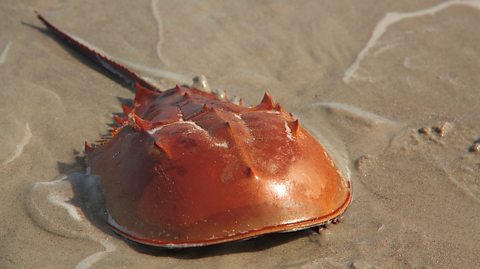
Horseshoe crab
The deceptively named horseshoe crab is not part of the crab family at all - instead it is related to scorpions, spiders and an extinct marine animal called a trilobite. While their alien-like appearance may give them a futuristic vibe - these ancient crustaceans have been around for around 450 million years. This means they predate dinosaurs by more than 200 million years!
Four species of the horseshoe crab still exist today - three of which reside in Southeast Asia, and another which can be found along the Atlantic and Gulf coasts, from Maine, USA, to Mexico.
These crabs can live for more than 20 years and can go through the moulting process 16 or 17 times during their first 10 years of development. This process is required for them to shed their small exoskeletons and grow larger shells.
In October 2023, the photographer Laurent Ballesta won the Wildlife Photographer of the Year (WPY) for the second time. His submission of a horseshoe crab being tracked by three small fish was taken in the waters near the Philippines.
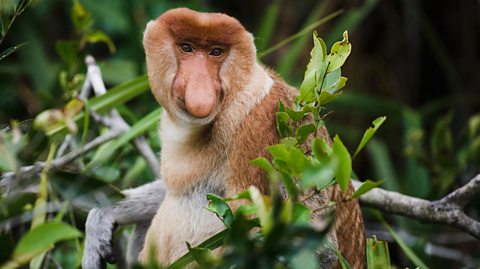
Proboscis monkey
Proboscis monkeys are Something that is native or confined to a specific region. creatures, residing in the jungles of Borneo - the third largest island in the world. They are also dimorphic, meaning that males and females have separate and distinct attributes. In this case, female proboscis monkeys are significantly smaller than males, which typically stand between 56-72 cm (22-28 inches) and weigh around 20kg (44 pounds).
Perhaps the most noticeable feature of the proboscis monkey is their long noses, which differentiates them from other primates in the animal kingdom. In adult males, noses can exceed 10cm (3.9in) in length and are used to attract mates and determine social status.
Known as social creatures, they typically live in groups between 10 to 32 and eat a diet mainly consisting of leaves, seeds and unripe fruit.
Unlike most species of monkey, they are great swimmers. They are able to swim long distances using their partially-webbed toes and fingers which help them to cross rivers in search of food or escape predators.
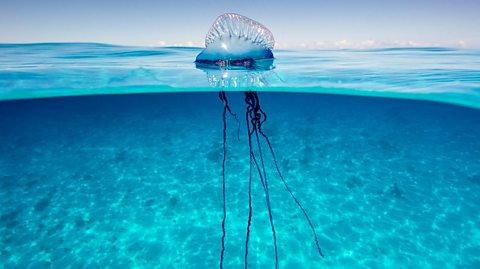
Portuguese Man o' War
The balloon-like Portuguese Man o’ War is a unique marine creature often mistaken for a jellyfish. They are a species of siphonophore, a distinct animal that is made up from a colony of individual organisms - called polyps - working together.
One of these organisms is their tentacles, which have been known to extend up to 50m (165ft) and which can deliver a painful sting. Another of its organisms, the uppermost polyp, is a gas-filled bladder which enables them to float on the ocean surface. It is this bladder that has earned the animal its name, as it is said to resemble an old wooden Portuguese warship at full sail.
Propelled by ocean currents and winds alone, they are typically found floating in some of the world’s warmest oceans in groups of 1,000 or more.
As well as being a carnivorous species, with a diet of small fish, and occasionally small crustaceans, they also have predators themselves. Some animals, such as loggerhead sea turtles and the ocean sunfish, have been known to feast on siphonophores.
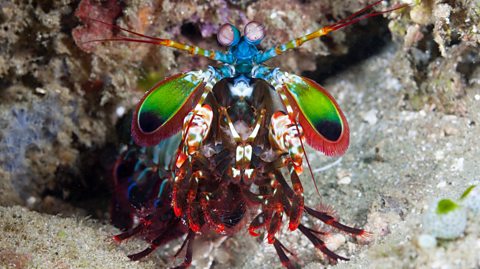
Mantis Shrimp
The mantis shrimp is a relative of crabs and lobsters that have been on Earth for more than 400 million years. There are over 350 different species of mantis shrimp but perhaps the most recognisable is the peacock mantis shrimp. This creature gets its name from its colourful shell, which has been compared to a peacock's tail, and its hinged forearms, which resemble a praying mantis.
They’re most commonly found in the Mediterranean Sea, the Indian and Pacific Oceans and regions nearby the Atlantic Ocean.
The mantis shrimp has two types of hunting approaches - smashing and spearing. The deadly front claws of the creature are known for being able to deliver a 60-mile-per-hour punch. That’s enough to crack a glass aquarium!
But that’s not all. This impressive shrimp is also noted for its extraordinary vision. Researchers believe they are able to see between 12 to 16 channels of colour, and can even see light wavelengths in the ultraviolet spectrum.
This article was published in November 2023
The around-the-world in eight questions quiz
Can you identify the famous landmarks from the clues in the questions?

The trees that witnessed history
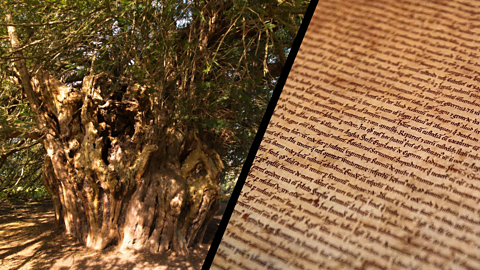
From the American Civil War battlefields to the signing of the Magna Carta, discover how trees have witnessed key moments of history.
Four amazing means of transport from around the world
From Wales to the Arctic, BBC Bitesize looks at four brilliant forms of transport from around the world.