Across the UK, parents can dread the moment when they're asked to help their children out with homework.
It can make them feel a little apprehensive, especially in subjects where they lack confidence.
One of those subjects is maths. Some people can feel a real sense of worry and confusion when dealing with anything involving number and figures – it's known as maths anxiety. Here are some tips to help you remain positive when helping the kids with their maths homework.
The ‘intelligence’ question
National Numeracy is a charity which aims to give everyone in the UK the confidence to use maths in everyday life. Its chief executive, Mike Ellicock, is keen to show people that maths is not something to be afraid of, and features in everyday life perhaps more than people realise.

“We link maths strongly with intelligence,” Mike told BBC Bitesize. “We think people who aren’t good at maths aren’t intelligent, or often believe there is a ‘maths gene’, the same as when someone is good at sport. That is nonsense.”
Before anyone starts telling their children that maths ‘just isn’t their thing’, Mike offers three tips which could help everyone work with numbers at home, even grown-ups.
Be positive about maths
“Don’t say things like ‘I hate maths’,” said Mike. “Instead, think ‘I don’t really know, but I’m going to get started’. Go on a journey to try to engage with stuff.
“It’s like exercise. Once you’re past the getting off the couch stage, it’s not half as bad as you think.”
Mike's advice is to create an environment where there isn't a fear of numbers and data. His hope is that, if parents stay positive and willing to engage with maths, it will rub off on the younger generation. He also stresses that no parent should worry about not knowing the ins and outs of the more complex maths teenagers may be studying. Online resources can provide the information required there, if necessary.
Point out everyday maths
You may think that maths isn’t for you, but you could also be using number skills throughout the day without even realising it.
Planning a monthly budget, measuring ingredients for cooking, organising the day into blocks of time. All these involve figures and data of some description.
Involving the children in these can also help with their maths too.
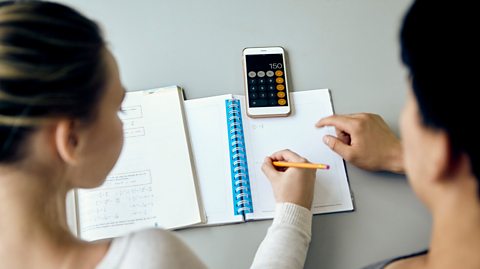
Mike would love to see adults who don't have confidence in their maths, gain it in everyday situations: “For example," he said, "should should I buy a new car [on a payment plan] or buy it second-hand, should I buy an electric car? These are decisions where I need to use numbers and data.”
Praise your child for effort, not correct answers
This is a piece of advice that goes beyond teaching maths. Mike stressed the importance of praising the effort that children put into their number work, not just the results.
He explained: “It’s really good to say that you’re impressed with how hard a child worked on a task.
“Don’t say, ‘you’re so clever’, that leads to a chain of thought where the child doesn’t want to do anything that would disprove that. So they won’t take risks. If you’re praising effort all the time, they want to impress you. The way they impress you is by trying hard.”
Speaking to children, and learning from their experiences in maths, is also encouraged. Working through a problem together, with an adult using the method they know, and a child their own, can be a good way of finding the route to a solution. If the grown-up ends up learning a new way of maths from their child, don’t worry - it’s a positive thing.
Mike said: “Other people think about things in a different way to you, and that’s really enriching. I think the really important thing to reassure parents is that they don’t need to be the font of all knowledge.”

More from BBC Bitesize Parents' Toolkit…
Bitesize Parenting
Fun activities, real-life stories, wellbeing support and loads of helpful advice - we're here for you and your child.
What is dyslexia and how can I help my child?
Parents can face worry and uncertainty when they suspect their child is dyslexic. We have advice on diagnosis, schooling and support.

Helping with homework for the first time?
Three ways you can support your child when they start bringing homework back from school.
National Numeracy Challenge. External Link
Test your maths skills here (don't worry, you can use a calculator!)

Game - Karate Cats Maths
KS1 Maths
Five simple steps to change your maths mindset. video
Maths might be easier than you thought.