For sprinter Elliot Jones, the road to the 2026 Commonwealth Games has been anything but an easy one.
From rejection to disappointments to serious injuries that put pause to his career in sport altogether.
But now, aged 28, he is set to make his Commonwealth Games debut, representing Team England on one of World Athletics' premier stages.
BBC Bitesize caught up with Elliot at Loughborough University’s training facilities, to find out more about his journey to Glasgow 2026 and the power of hard-work and resilience.
Watch Elliot discuss his journey with BBC Bitesize
BBC Bitesize speaks to Elliot Jones about his journey and the power of resilience
Elliot: I nearly stopped the sport so many times, but I always had that bit of perseverance to carry on, and from every age I would just tell myself to keep pushing through, keep working. Because when you reach the top, it's worth it.
Kimberley: Elliot, let's take it back to where it all started. How did you get into athletics in the first place?
Elliot: In terms of my journey with athletics. It's always been I've just been very naturally quick. So, I played a lot of sports as a kid. I've played football, basketball, and I was always just the quickest person wherever I was. And then I had a schoolteacher when I was in maybe year 7 or 8, who basically recommended me to go down to my local athletics club. I just adored it from the very start. I remember when I was young, when I just started, and I turned to my dad and I was like, “Dad, that feeling when I run, it just makes me feel alive.”
Kimberley: You're 28 now and you are having really a breakthrough year, aren't you? You're going to the Commonwealths!
Elliot: It's incredible. I'm over the moon. So, I've been on the cusp of national teams for a few years and not quite making it. And that eternal feeling of, yeah, I've done really well, but it's not quite what I need to do. Whereas this is the first year that I've been called into national teams, made my first squad for Great Britain when we went to the World Relays in Botswana this year, which was my first international call, the first significant breakthrough. And then a few months later, I got the call for Commies for England, which is obviously a little bit different, but it's a huge honour to be going to a Commonwealths, which is classed as my first major championships and our team leader in England, she's called Shani. She's incredible. She was like, I've got some, got some news for you. And I was like, oh, is this just a courtesy call? And she's like, no, we want to take you as part of the relay squad. And I was over the moon.
Kimberley: When was the moment where you kind of thought, actually, this could be more than just something that I'm doing for fun for, you know, competing. This could actually be a serious career choice.
Elliot: It was more just it's what I enjoyed. I moved up and up and up the national ranks in terms of age groups, so under-18s I went to a top ten in the country, and then I went off to university and had a few years where I was slightly off and prioritised other things in my life. But then I came here to Loughborough University, and at that point I rekindled that passion and I just decided I was going to stay here. And since then, it's been progression, progression, progression, and I've gone from being like the top 50 men in the country and then now we're up in the top ten men in the country.
Kimberley: Yeah. It's incredible. And what's interesting with you, Elliot, is it hasn't all happened just at once. You really are a tale of resilience and not giving up?
Elliot: Exactly. It's been a long journey to get here. I've always believed in myself. I've always thought that I could reach the top. And yeah, I've never given up. Always kept on fighting, always kept on training. Like turned up year on year on year. Getting gradually quicker, gradually quicker, gradually quicker. I'm incredibly proud of the way that I've been consistent, and I think that's the fundamental reason that I've reached this point is because I've never given up, and I've just kept on persevering through everything.
Kimberley: It's interesting that, isn't it, because sometimes you can train with people who are maybe faster at a certain point, but there is something in just refusing to give up.
Elliot: Don't accept no for an answer. I will drive, I will commit, I will give everything that I have in order to reach my target. And after many, many hard years of work, I'm finally starting to reach the point where I want to be. I'm still not there yet. Um, I'm not going to give up until I'm number one. But every athlete's dream is to compete at the Olympics, so my primary goal now is to be in that squad for Los Angeles 28. Um, I'm in a great position now with the way that I've progressed this year, but I can't get complacent with being in squads, so I've got to keep on working, keep going faster because competition doesn't stand still. You've got to you've got to keep pushing, keep driving.
The start of the journey

Raised in Parbold, West Lancashire, Elliot developed a passion for sport at a very early age.
Initially falling in love with football, Elliot found his natural speed gave him an advantage over other players in his age group. But how did he find his way to athletics?
Well, as is often the case, it was the wise words of a caring teacher - one who saw Elliot's potential and recommended he join a local athletics club.
Instantly, Elliot was in love.
"I remember, when I first started, turning to my dad and saying: 'Dad, that feeling, when I run, it just makes me feel alive'".
Even still, Elliot's journey with athletics was never a linear one. He continued to pursue football until the age of 18, at which point a few negative experiences turned his mind back to athletics.
The speed, the adrenaline, the wind whipping against his face.
The feeling of being alive.
And once Elliot was back to athletics, he was back with a vengeance. Coupling his natural speed with a powerful work ethic, Elliot quickly climbed the ranks amongst his national peers, marking his place as one of the top 10 sprinters in his age group at 18.
But the journey was far from over, and the sailing far from smooth…
Setbacks
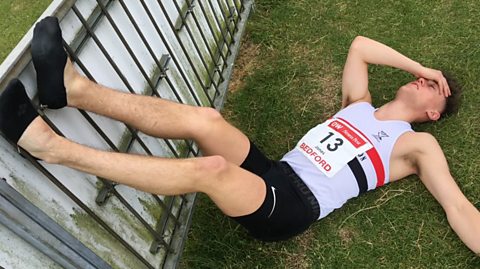
Elliot's journey to the Commonwealth Games has been one of resilience and perseverance.
Following the rekindling of his passion for athletics, Elliot has had to battle through a slew of injuries and rejection, ultimately leading him to where he is today.
With his career stalled by a plague of injuries - including a hip surgery and Achilles pain so severe he was unable to run for a whole year - Elliot could easily have called it a day.
Indeed, he says he's seen countless athletes he came up alongside fall away from the sport over the years.
But not him.
No, at every setback and injury and rejection, Elliot has persevered.
He credits the strong support network around him, including his mum, dad and girlfriend, for their unwavering belief in him, supporting him at every step of his journey. He also talked about the importance of learning from your setbacks, using them as an opportunity to grow and mature.
“Although [setbacks are] incredibly frustrating, that maturity, and what I learned during that period, has enabled me to become the athlete that I am today.”
Elliot says the setbacks he's faced have only enriched his later success. And despite almost quitting on a number of occasions, Elliot's resilience finally bore fruit this year…
The Commonwealth call
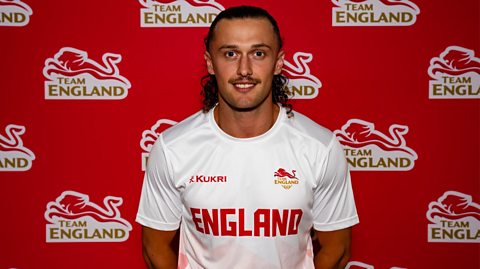
For Elliot Jones, the call up to the Commonwealth games was a two-part process.
The first, and most painful, part of that process was the waiting game.
After making his debut for Great Britain at the World Athletics Relay 2026 in Botswana, and a continual improvement in performance that saw him rise into the upper echelons of the national ranks, Elliot was hopeful that a call up to Team England for the Commonwealths was soon to come.
Elliot knew the day the squad would be selected, telling BBC Bitesize that he spent the bulk of it by his phone, enduring an agonising wait for the call to come.
By 10pm of that day, his hope had faded. Fearing this would be yet another instance where he'd been on the cusp of national selection and not quite made it.
Until 10.30 that same night. Elliot's phone rings.
It was Shani Palmer, the England athletics event lead for speed/sprints.
Still conscious of the time, Elliot assumed it was a courtesy call.
It wasn't.
The second, and more joyful, part of the call up process was being able to tell friends, family and coaches that had supported him along the way that his dream was finally realised.
He'd been called up to the Men's 4x100m relay team, representing Team England at the Commonwealth Games.
He described the feeling as overwhelming, saying he struggled to formulate thoughts in the moment.
The biggest achievement of his career to date, Elliot is excited to get underway at the games, describing the relay as incredibly complex - but emphasising that that's what makes it so exciting.
And the joy wasn't to end there, as the evening after our interview with Elliot, he received word that he'd also be competing for England in the individual Men's 100m race - realising yet another long-held dream.
But if there's anything we've learned about Elliot, it's that he's never going to rest on his laurels. So what's next?
Well, what else could it be, but the overarching dream of nearly every athlete on the planet.
Summer 2028. Los Angeles, California. The Olympics, representing Team GB.
Mark your calendars. We know Elliot will be!
Where can I find more about the 2026 Commonwealth Games?
BBC Sport's Commonwealth Games index is your one-stop shop for all the best news and stories coming out of Glasgow 2026. For more interesting stories from the world of sport, check out these articles about a mother-daughter umpiring duo and four times sporting events came down to the wire.
If you're interested in a career in sport yourself, you can check out this section of the Bitesize Careers website, or this article with the digital content producer for England Women's Cricket team.
You can also check out BBC Bitesize's great PE resources, including our bespoke sections focused on sports like athletics, football and swimming.
This article was published in July 2026
Meet the Mini London Marathon winner balancing athletics with his GCSEs
BBC Bitesize sat down with Sheffield's Hallamshire Harriers runner Thomas Thake to discuss athletics, resilience and GCSEs.
Women’s T20 World Cup: Meet the 18-year-old taking the cricket world by storm
Tilly Corteen-Coleman sat down with BBC Bitesize to discuss all things cricket, T20 World Cup and how she juggles her cricket career with education.
Beth Mead: “I won the Euros on my period”
BBC Bitesize's new three-part series 'Girls in PE: Breaking Down the Barriers' takes a look at why so many teenage girls continue to drop out of PE at school.