Status symbols are intended to be seen.
They're not necessarily expensive objects, and they differ throughout the world. Delve into the past and some surprising ways to impress others and show rank or achievement can be found.
From the colour of your clothes to the length of your shoe, here are just a few examples.
Purple
If you have a favourite top or shirt that you buy in different colours, picking it up in purple shouldn’t be much of a problem.
It would have been a problem more than a thousand years ago. Wearing purple was a sign of power and wisdom, and rules were in place over who could wear the shade. The much sought-after source of purple dye came from one of the glands of a sea snail called the murex. This particular shade, known as Tyrian, was unusual because it didn’t fade and became more vivid the more it was worn.
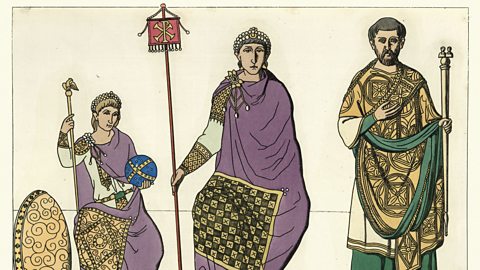
In ancient Greece, the amount of purple you could wear was determined by your status in society. The higher your rank, socially and politically, the more you could wear. It became a colour seen on emperors, priests, kings and judges.
The rules on purple weren’t to be taken lightly. The Roman historian Suetonius spoke of an incident where King Ptolemy of Mauretania wore purple when meeting the 1st Century emperor Caligula. The emperor saw this fashion choice as an aggressive statement against his empire and had the king killed for it.
For centuries, sea snail glands remained the best source for the perfect purple. It wasn’t until 1856, when the 18-year-old British chemist William Henry Perkin found a synthetic version of purple (while trying to cure malaria, of all things) with a lustre comparable to the Tyrian version. It became a shade accessible to all, and purple’s association with the elite began to dwindle.
Pineapples
In the 21st Century, pineapples tend to crop up in debates over whether they should appear as a pizza topping. But if you’d made a Hawaiian with one in the 16th Century (which would be tricky - pizzas as we know them didn't exist then), you could have charged top dollar.
It was around this time that pineapples began to be imported into the British market from abroad. Their unusual scaled and spiky look, complete with a green ‘crown’ on top led to them being called King Pine. Charles II commissioned a portrait which showed him being presented with a pineapple and stately homes throughout the country had replicas of the fruit carved into their masonry.

It later become possible to grow pineapples in the British climate, which became an even greater status symbol for those who could afford to cultivate them, or have their own gardener do it for them. One magazine suggested it would cost £150 (£28,000 today) to buy and build your very own hothouse that provided the best conditions for growing your own.
Pineapples became so valuable that they were more for display than digesting. If your income didn’t stretch to one, but you still wished to give off an air of success, the fruit could be hired out, then plonked in an easy-to-spot place to look as though it had always been there. It’s a lot easier to get one these days - you can pick up a whole pineapple in the supermarket for between 75p and one pound.
X-rays
Getting your hands on the latest technology (and flaunting it) didn’t start with people flashing the latest model of smartphone about. Towards the end of the 19th Century, one way to cement your top spot on the social ladder was to have your own x-ray picture hanging in your home.
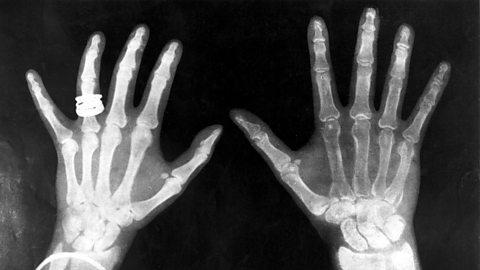
While exhibitions and demonstrations showing how x-rays worked could be seen by practically anyone, owning your own image, one which gave a glimpse of the bones beneath your skin, was something for the rich. It became a status symbol for married women to have their hand x-rayed. Any elaborate beading of their cuffs could still be seen on the finished plate, as could their wedding ring and any other jewellery on their wrist and hand.
In a 2001 edition of the Victorian Review, Professor Sylvia Pamboukian, an expert in Victoria studies and pharmacy, wrote: "Since the jewelry interferes with the image of the skeleton, this image has no medical value… but unlike a medical photograph… the woman's jewelry functions as an identifying marker of gender and social status."
Prof Pamboukian added: "The popular skeleton-hand x-ray, like a "dressed" portrait photograph, reinforced the social role of the sitter."
But it didn’t last. People began complaining about strange burns after using x-ray machinery and the early x-ray photographers often developed cancer or other conditions from being exposed to the radiation involved in the process. While medicine worked on ways to make x-rays safer to use, its position as a status symbol quietly faded.
Hermits for hire
If owning your own estate in the 18th Century wasn’t posh enough, its owner could make themselves look even posher by installing a hermit to live in the grounds.
The fad had its roots in the days of the Roman emperor Hadrian. His villa in Tivoli had a small building, suitable for one occupant, built as part of its pond that someone could retreat to, possibly for contemplation. This kind of inward-looking behaviour was popular in Georgian times, and it was even trendier to have a permanent hermit - who could display that behaviour for you - in residence.

Land owners would have a hermitage built in the grounds, then recruit a hermit. Professor Gordon Campbell of the University of Leicester, who wrote the book The Hermit in the Garden, said while promoting his work: “Recruiting a hermit wasn’t always easy. Sometimes they were agricultural workers, and they were dressed in a costume, often in a druid’s costume.”
Once employed, a hermit was expected to be melancholy (showing a thoughtful sort of sadness), also a fashionable behaviour for the time. By the end of the 18th Century, hermits were no longer fashionable and it has been suggested by Prof Campbell that the idea developed into the lower maintenance garden gnomes we still see today.
Pointy shoes
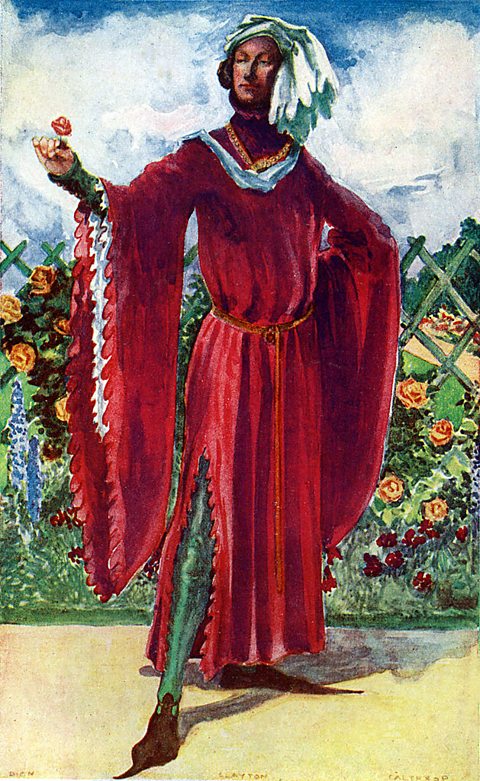
And we mean, very pointy shoes. In the 14th and 15th Century, this was an obvious way for men who lived lives of leisure, with the wealth to fund it, to show the fact off to the world.
These shoes were designed to extend far beyond the toe, sometimes as far as five inches. The shoe historian Rebecca Shawcross has suggested they likely originated in Krakow, Poland, in around 1340 as the elaborate footwear were known as crakows, while the tips themselves were referred to as poulaines. They became popular around Europe.
The longer the poulaine, the more expensive the shoe. The impracticality of walking in those with especially long toes also became a form of status symbol. They proved the wearer did not need a job where these overly long toes could get in the way, such as physical labour.
But everything has its limit. In 1463, these shoes had become so excessively long among the nobility in King Edward IV’s court that a law was made against them. The poulaine was now restricted to a maximum extension of two inches beyond the toe.
Perhaps they should have dyed them Tyrian purple instead.
The 80s gadgets that were stranger things at the time
Walkmans, calculator watches and the greatest in video gaming

How are trends born?
The people whose decisions help shape fashions and fads

The stories behind five global fashion trends
Histories of the mini skirt, the white wedding dress, and why the tale you've probably heard about nylon isn't true.