The Hexham Heads: Paranormal footage 'holy grail' uncovered
BBC Nationwide's 1976 Hexham Heads report was thought to be lost forever
- Published
“I swear to God, this is the holy grail. I can't believe I'm watching it - it's astonishing.”
In normal circumstances, writer Stephen Brotherstone’s reaction to the screening of a 1976 BBC current affairs report might be a bit extreme, but among paranormal enthusiasts this footage has long been spoken about in hushed tones.
He is watching Nationwide’s report about the so-called Hexham Heads; two creepy stone heads found by children in their garden near Hadrian's Wall. The footage was previously mute and unusable, with the sound feared to have been lost forever.
AI voice recognition technology and a search for the term, "lower part was human,” led to the thrilling discovery of half the missing audio, buried at the end of an unrelated religious affairs programme.
The report presented a shocking glimpse of a horror film on early evening television. Almost 50 years later, the image of a werewolf haunts the imaginations of many who saw it at the time.
Mr Brotherstone and Dave Lawrence are the authors of Scarred for Life - a series of books looking at the impact of 1970s and 1980s pop culture.
“Every live show we do, we mention the Hexham Heads and one or two people in the audience remember this report - I am gobsmacked,” said Mr Brotherstone.

Dr Anne Ross was a Celtic studies academic who had appeared as an expert on a number of BBC programmes
The story began in the early 1970s when two brothers aged nine and 11 found two unusual stone heads in their garden in Hexham, Northumberland.
Each roughly about the size of a tennis ball, the discovery caused a stir in the neighbourhood.
The boys’ mother Jenny Robson told Nationwide reporter Luke Casey that a few nights after she showed the heads to her neighbour, the woman reported seeing a creature in her bedroom that was “half-man, half-beast”.
She said the woman’s husband watched this werewolf-like creature padding down the stairs.
The heads were sent off for further examination and eventually made their way to Dr Anne Ross, a respected Celtic archaeology expert at the University of Southampton.

Nationwide reporter Luke Casey put forward the theory that the stone heads had somehow recorded and retained traumatic memories
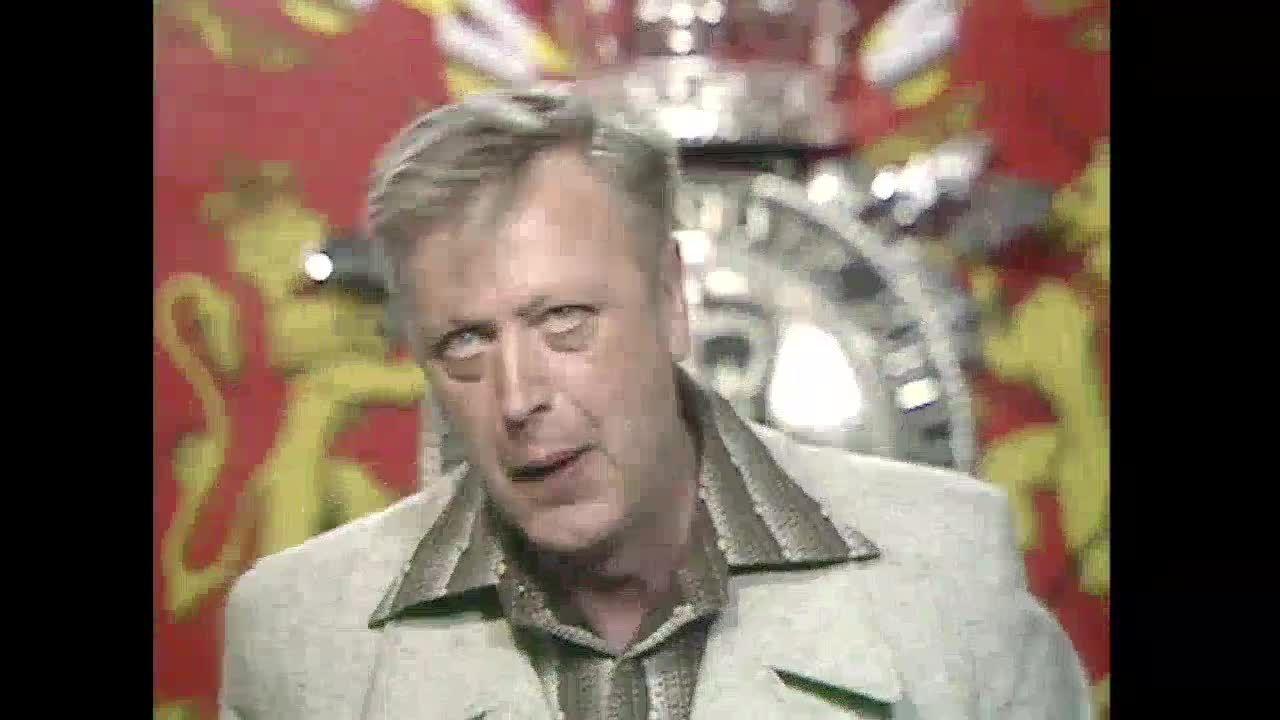
Dr Ross told Nationwide that a few days after she received the heads, she woke up panic-stricken in the middle of the night.
As she looked towards the door, she saw “this thing going out of it, and it was about six feet high, slightly stooping”.
“It was half animal and half man - the upper part I would have said was a wolf, and the lower part was human,” she said.
Dr Ross said her teenage daughter had a similar experience a few days later, when she returned home from school to a shocking scene on the other side of the front door.
“As she opened it, a black thing which she described as being as near a werewolf as anything that you know she could imagine, had leapt halfway down the stairs, had jumped over the banisters and landed with a kind of plop, you know, like padded heavy animal feet.
“It had rushed towards the back of the house, and she had felt compelled to follow it.
“It disappeared in the music room right at the end of the corridor, and when she got there it had gone and then she realised she was terrified.”
What is hauntology? And why is it all around us?
- Published22 August 2024
More than monsters: Icons of horror films on the definition of the genre
- Published28 October 2024
At this point in the Nationwide report, footage flashes up of Oliver Reed in Curse of the Werewolf, the 1961 Hammer Horror film.
This is the moment that seared the report in the memories of many of those watching.
One of those who saw the report was Tony Pollard. Now a professor of conflict archaeology, he was aged 10 at the time and watching Nationwide with his parents.
“My memory is there was a trigger warning, as we would call it now, that if there are any small children in the room, they might want to be removed, but my parents thought never mind that,” he said.
“As it continued, I think they realised this was slightly disturbing and I left the room, but I remember coming back in when they thought it was finished.
“And then all I have is this image of a werewolf howling at the screen in a kind of almost subliminal image, and that has stuck with me.”
Dr Ross’ account of the werewolf vaulting the bannisters also remained a clear memory for him.
Watching the report again after all these years, he said: “The hairs on the back of my neck were standing when she was making that description.”

Richard Littler's Scarfolk imagery is haunted by memories of childhood in 1970s Britain
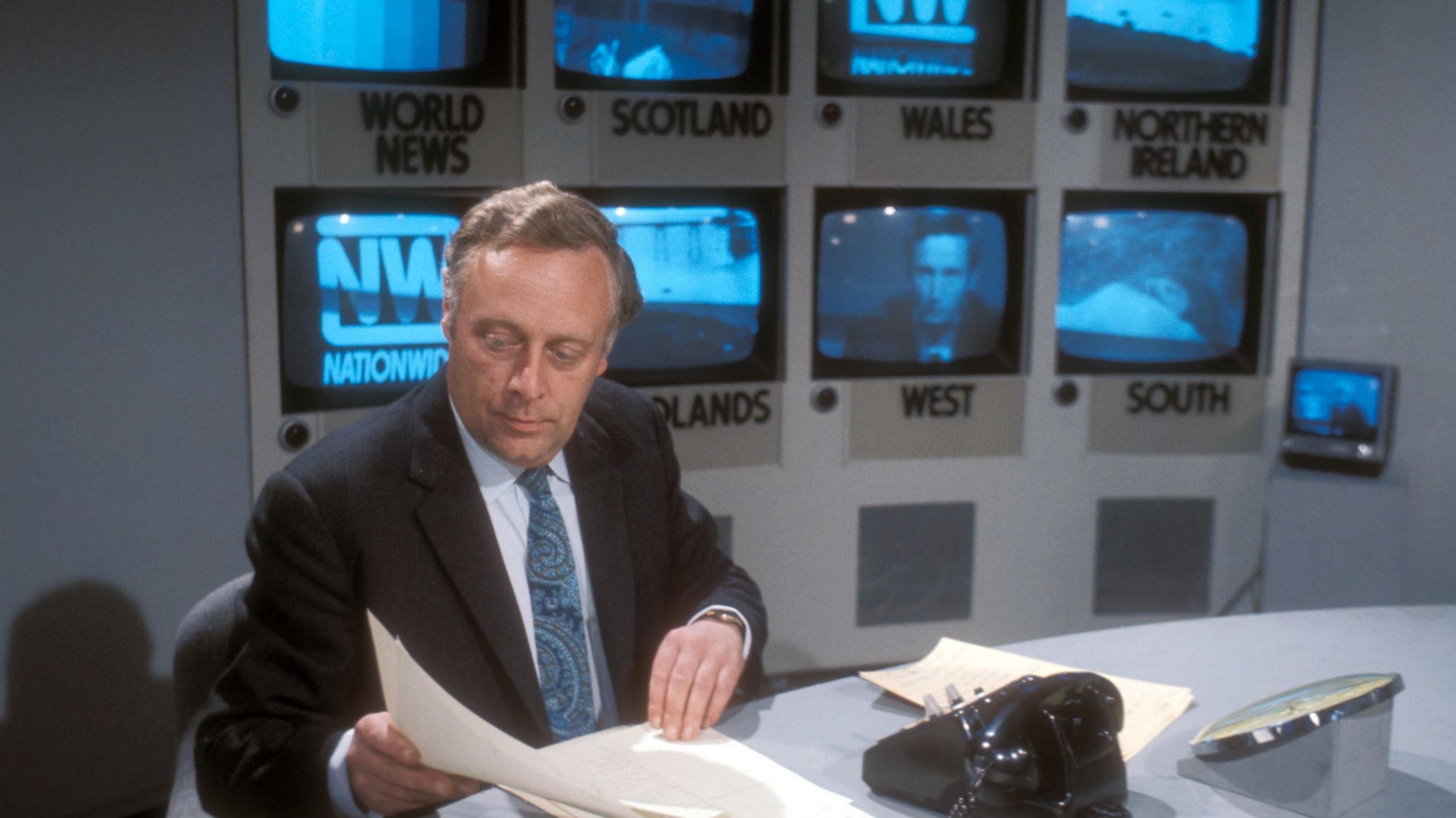
It seems like terrifying viewing for a teatime audience, but according to the writer Richard Littler, the Nationwide report was “typical of the mid-1970s interest in all things supernatural”.
Mr Littler created the popular cult Scarfolk blog, external featuring communications “from a fictional town in North West England that did not progress beyond 1979”.
He said mainstream interest in the occult began growing in the late 1960s as the hippie era ended – “the age of Aquarius gone wrong” - and sensationalist non-fiction books on esoteric matters such as the Loch Ness Monster, UFOs and the Bermuda Triangle became popular among kids and adults.
“Nationwide was presented as a current affairs programme, so you would cut between conventional news reports of the day and then they'd throw in something like that or the Enfield poltergeist and people were terrified,” he said.
“This inability to distinguish fact from fiction is crazy really; it’s as if there’s no attempt to frame it as anything other than actual news.
“It was amazing to see it because I've heard so much about it.”

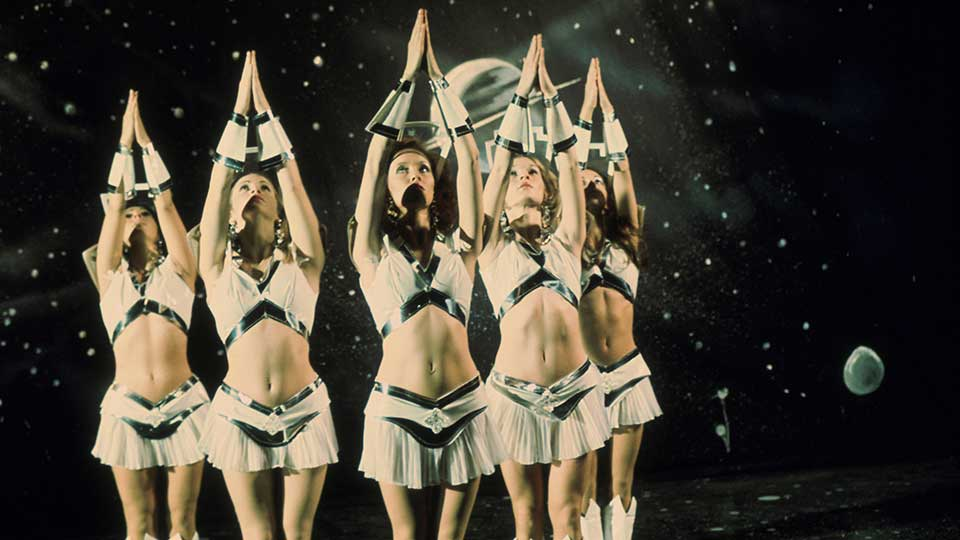
Nationwide's 1977 Christmas Wizard of Oz pantomime featured well-known faces such as the then-Chancellor Denis Healey
The report even fascinates people too young to have seen it at the time, such as electronic musician The Night Monitor, aka Neil Scrivin.
His 2024 album Horror of the Hexham Heads, external is one of his “imaginary synthesiser soundtracks to paranormal events”.
“I was told by someone who saw it at the time that my album served as a perfect soundtrack to their memory of it,” he said.
“I think what attracted me to the story is its combination of bizarre events happening in a normal, urban setting - this idea of some dark and ancient power somehow seeping into the modern world.”
Brutal lessons of 1984 nuclear bomb drama Threads
- Published9 October 2024
Scarred for Life writer Dave Lawrence said he was pleased the report had lived up to what they had imagined.
“There's a phenomenon we often talk about where things in the memory get built up and mythologised, and I think that's what's happened with the Hexham Heads - it's well worth its mythology,” he said.
For Tony Pollard, it’s the sort of thing that is fun to think about but not take too seriously.
“I'm one of these people that would love for all this stuff to be real, but I don't think I do believe it,” he said.
“But that's until the next time I get confronted by a werewolf, obviously.”
More from BBC Archive
- Published3 July 2024
- Published24 June 2024
- Published22 August 2024
- Published1 July 2024