|
CATEGORIES | TV | RADIO | COMMUNICATE | WHERE I LIVE | INDEX |  |
SEARCH | |
|
|
|
|
|
|
|
|
|
|
|
|
|
|
|
|
|
|
|
||||||||||||||||||||||||||||
|
 |
|
|
|
|
|
|
|||||||||||||||||||||||||||||||||||||||||||||||||||||||||||||||||||||||||||||||||||||||||||||||||||||||||||||||||||||||||||||||||||||||||||||||||||||||||||||||||||||||||||||||||||||||||||||||||
|
|
|
You are in: World: South Asia | |||||||||||||||||||||||||||||||||||||||||||||||||||||||||||||||||||||||||||||||||||||||||||||||||||||||||||||||||||||||||||||||||||||||||||||||||||||||||||||||||||||||||||||||||||||||||||||||||||
|
|
|
Tuesday, 21 May, 2002, 12:29 GMT 13:29 UK
Nepal PM in tight spot
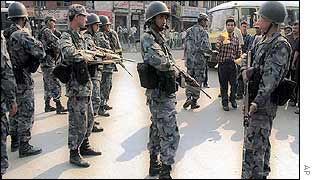
Critics say existing laws are enough to crack down on the rebels
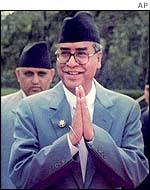
Heat is building on the Nepalese Prime Minister Sher Bahadur Deuba ahead of a parliamentary vote to extend the state of emergency.
Hostility to the motion is rising not only from among opposition MPs but also within Mr Deuba's faction-ridden ruling Nepali Congress Party. The state of emergency expires next Saturday but the prime minister is keen to get it extended by another six months. Mr Deuba's party colleagues are accusing him of not consulting the party before deciding to push for an extension. Some analysts say the parliamentary vote is crucial for Mr Deuba as a defeat could cost him his job. Fate unclear The main opposition United Marxist-Leninist (UML) party and a dissident faction of the ruling party have not yet said if they will vote against the government.
But the fate of the extension to emergency rule, which expires next Saturday, hangs in the balance. Extending the emergency requires a two-thirds majority in the 205-seat parliament. With only 113 seats held by the ruling party, support from both the opposition and his own party is crucial to Mr Deuba's objectives. The dissident faction is made up of the supporters of Mr Deuba's predecessor, Girija Prasad Koirala. The government says that an extension of the emergency would yield further progress in the military operation against the Maoists, which it says has gone well in the past six months. Critics insist that existing anti-terrorism laws are enough to crack down on the Maoist rebels, who have launched their heaviest attacks yet in recent months. They have also accused the government of abusing its emergency powers in an attempt to derail the country's young democracy.
|
|
See also:

20 May 02 | South Asia
17 May 02 | South Asia
04 Apr 02 | South Asia
21 Feb 02 | South Asia
11 May 02 | South Asia
23 Nov 01 | South Asia
23 Apr 02 | Country profiles
Internet links:
The BBC is not responsible for the content of external internet sites Top South Asia stories now:
Links to more South Asia stories are at the foot of the page.
|
|||||||||||||||||||||||||||||||||||||||||||||||||||||||||||||||||||||||||||||||||||||||||||||||||||||||||||||||||||||||||||||||||||||||||||||||||||||||||||||||||||||||||||||||||||||||||||||||||
|
|
|
 E-mail this story to a friend E-mail this story to a friend |
|
|
|
Links to more South Asia stories |
|
|
|
||
 |
||||
 |
|
|
||
|
----------------------------------------------------------------------------------
To BBC Sport>> | To BBC Weather>> | To BBC World Service>> ---------------------------------------------------------------------------------- © MMIII | News Sources | Privacy ~RS~a~RS~Domestic~RS~q~RS~~RS~z~RS~31~RS~)
|