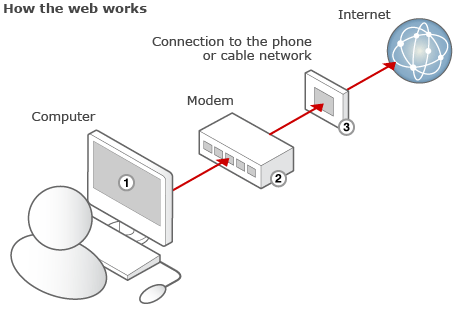
To get online you need - a computer,
- a modem and
- a connection to
the internet
This can also be done via a mobile phone.
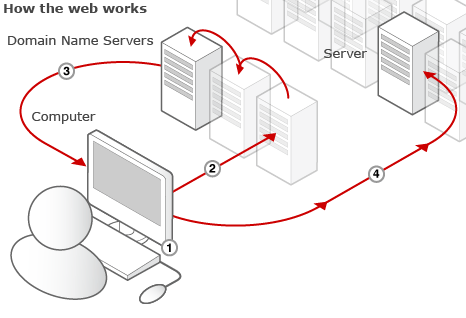
- The person types a web address in their browser.
- This prompts the computer to contact a network of DNS servers which hold the address of millions of web servers around the world.
- Once the DNS server identifies the location of the webpage it sends it back to the computer.
- The computer then contacts the server and requests the web page.
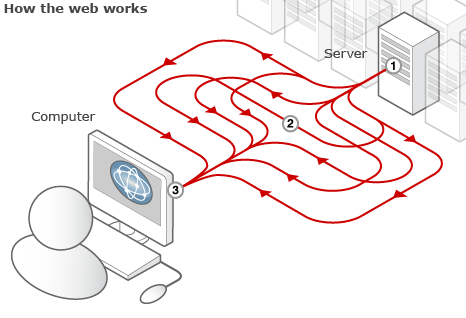
- To speed the transfer of data over the network, it is split into small chunks known as packets.
- These are sent on different routes around the internet.
- The packets are re-assembled in the web browser to show the complete page.
To view the enhanced content on this page you need Javascript and the Flash plugin. Click here to download Flash plugin from the Adobe website
The internet by numbers
Internet users in the world
1,700,000,000
E-mail messages sent today
284,200,000,000
Blog posts today
633,333
Google searches today
3,033,706,984
The counters display estimated figures based on various data sets.
Source: Realtimestatistics.org
The BBC is not responsible for the content of external internet sites
The counters display: - An approximation of the number of new connections added to the internet. At current rates, this is approximately six per second.
- The number of e-mail messages sent from 00:00 GMT each day. The figure includes spam.
- The number of blog posts since 00:00 GMT each day.
- An approximation of the number of Google searches done since 00:00GMT each day.
SuperPower:
a season of programmes exploring the power of the internet.
|
 BBC NEWS CHANNEL
~RS~a~RS~Domestic~RS~q~RS~~RS~z~RS~11~RS~)
~RS~q~RS~~RS~z~RS~11~RS~)


Bookmark with:
What are these?