
 |
CATEGORIES | TV | RADIO | COMMUNICATE | WHERE I LIVE | INDEX |  |
SEARCH | |
|
|
|
|
|
|
|
|
|
|
|
|
|
|
|
|
|
|
|
||||||||||||||||||||||||||||
|
 |
|
|
|
|
|
|
||||||||||||||||||||||||||||||||||||||||||||||||||||||||||||||||||||||||||||||||||||||||||||||||||||||||||||||||||||||||||||||||||||||||||
|
|
|
You are in: Health | ||||||||||||||||||||||||||||||||||||||||||||||||||||||||||||||||||||||||||||||||||||||||||||||||||||||||||||||||||||||||||||||||||||||||||||
|
|
|
Botox injection for bladder problems
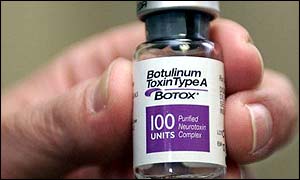
Botox is used for cosmetic surgery
Botox injections used to reduce facial wrinkles can help treat bladder complaints, researchers have found.
The use of the botulism toxin has rapidly become one of the world's most popular forms of cosmetic surgery.
Botox injections have shown promise as a treatment for a variety of problems with the lower urinary tract. Professor Michael Chancellor, an expert in urology and gynaecology at the University of Pittsburgh, said: "Bladder dysfunction affects a staggering number of people worldwide. "The use of botox injections can offer many of these patients a safe, but temporary, solution to this embarrassing problem." In the study, 50 patients were injected with botox into the bladder or urethra. The patients suffered from a variety of conditions, including multiple sclerosis, spinal cord injury and stroke. Incontinence However, in each case they were suffering from involuntary contractions of the bladder muscle. This either caused incontinence, or an inability to completely empty the bladder. Forty-one of the 50 patients reported a decrease or absence of incontinence after the injections. The improvement was seen within seven days of the injection and symptoms were alleviated for approximately six months. None of the patients experienced long-term complications from the treatment. Botox acts by binding to the nerve endings of muscles, blocking the release of the chemical that causes the muscle to contract. When injected into specific muscles, the muscle becomes paralyzed or weakened, but leaves surrounding muscles unaffected, allowing for normal muscle function. Details of the study were published at a meeting of the American Urological Association.
|
|
See also:

12 Mar 02 | Business
11 Mar 02 | Health
07 Sep 01 | Glasgow 2001
13 Oct 00 | Entertainment
24 Apr 02 | Business
Internet links:
The BBC is not responsible for the content of external internet sites Top Health stories now:
Links to more Health stories are at the foot of the page.
|
||||||||||||||||||||||||||||||||||||||||||||||||||||||||||||||||||||||||||||||||||||||||||||||||||||||||||||||||||||||||||||||||||||||||||
|
|
|
 E-mail this story to a friend E-mail this story to a friend |
|
|
|
Links to more Health stories |
|
|
|
||
 |
||||
 |
|
|
||
|
----------------------------------------------------------------------------------
To BBC Sport>> | To BBC Weather>> | To BBC World Service>> ---------------------------------------------------------------------------------- © MMIII | News Sources | Privacy ~RS~a~RS~Domestic~RS~q~RS~~RS~z~RS~31~RS~)
|





