|
CATEGORIES | TV | RADIO | COMMUNICATE | WHERE I LIVE | INDEX |  |
SEARCH | |
|
|
|
|
|
|
|
|
|
|
|
|
|
|
|
|
|
|
|
||||||||||||||||||||||||||||
|
 |
|
|
|
|
|
|
|||||||||||||||||||||||||||||||||||||||||||||||||||||||||||||||||||||||||||||||||||||||||||||||||||||||||||||||||||||||||||||||||||||||||||||||
|
|
|
You are in: Education | |||||||||||||||||||||||||||||||||||||||||||||||||||||||||||||||||||||||||||||||||||||||||||||||||||||||||||||||||||||||||||||||||||||||||||||||||
|
|
|
Tuesday, 23 July, 2002, 16:59 GMT 17:59 UK
Scientists to head for the classroom
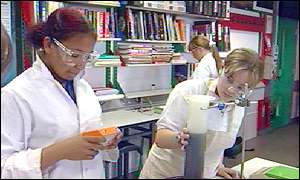
The aim is to inspire the next generation of scientists
Science, maths and technology students and researchers are to be encouraged to work in local schools, in an effort to address the shortage of teachers in these key subjects.
The move will see students paid for their time, as the government seeks to bolster the UK's research base and economic performance.
A new national centre for excellence in science teaching, in partnership with the Wellcome Trust, will be opened to give teachers added support. And the school curriculum in maths and science will be reviewed to ensure pupils are properly stimulated, but given the skills they need for higher and further education and employment. Modern labs The government is also promising more money to modernise science and technology labs and equipment in universities and schools and better stipends for research students. The schemes are part in response to a study maths and science teaching published by president of Wolfson College, Oxford, Sir Gareth Roberts in April. Sir Gareth's review - commissioned by Gordon Brown in his drive to improve Britain's record on investment in research and development - recommended paying maths and science teachers more to attract and retain good recruits. The Education Secretary, Estelle Morris, said the investment would support scientists and budding scientists from school age to post-graduates and from schools to cutting-edge research. "It will boost teaching skills, fund increases in pay in higher education and provide exciting new training opportunities," said Ms Morris. Building bridges Ms Morris praised a scheme at Imperial College, where post-doctorate researchers spend half their time working in local schools and she called for the initiative to be extended. "Our aim must be that over a five to 10-year period we work towards every single secondary school within easy reach of a university being covered by such a programme," she said. The minister said she wanted to see bridges being built between schools and universities. "If we only depend on people coming into teaching through the traditional ways, we won't crack it," she said. She added that half the lab technicians in schools had science degrees and suggested many might be able to become teachers. "Let's make use of them," she said. The Imperial College scheme, which is being sponsored by GlaxoWelcome, will see up to 15 local schools gaining one or two scientists each. "They will spend half their time at Imperial and half their time in schools," a spokeswoman said. "The idea is that it will lead to a teaching qualification."
|
|
See also:

15 Apr 02 | Education
22 Jul 02 | Education
13 Jun 02 | Features
11 Jul 02 | Education
03 Jan 02 | Education
Internet links:
The BBC is not responsible for the content of external internet sites Top Education stories now:
Links to more Education stories are at the foot of the page.
|
|||||||||||||||||||||||||||||||||||||||||||||||||||||||||||||||||||||||||||||||||||||||||||||||||||||||||||||||||||||||||||||||||||||||||||||||
|
|
|
 E-mail this story to a friend E-mail this story to a friend |
|
|
|
Links to more Education stories |
|
|
|
||
 |
||||
 |
|
|
||
|
----------------------------------------------------------------------------------
To BBC Sport>> | To BBC Weather>> | To BBC World Service>> ---------------------------------------------------------------------------------- © MMIII | News Sources | Privacy ~RS~a~RS~Domestic~RS~q~RS~~RS~z~RS~37~RS~)
|