|
CATEGORIES | TV | RADIO | COMMUNICATE | WHERE I LIVE | INDEX |  |
SEARCH | |
|
|
|
|
|
|
|
|
|
|
|
|
|
|
|
|
|
|
|
||||||||||||||||||||||||||||
|
 |
|
|
|
|
|
|
||||||||||||||||||||||||||||||||||||||||||||||||||||||||||||||||||||||||||||||||||||||||||||||||||||||||||||||||||||||||||||||||||||||||||||||||||||||||
|
|
|
You are in: Business | ||||||||||||||||||||||||||||||||||||||||||||||||||||||||||||||||||||||||||||||||||||||||||||||||||||||||||||||||||||||||||||||||||||||||||||||||||||||||||
|
|
|
Friday, 22 November, 2002, 06:35 GMT
Japan announces extra spending
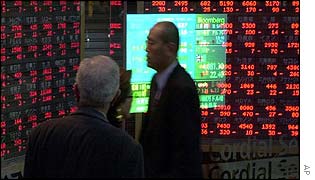
Red screens is a familiar sight for Japan's stock traders
The Japanese government has announced plans to inject more cash into the economy in order to fuel a recovery.
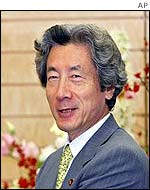
The spending plan was quickly denounced by analysts as insufficient "Recovery simply isn't possible with just public works," said BNP Paribas chief economist Koji Shimamoto. "The supplementary budget remains a job half done," agreed Japan's leading business newspaper, the Nihon Keizai Shimbun "The government and the central bank need to follow with additional efforts." More is needed Japan is in desperate difficulty. "The move toward recovery has slowed, and the situation surrounding prospects for the economy is growing more uncertain," Prime Minister Junichiro Koizumi said. An extra 1.5 trillion yen spent on public works and a further 1.5 trillion yen spent to create jobs and help small firms should help Japan recover, the government hopes. But reversing the shrinkage of Japan's economy and its falling prices would require much greater efforts, said Mr Shimamoto. "Even if the number had an extra zero at the end and was 10 times the amount, getting out of deflation isn¿t possible," he said. "The supplementary budget is still very small," agreed HSBC senior economist Peter Morgan. "It is no stimulus at all." Japan's economy has been in slowdown since the early 1990s. Its banking sector is burdened by a mountain of bad debts which put a squeeze on credit for investment in the private sector. The government is itself massively indebted too. Economists agree that radical reform is needed, but there is much resistance against change from powerful pressure groups and their allies in the government. Strong shares Japanese shares rose, lifting the Nikkei index of leading shares 1.21% to 8,772.56, its highest close in two weeks. The stock market has risen 7% after hitting a 19-year-low last month, but observers said this had as much to do with strong stock markets and economic recovery hopes in the US as with Japan's economic prospects. Red screens, indicating falling share prices, have become a familiar sight for Japanese stock market traders in recent months and few believe the market is set for a sustained recovery. |
|
See also:

21 Nov 02 | Business
20 Nov 02 | Business
15 Nov 02 | Business
14 Nov 02 | Business
13 Nov 02 | Business
08 Nov 02 | Business
31 Oct 02 | Business
20 Dec 01 | Business
Internet links:
The BBC is not responsible for the content of external internet sites Top Business stories now:
Links to more Business stories are at the foot of the page.
|
||||||||||||||||||||||||||||||||||||||||||||||||||||||||||||||||||||||||||||||||||||||||||||||||||||||||||||||||||||||||||||||||||||||||||||||||||||||||
|
|
|
 E-mail this story to a friend E-mail this story to a friend |
|
|
|
Links to more Business stories |
|
|
|
||
 |
||||
 |
|
|
||
|
----------------------------------------------------------------------------------
To BBC Sport>> | To BBC Weather>> | To BBC World Service>> ---------------------------------------------------------------------------------- © MMIII | News Sources | Privacy ~RS~a~RS~Domestic~RS~q~RS~~RS~z~RS~30~RS~)
|