
 |
CATEGORIES | TV | RADIO | COMMUNICATE | WHERE I LIVE | INDEX |  |
SEARCH | |
|
|
|
|
|
|
|
|
|
|
|
|
|
|
|
|
|
|
|
||||||||||||||||||||||||||||
|
 |
|
|
|
|
|
|
||||||||||||||||||||||||||||||||||||||||||||||||||||||||||||||||||||||||||||||||||||||||||||||||||||||||||||||||||||||||||||||||||||||||||||||||||||||||
|
|
|
You are in: Business | ||||||||||||||||||||||||||||||||||||||||||||||||||||||||||||||||||||||||||||||||||||||||||||||||||||||||||||||||||||||||||||||||||||||||||||||||||||||||||
|
|
|
Friday, 8 November, 2002, 09:46 GMT
UK's eurozone trade gap halves
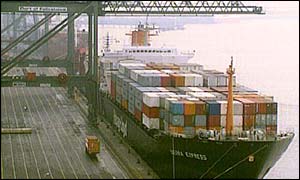
Fewer goods are being shipped to mainland Europe
The UK economy managed to narrow its trade gap in September.
After setting record levels in August, the global trade gap - the difference between how much we sell and we buy to foreigners - fell to £2.7bn in September, compared to £3.4bn in the previous month. This was broadly in line with market expectations, and will help boost the value of the pound sterling in foreign exchange dealing. Total exports of goods rose 3% to £15.2bn, while total imports of goods fell 1.5% £17.9bn - a possible sign of an economic slowdown. Britain's big consumer boom, that has kept its economy buoyant, has largely been fuelled by foreign imports. Selling to Europe The UK's trade gap with its EU partners was cut by half, coming in at £0.8bn this month compared to £1.5bn last time. There were higher exports to Belgium, Ireland, and Spain as well as lower imports from Germany, Spain and Italy. However, the Office of National Statistics, who issued the figures, warned that the broad trend was still for a worsening of the UK trade gap. This could add to the dilemma of the Bank of England in setting interest rates. The high UK rates, compared to those in the United States, have led to a high pound, which in turn has hurt exporters. That in turn could make the trade deficit worse. And a further deterioration of the trade figures could raise questions over whether foreigners were prepared to finance the gap indefinitely. Britain traditionally runs a deficit in manufactured goods, but runs a surplus in trade in services, covering such areas as accountancy, legal fees, and royalites from books and records. But that surplus has been eroding in recent years, especially in the area of air transport, as increasing number of Britons take holidays abroad.
|
|
See also:

09 Oct 02 | Business
09 Aug 02 | Business
07 Aug 02 | Business
05 Aug 02 | Business
07 Nov 02 | Business
Internet links:
The BBC is not responsible for the content of external internet sites Top Business stories now:
Links to more Business stories are at the foot of the page.
|
||||||||||||||||||||||||||||||||||||||||||||||||||||||||||||||||||||||||||||||||||||||||||||||||||||||||||||||||||||||||||||||||||||||||||||||||||||||||
|
|
|
 E-mail this story to a friend E-mail this story to a friend |
|
|
|
Links to more Business stories |
|
|
|
||
 |
||||
 |
|
|
||
|
----------------------------------------------------------------------------------
To BBC Sport>> | To BBC Weather>> | To BBC World Service>> ---------------------------------------------------------------------------------- © MMIII | News Sources | Privacy ~RS~a~RS~Domestic~RS~q~RS~~RS~z~RS~12~RS~)
|






