
 |
CATEGORIES | TV | RADIO | COMMUNICATE | WHERE I LIVE | INDEX |  |
SEARCH | |
|
|
|
|
|
|
|
|
|
|
|
|
|
|
|
|
|
|
|
||||||||||||||||||||||||||||
|
 |
|
|
|
|
|
|
||||||||||||||||||||||||||||||||||||||||||||||||||||||||||||||||||||||||||||||||||||||||||||||||||||||||||||||||||||||||||||||||||||||||||||||||||
|
|
|
You are in: Business | ||||||||||||||||||||||||||||||||||||||||||||||||||||||||||||||||||||||||||||||||||||||||||||||||||||||||||||||||||||||||||||||||||||||||||||||||||||
|
|
|
Monday, 21 October, 2002, 05:48 GMT 06:48 UK
£7bn 'black hole' may spur tax rises
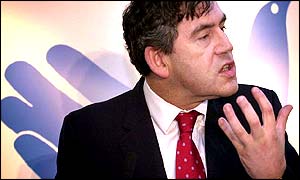
Mr Brown no longer has room for manoeuvre
UK Chancellor Gordon Brown faces a £7bn "black hole" in the public finances this year and may have to put up taxes as a result, an influential economic think-tank has said.
The Ernst & Young Item Club, a forecaster that uses the same economic model as the UK Treasury, put the blame on the jittery global economy combined with lower tax receipts from once-prosperous sources such as City workers. Since Treasury rules forbid any significant increase in borrowing, "higher spending now means higher taxes," said Professor Peter Spencer, Item's economic adviser. The forecast is the gloomiest assessment so far of Britain's once-healthy public finances; most economists have predicted that Mr Brown will miss his deficit targets to some extent, but estimates have tended to go no higher than £5bn. Too little, too late? Mr Brown has already raised taxes this year, proposing an increase in National Insurance and other measures to help fund an increase in spending on public services. But the Item Club warned that it was not enough. According to Professor Spencer, a drop-off in income tax receipts has been the result of the collapse in the technology sector, and the fading fortunes of wealthy financial workers. And the slowing economy has also hit receipts from capital gains tax and from corporation tax. "There's weakness right across the board on the Inland Revenue - the only bright spot is VAT which continues to rise as long as the High Street keeps on going," Professor Spencer told BBC Radio Five Live. The Item club says there is a 50% probability that higher taxes will be needed next year if the chancellor is to avoid breaking his 'golden rule'. "His golden rule allows him to borrow to finance investment - that's schools and hospitals," Professor Spencer said. "It unfortunately doesn't allow him to borrow to finance the teachers, doctors and nurses - i.e. current expenditure - and it's because he's so close to breaking the golden rule that he will have to put taxes up, perhaps not in April but at some point over the next couple of years." Slowdown Separately, the Item Club forecast that economic growth would slow to just 1.5% this year, well below Mr Brown's April prediction of 2-2.5%. It also predicted that the Bank of England would leave interest rates on hold until early next year because of the continued strength of the housing market. In a rare spot of partial cheer, the Club said it did not foresee a crash in the housing market, which it said was likely to be buoyed by high employment. |
|
See also:

20 Oct 02 | Politics
15 Jul 02 | Politics
15 Jul 02 | Politics
12 Jul 02 | Business
Internet links:
The BBC is not responsible for the content of external internet sites Top Business stories now:
Links to more Business stories are at the foot of the page.
|
||||||||||||||||||||||||||||||||||||||||||||||||||||||||||||||||||||||||||||||||||||||||||||||||||||||||||||||||||||||||||||||||||||||||||||||||||
|
|
|
 E-mail this story to a friend E-mail this story to a friend |
|
|
|
Links to more Business stories |
|
|
|
||
 |
||||
 |
|
|
||
|
----------------------------------------------------------------------------------
To BBC Sport>> | To BBC Weather>> | To BBC World Service>> ---------------------------------------------------------------------------------- © MMIII | News Sources | Privacy ~RS~a~RS~Domestic~RS~q~RS~~RS~z~RS~55~RS~)
|



